8.9 C
Athens
Tuesday, February 3, 2026
Home Blog Page 2

Abbas Launches Fierce Attack on Hamas, Demands Hostage Release

0
Abbas Launches Fierce Attack on Hamas, Demands Hostage Release
PHOTO: Martin Schulz - Former EP President (2012 - 2017) - Flickr https://www.flickr.com/photos/photosmartinschulz/27978527702 CC BY-NC-ND 2.0

In a rare and scathing public attack, Palestinian Authority President Mahmoud Abbas on Wednesday condemned Hamas as “sons of dogs” and demanded the militant group release the hostages it holds in Gaza.

The statement marks one of Abbas’s strongest direct criticisms of Hamas amid the ongoing war with Israel.

The top priority is to stop the war of extermination in Gaza. It must end—hundreds are being killed every day,” said Abbas, harshly criticizing Hamas for holding on to hostages, including American citizens. He argued that this gives Israel justification to continue its military campaign.

Why don’t you hand over the American hostages?” Abbas asked pointedly. “Release those you are holding and end this story. Remove their [Israel’s] excuses. End it.

Abbas also reiterated his call for Hamas to relinquish control of Gaza to the Palestinian Authority and to transition into a political party.

Hamas must hand over its responsibilities in Gaza and its weapons to the Palestinian Authority, and become a political party,” he emphasized.

The Palestinian leader has repeatedly condemned the October 7, 2023 attack by Hamas, during which more than 5,000 militants stormed southern Israel, killing around 1,200 peoplemostly civilians—and abducting 251 hostages. Abbas maintains that this attack provided Israel with a pretext for Gaza’s destruction.

Just two weeks ago, the Palestinian Authority presidency issued a statement calling on Hamas to “stop giving the Israeli occupation any pretext to continue its genocide,” as they phrased it.

India Suspends Indus Water Treaty with Pakistan After Kashmir Terror Attack Kills 26 Tourists

0
India Suspends Indus Water Treaty with Pakistan After Kashmir Terror Attack Kills 26 Tourists
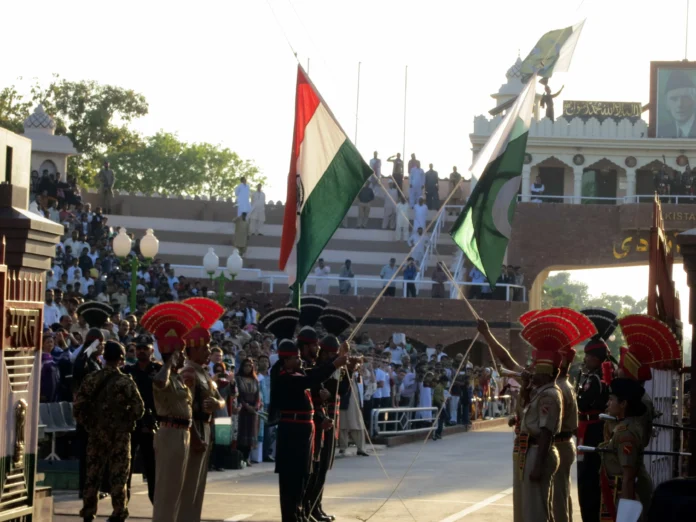
India-Pakistan border closure ceremony, at the Wagah-Attari border crossing, 2014. File photo: Stefan Krasowski - פליקר flickr, CC BY 2.0, https://commons.wikimedia.org/w/index.php?curid=40686356

In one of the most serious escalations in recent years, India has suspended the Indus Water Treaty with Pakistan following a terrorist attack in Kashmir that killed 26 tourists and injured dozens more.

The attack occurred on Tuesday near the Baisaran Valley, a well-known tourist destination in Pahalgam, making it the deadliest civilian assault in the region in years. Although no group has claimed responsibility, Indian authorities suspect Pakistani-based extremists, a pattern seen in previous incidents.

Immediately after the attack, the Indian Cabinet Committee on Security convened an emergency session in New Delhi, announcing a series of severe countermeasures:

  • Suspension of the Indus Water Treaty, a key bilateral agreement signed in 1960 under World Bank mediation, governing the water flow from India to Pakistan.
  • Closure of the Wagah-Attari border crossing, halting all movement.
  • Recall of Indian diplomats from Islamabad, and a one-week deadline for Pakistani diplomats to leave New Delhi.
  • Cancellation of all Pakistani visas issued under the SAARC framework.
  • A 48-hour expulsion order for all Pakistani nationals currently in India.

The Indus Water Treaty had long been hailed as a model of cooperation between the two rival nations, surviving multiple wars and diplomatic crises. Its suspension now grants India the ability to divert or restrict river flows, a move that could significantly impact Pakistan’s agriculture-dependent economy, raising both humanitarian and geopolitical concerns.

Indian Defence Minister Rajnath Singh delivered a stark warning:

We will not stop at those who executed the attack. We will go after those who, hidden behind curtains, masterminded these heinous acts on Indian soil.

Prime Minister Narendra Modi, who cut short a visit to Saudi Arabia to return home, strongly condemned the attack on the platform X:

Those responsible for this horrific act will not go unpunished… Their evil plan will fail. Our resolve to fight terrorism is unshakable.

The abrupt deterioration in diplomatic ties and the suspension of such a strategic treaty signals a new and dangerous phase in India-Pakistan relations.

Germany halts Eurofighter jet deal with Turkey over Imamoglu arrest

0
Germany halts Eurofighter jet deal with Turkey over Imamoglu arrest
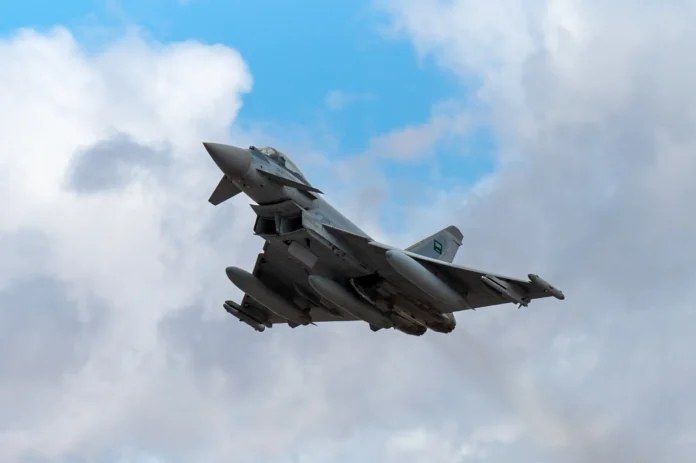
EF-2000 Eurofighter Typhoon: US DOD Photo

The German caretaker government has frozen the planned export of around 30 Eurofighter jets to Turkey, following the arrest of Ekrem Imamoglu, a key opposition figure and prominent critic of Turkish President Recep Tayyip Erdogan.

According to a report by Handelsblatt, based on government sources, the decision stems from deepening concerns over the state of democracy in Turkey. Other major German media outlets have echoed this stance, highlighting what they describe as a troubling trend of political repression.

Imamoglu, the mayor of Constantinople and a rising star in Turkish politics, has been accused of corruption—a charge the Turkish opposition calls politically motivated. In Berlin, senior officials described the arrest as an attack on Turkey’s democracy, stating that no military agreement can proceed under such circumstances.

This halt in arms exports is not merely a decision by an outgoing government. Influential figures from the current ruling coalition—notably within the SPD and CSU—who supported the suspension, are expected to play key roles in the incoming administration led by Friedrich Merz.

The new CDU–SPD–CSU alliance, set to take office on May 6, has outlined its priorities: strengthening defense, tougher migration policies, and upholding democratic values and the rule of law both domestically and internationally.

Although Merz has made positive remarks about Turkey, there is uncertainty over whether these statements will translate into concrete policy actions. While Ankara insists that German objections to the sale have been resolved, the Handelsblatt report suggests otherwise, indicating the situation remains far from settled.

Putin announces surprise Easter Ceasefire – Ukraine responds with skepticism

0
Putin announces surprise Easter Ceasefire – Ukraine responds with skepticism
Vladimir Putin: Kremlin.ru photo

Russian President Vladimir Putin made a surprise announcement on Saturday, April 19, 2025, declaring a 30-hour Easter ceasefire in Eastern Ukraine. The ceasefire began at 18:00 PM Moscow time and is set to last until midnight on Monday, April 21.

Despite the declared truce, air raid sirens reportedly sounded across multiple Ukrainian cities, and Russian drones were observed in the sky, according to Ukrainian sources. Putin stated, “We expect the Ukrainian side to follow our example,” adding that the ceasefire would allow Russia to assess Kyiv’s sincerity regarding its desire for peace.

The announcement came just hours after the Russian Ministry of Defense claimed its forces had expelled Ukrainian troops from one of their final strongholds in Russia’s Kursk region. Ukrainian forces had launched a surprise incursion there, aiming to preempt potential Russian offensives against Sumy and Kharkiv.

Ukrainian President Volodymyr Zelensky dismissed the ceasefire announcement, calling it “another of Putin’s attempts to manipulate human lives.” In a post on X (formerly Twitter), Zelensky stated that Ukrainian forces remain active in the Kursk region and have expanded their control zone into Russia’s Belgorod region.

He further noted that at the time of the ceasefire announcement, Russian attack drones were detected over Ukrainian territory, prompting ongoing operations by Ukrainian air defense units to intercept them.

Kyiv views the truce as a potential tactical maneuver by Moscow rather than a genuine peace initiative. With drone strikes continuing and the fog of war still thick, whether the ceasefire will truly hold remains uncertain.

Greece unveils first national maritime spatial strategy

0
Greece unveils first national maritime spatial strategy
Photo Greek foreign Ministry

The act of forming the National Spatial Strategy for the Marine Area, which specifies and maps the country’s Marine Spatial Planning (MSP), was issued today at the initiative of the Ministry of Environment and Energy, in cooperation with the Ministry of Foreign Affairs and the competent ministries.

This is a significant initiative, as for the first time Greece sets the rules for the organization of its marine space. Marine Spatial Planning constitutes a holistic spatial framework and is a necessary condition for the successful development of a blue and circular economy, clearly recording the human activities that can take place in all the marine zones of our country, while respecting the pressing need for environmental protection.

The approach followed in the development of the National Spatial Strategy for the Marine Area synthesized often conflicting social, economic, energy-related, and environmental parameters, in order to serve a series of interconnected goals, such as climate resilience of the marine environment, sustainable tourism development, the protection of our cultural heritage—especially underwater antiquities, the improvement and safeguarding of maritime transport, the exploitation of the country’s energy resources, aquaculture, and the strengthening of cross-border projects of common interest. Marine Spatial Planning takes into account the interactions between land and sea activities and emphasizes consultation and the co-formation of priorities by region, through the creation of Marine Spatial Frameworks.

With Marine Spatial Planning and the National Spatial Strategy for the Marine Area, the Greek State, for the first time, defines in detail the uses of its marine zones, fulfilling the obligation arising from Directive 2014/89/EU and exercising the rights derived from International Law.

The Ministers
Foreign Affairs
Giorgos Gerapetritis
Environment and Energy
Stavros Papastavrou

Marine Spatial Planning
Announcement_The First Marine Spatial Planning in the Country

Questions & Answers

  1. Why is the drafting, specification, and mapping of the Marine Spatial Planning (MSP) an important move?

This is the first time that the potential outer limits of the Greek continental shelf (i.e., full influence of the mainland and islands in marine zones) are recorded in an official EU regulatory text.

  1. So what does the map depict?

The maritime areas depicted on the map include the Greek-Italian EEZ delimitation agreements of 1977 and 2020, and the Greek-Egyptian agreement of 2020, and they align with the boundaries arising from Law 4001/2011.

Regarding non-delimited areas, the map shows the median line determining the outer boundary of the Greek continental shelf, until agreements are made with neighboring states whose coasts are adjacent or opposite to the Greek coasts.

  1. So does the map depict the EEZ of Greece across the entire Greek territory (Ionian, Aegean, and Eastern Mediterranean)?

The delimitation of maritime zones is a different process from Marine Spatial Planning, which concerns how the competent authorities of member states analyze and organize human activities in the aforementioned maritime areas to achieve ecological, economic, and social goals.

Therefore, the map depicting Greek Marine Spatial Planning does not constitute EEZ delimitation.

  1. Does it reflect the extension of Greece’s territorial waters to 12 nautical miles (in the Aegean and Eastern Mediterranean)?

The extension of territorial waters up to 12 nautical miles is an inalienable right of our country derived from the United Nations Convention on the Law of the Sea (UNCLOS). It is a right whose exercise Greece reserves, when and as deemed in the national interest, according to the rules of International Law.

  1. How is the development of Marine Spatial Planning related to sovereignty and the exercise of sovereign rights?

Marine Spatial Planning and its mapping reflect activities in all of the country’s maritime zones – it does not constitute the exercise of sovereign rights.

Sovereignty is not subject to planning. It preexists and is not affected by it.

  1. Why is the government submitting Marine Spatial Planning now?

The government is settling long-standing issues. It defends national interests in a substantial way, not through communication pyrotechnics.

  1. Might the Marine Spatial Planning drafting provoke a reaction from Turkey? Are you abandoning Greek-Turkish dialogue?

Solving past issues does not mean that Greek-Turkish dialogue is not pursued. Disagreeing doesn’t mean we don’t talk. Talking doesn’t mean we compromise our positions, as proven in practice. Greece desires a positive climate in relations with Turkey and has consistently supported Greek-Turkish understanding based on International Law and good neighborliness.

Moreover, Marine Spatial Planning concerns a substantive obligation of our country to the EU, stemming from specific European directives, and fits within the framework of several European Strategies, such as the Green Deal and the EU Maritime Security Strategy (EUMSS).

The Ministry of Environment and Energy also explains the following: QUESTIONS AND ANSWERS ABOUT MARINE SPATIAL PLANNING

What is Marine Spatial Planning?

Marine Spatial Planning (MSP) records human activities in all maritime zones of our country, with a focus on environmental protection in those areas.

At the same time, it defines the compatibility and parallel development of these activities, always aiming for the sustainable development of marine areas and the utilization of marine resources. The geographic scope of Marine Spatial Planning was defined according to EU law and International Law of the Sea, particularly the United Nations Convention on the Law of the Sea (UNCLOS).

This process is stipulated in Directive 2014/89/EU, fulfilling Greece’s European obligation. Correct transposition of the directive into national law is essential for developing a sustainable blue economy, managing marine resources, and preserving healthy marine ecosystems and biodiversity, within the European Green Deal.

It’s worth noting that this directive does not affect the sovereign rights and jurisdiction of member states over their maritime waters, which derive from international law, particularly UNCLOS.

What is its purpose?

To organize marine space, enabling the smooth interaction of land and sea activities, aiming at environmental protection and sustainable development. During the drafting of Marine Spatial Planning, social, economic, energy-related, and environmental parameters are taken into account for activities such as:

– Protection of the marine environment from the impacts of climate change, including the establishment of marine parks
– Preservation of cultural heritage, especially underwater antiquities
– Improvement and protection of maritime transport
Sustainable tourism development
Exploitation of energy resources, particularly potential natural gas fields and offshore wind farms
Aquaculture
– Strengthening cross-border infrastructure of common interest with other EU member states and neighboring regions

Marine Spatial Planning allows for a coordinated, rather than fragmented, allocation of human activities.

Correct transposition of the directive into national law is crucial for the development of a sustainable blue economy, the sustainable use of marine resources, and the preservation of healthy marine ecosystems and biodiversity, within the framework of the European Green Deal.

Following the strategic priorities set by the Prime Minister at the 9th Our Ocean Conference, the planning is part of a holistic spatial planning policy for land and sea, progressively implemented by the Greek Government.

Why is Marine Spatial Planning being submitted now?

Marine Spatial Planning is a Roadmap for the utilization of marine resources. Thus, its design was the subject of extended consultation with competent ministries, local authorities, and local communities. It gains even more importance considering that Greece has the longest coastline in the EU and the most recorded islands.

Why was Marine Spatial Planning divided into 4 spatial units?

To reflect the administrative structure of the respective Regions. The relevant marine spatial frameworks will follow, as was the case with Regional Spatial Frameworks (12 out of 13 have already been published, and the 13th is in progress).

Where is Marine Spatial Planning published? How will citizens be informed?

It is published in the Government Gazette, as provided in Greece. The European Union is notified, and it is posted on the relevant online platforms. There will also be informational actions by the Ministry of Environment and Energy.

Does Marine Spatial Planning have geopolitical significance?

The geographic scope of Marine Spatial Planning was defined according to Union legislation and international law of the sea, especially the UNCLOS.

It is the first time that the limits of the Greek continental shelf, meaning the full influence of the mainland and islands, are recorded in an official EU regulatory document.

Marine Spatial Planning implements several European strategies and forms part of the EU acquis.

Greek-French defense alliance deepens with Fourth FDI Frigate and Exocet missile agreement

0
Greek-French defense alliance deepens with Fourth FDI Frigate and Exocet missile agreement
French FREMM Frigate PHOTO: NIKOS DENDIAS X

Greece and France are entering a new phase of strategic defense cooperation, marked by two pivotal developments during the official visit of French Defense Minister Sébastien Lecornu to Athens on Holy Monday, April 14, 2025.

At the heart of the visit was the signing of a bilateral agreement for the procurement of 16 EXOCET guided missiles, in the presence of both defense ministers. The agreement was signed by Lieutenant General Ioannis Bouras, Director General of Greece’s General Directorate for Defense Investments and Armaments (GDDIA), and Annie Kristina Ramon, representative of MBDA.

Simultaneously, Greek Defense Minister Nikos Dendias announced his intention to propose the acquisition of a fourth FDI/Belharra frigate to the Government Council for Foreign Affairs and Defense (KYSEA), within the framework of the strategic defense partnership with France.

The procurement of three Belharra frigates, along with a potential fourth—should KYSEA accept my recommendation—will significantly deepen the naval cooperation between our countries,” Dendias stated.

Strengthening the Athens–Paris Strategic Axis

These developments align with the ongoing enhancement of defense ties under the 2021 Greece–France Strategic Agreement.

Greece has full confidence that France considers Greece’s security in its decision-making, and supports maintaining a technological edge against revisionist threats. Greece does not threaten, but it is being threatened,” emphasized Dendias.

He also proposed initiating talks to renew the 2021 agreement, stressing its enduring strategic value.

Innovation and Joint Defense Initiatives

Dendias highlighted the importance of innovation-driven cooperation, citing the Hellenic-French Defense Innovation Symposium held in Athens in December 2024. He also referenced joint initiatives within the framework of Agenda 2030 and European strategic autonomy.

Visit to French Frigate “ALSACE” and Operation ASPIDES

The ministers jointly visited the French frigate “ALSACE” docked in Piraeus, which is currently part of Operation ASPIDES in the Red Sea.

ALSACE has successfully intercepted ballistic missiles and Houthi drones,” Dendias noted, underlining the importance of freedom of navigation and regional stability in the Eastern Mediterranean.

Talks on Geopolitical and Defense Industry Developments

Their discussions covered European defense programs such as SAFE and ReArm Europe, developments in the EU defense industry, and the situation in Ukraine, the Eastern Mediterranean, the Middle East, the Sahel, and Syria.

Dendias also criticized Turkey’s attempts to participate in European defense programs, implying a lack of alignment with EU strategic interests.

We value France’s leadership and contribution to shaping a unified European defense environment. We must reduce our dependencies and funding to third parties whose actions conflict with our national interests,” he asserted.

Greece responds to Turkey’s new provocative remarks on minority Rights in Thrace

0
Greece responds to Turkey's new provocative remarks on minority Rights in Thrace
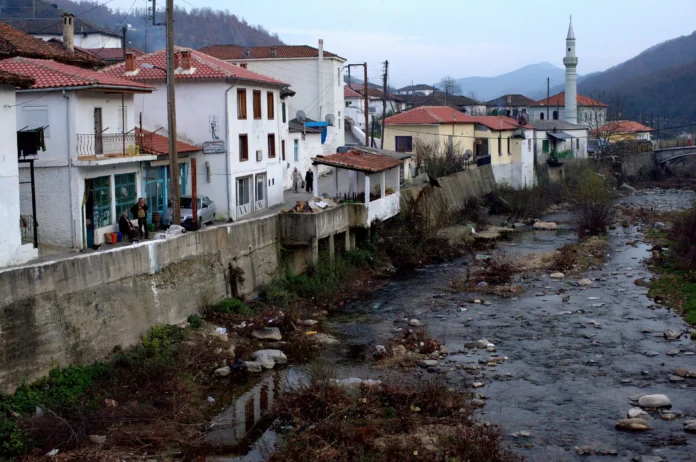
By Ggia - Own work, CC BY-SA 3.0, https://commons.wikimedia.org/w/index.php?curid=8806994

In response to a provocative statement by the Turkish Ministry of Foreign Affairs, which once again referred to a “Turkish minority” in Thrace, the Greek Ministry of Foreign Affairs issued a strong rebuttal.

The Greek ministry clarified that the minority in Western Thrace is religious, not ethnic, stressing that its members are Greek citizens. The official statement reads:

The Treaty of Lausanne is explicit, referring clearly to a religious minority in Thrace, not an ethnic one. The Hellenic State fully respects the religious beliefs and cultural characteristics of the Muslim Minority in Thrace. Greek citizens who are members of this minority enjoy complete equality before the law and equal civic rights.”

The Turkish statement, which sparked Greece’s reaction, was made on the occasion of the 98th anniversary of the establishment of the so called “Turkish Union of Xanthi”. In its message, Turkey referred to the Muslim minority in Greece as “Turkish” and claimed to support the Union’s “just efforts and honorable struggle to use its name,” citing the European Court of Human Rights (ECHR).

Specifically, the Turkish Foreign Ministry posted:

Happy 98th anniversary to the Turkish Union of Xanthi, the oldest civil society organization of the Turkish Minority of Western Thrace! We support the Union’s legitimate efforts and honorable struggle to use its name, as endorsed by ECHR rulings.”

Greece views this repeated terminology as a deliberate provocation and a misinterpretation of international treaties, notably the Treaty of Lausanne, which remains the cornerstone of minority rights in the region.

Panos Xenokostas: “National warship, with design, construction and support from the Greek Shipyards”

0
Panos Xenokostas: "National warship, with design, construction and support from the Greek Shipyards"
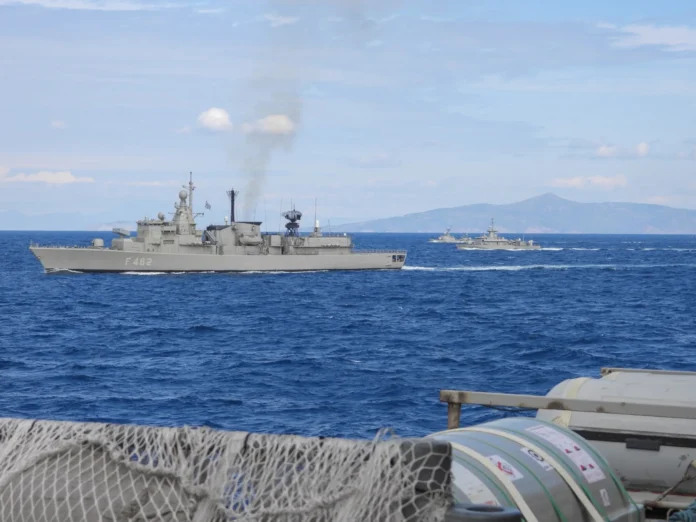
Hellenic Navy frigate HS Adrias (F462) conducts naval exercises in the Aegean or Eastern Mediterranean, accompanied by Roussen-class fast attack craft armed with Exocet missiles PHOTO: HELLENIC NAVY

Key points from Panos Xenokostas’ speech at the Delphi Economic Forum:

  • “Proposal by Panos Xenokostas to the Skaramangas Shipyards for the creation of a unified defense shipbuilding entity to support the Hellenic Navy”
  • “We caused economic bleeding in Turkey. Our goal… is for this bleeding to increase”
  • “The footprint on the national GDP reaches 1 billion euros”
  • “National Ship, with design, construction and support from the Greek Shipyards”
  • “Excellent relations with Prokopiou, Varvitsiotis”
  • “Unpleasant experiences of the past must not be repeated”
  • “We invested over 130 million euros. 2,000 jobs”
  • “With the commercial war currently underway, we must focus on strengthening the domestic defense industry”
Panos Xenokostas: "National warship, with design, construction and support from the Greek Shipyards"
PHOTO: ONEX

The President and CEO of ONEX, Panos Xenokostas, and President of the Hellenic Shipyards Association, participated in the panel “Defence Strategy and Security Challenges in Greece”, within the framework of the proceedings of the Delphi Economic Forum, on Saturday, April 12, 2025.

Mr. Xenokostas had the opportunity to present his views on the environment being shaped in Greece and internationally, in terms of the challenges accompanying the Defense and Security sector, armament programs, the domestic defense industry and the Greek companies that are claiming a leading role in international competition, the new defense priorities of the European Union and more broadly of the West, and what must be done by the State so that the footprint of the national defense industry is stronger.

At the conclusion of his intervention, Mr. Xenokostas also publicly submitted a surprise proposal. Categorically denying related rumors and publications, he clarified that relations with the Skaramangas Shipyards, Mr. Prokopiou and Mr. Varvitsiotis, are excellent.

“I listen to their concerns. The leaderships of the Shipyards are not in conflict. And I propose that a new national entity be created, with the Skaramangas and ONEX Shipyards appearing as a single interlocutor of the Hellenic Navy.”

According to the President and CEO of ONEX, we must begin to speak of a “Greek ship,” a “national warship”, with design, construction and support from the Greek Shipyards, which will substantially strengthen the overall domestic industrial ecosystem, which in turn will be able to meet foreign needs as well.

“We need companies that can produce complete products. We made investments for corvettes, but the Hellenic Navy did not proceed,” he stressed.

The President of ONEX described the long journey the company had to go through from 2018–2019, when it took over the Syros and Elefsis Shipyards, which were in a state of dissolution, with large debts, unpaid workers, without infrastructure and without any real footprint.

“It took great effort to reverse that image. And to overcome the paradox that Greece is the leading shipping power in the world, without any operational Shipyard. To date, we have invested more than 130 million euros in the Shipyards, creating 2,000 direct and indirect jobs. And repaying the debts owed to the workers,” was the characteristic remark of the head of ONEX and the Hellenic Shipyards Association.

Describing the footprint of ONEX in the Greek shipbuilding industry for 2024, Mr. Xenokostas stated that:
80.1% of the total capacity, within Greek territory, of the ships repaired inside the docks was executed.
Ships with a total capacity of 2,755,954 GT out of 3,438,812 GT were serviced in all Greek shipyards, a numerical figure that represents 51.2% of the total number of ships that were serviced in all the shipyards of the country.
ONEX serviced 126 out of 246 ships (51.2%) in dry docks, proving its significant impact on the local economy and shipping.

Panos Xenokostas expressed pride in the results of the great work done in recent years, with more than 200 ships being serviced by the two Shipyards, Syros and Elefsis, annually.

“Investments are moving forward. The footprint is growing, and the country’s positioning on the international level is changing. The footprint on the national GDP now reaches 1 billion euros,” he emphasized.

The head of ONEX defined the strategic goal for the next day as the commitment to shipbuilding, including defense ships on behalf of the Hellenic Navy, expressing the hope that unpleasant experiences of the past will not be repeated, with the Navy being both customer and supplier, a dysfunction that had a heavy cost for the national economy and the Greek taxpayer.

“We are committed to continue on the path we started. We are proud of the results of our investment. We did our duty for our homeland,” commented Panos Xenokostas.

His reference to the economic blow dealt to the Turkish defense industry by the development momentum of the Greek Shipyards of Syros and Elefsis made an impression.

“The market we are serving today, we essentially took it from Turkey. We caused them economic bleeding. And I hope this bleeding will increase,” Panos Xenokostas emphasized meaningfully.

Regarding the new reality being shaped at the international level, with the tariff policy from the Trump administration, Mr. Xenokostas made the following observation:

“With the commercial war that is currently underway, each country and the Western world as a whole will be oriented towards producing national products. That is why we must focus on strengthening the domestic defense industry.”

ONEX – PRESS RELEASE

India tests indigenous ‘Gaurav’ glide bomb with precision strike at nearly 100 km range

0
India tests indigenous ‘Gaurav’ glide bomb with precision strike at nearly 100 km range
Release Trials of Long-Range Glide Bomb (LRGB) ‘Gaurav’ between April 08-10, 2025 from the Su-30 MKI aircraft PHOTO: INDIA DRDO

India has successfully tested a new long-range glide bomb, “Gaurav“, advancing its homegrown military strike capabilities and edging closer to inducting the weapon into frontline service.

The Defence Research and Development Organisation (DRDO) said trials of the 1,000-kg class bomb — named ‘Gaurav’ — were conducted April 8–10 from a Su-30 MKI fighter jet. The weapon hit its designated land-based island target with near 100-kilometer range and high accuracy, meeting all mission parameters.

The weapon was tested in multiple warhead configurations and integrated onto various stations of the aircraft, according to DRDO officials. The trials mark a key milestone in the bomb’s path toward induction into the Indian Air Force.

India tests indigenous ‘Gaurav’ glide bomb with precision strike at nearly 100 km range
PHOTO: INDIA DRDO Release Trials of Long-Range Glide Bomb (LRGB) ‘Gaurav’ between April 08-10, 2025 from the Su-30 MKI aircraft

“Gaurav” was jointly developed by DRDO’s Research Centre Imarat, Armament Research and Development Establishment, and the Integrated Test Range in Chandipur. The trials were observed and reviewed by senior officials from both DRDO and the Indian Air Force.

The project has been supported by a coalition of private and public sector players, including Adani Defence Systems & Technologies, Bharat Forge, and several medium and small enterprises. Certification and quality oversight were handled by the Centre for Military Airworthiness & Certification and the Directorate General of Aeronautical Quality Assurance.

India’s Defense Minister Rajnath Singh called the trials a success and said the new capability would “further enhance the capabilities of the Armed Forces to a great extent.”

DRDO Chairman Dr. Samir V. Kamat also congratulated the teams, calling it a step forward in the country’s efforts to strengthen its precision strike arsenal.

The successful test signals India’s growing ability to produce high-end military hardware domestically, part of a broader push for defense self-reliance. Once inducted, “Gaurav” would give the Indian Air Force a standoff weapon capable of hitting high-value targets from a safe distance — a strategic edge in any future conflict.

Greece condemns Turkish attacks on Syria’s Tishreen Dam at UN

0
Greece condemns Turkish attacks on Syria's Tishreen Dam at UN
PHOTO By The official account of the Permanent Mission of Greece to the United Nations @GRUN_NY

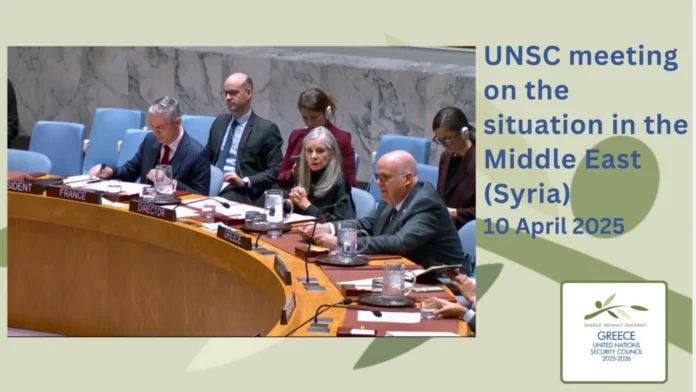
Greece denounces Turkey’s attacks on Syria’s Tishreen Dam at the UN, stressing the danger to civilians and regional stability.In a statement delivered at the United Nations, Greece condemned recent attacks by Turkey and its affiliated mercenaries (SNA) in northern Syria, with a particular focus on the Tishreen Dam, a facility of critical importance to the region’s civilian population.

We condemn the attacks in northern and northeastern Syria, especially on the Tishreen Dam. The dam is vital for the area’s water supply,” stated Ambassador Evangelos Sekeris, Greece’s Permanent Representative to the UN.

The condemnation gains added weight as it addresses direct military aggression with grave consequences for civilians and essential infrastructure. The Tishreen Dam is one of Syria’s key sources of water and electricity, and any targeting of such a facility poses serious humanitarian and environmental risks.

Ambassador Sekeris further emphasized that “Syria’s sovereignty and territorial integrity must be respected by all parties,” reiterating Athens’ firm support for a unified, peaceful, and secure Syria.

Addressing the recent atrocities in coastal regions, Sekeris highlighted the urgent need for an inclusive political transition and the building of transitional justice institutions as foundational steps toward sustainable peace.

He also reiterated Greece’s ongoing solidarity with the Syrian people, citing the country’s active role in the 9th Brussels Conference on Supporting the Future of Syria, as a concrete gesture of support.

Greece’s unequivocal denunciation serves as a clear message against Turkey’s unilateral military actions, which threaten regional stability and exacerbate the suffering of Syria’s multiethnic population. Sekeris’ intervention brings the issue to the international stage, reinforcing calls for adherence to international law and the protection of critical infrastructure.