
Analysis
Analysis: Aster 30 B1NT, Europe’s new anti-ballistic missile, and what it means for Greece’s FDI frigates
Analysis: The Aster 30 B1NT is the new version of Europe’s Aster 30 missile, designed to intercept ballistic missiles with a range of up to 1,500 km and the only European missile with a Ka-band seeker. What the 2024 and 2025 qualification firings showed, where it will serve first, and where Greece’s FDI HN frigates stand.

The Aster 30 B1NT (Block 1 New Technology) is the new version of Europe’s Aster 30 air-defence missile. It is designed to intercept ballistic missiles with a range of up to 1,500 kilometres, roughly twice what today’s Aster 30 B1 is built to counter. It is the only European missile with a Ka-band seeker. It completed two qualification firings, in 2024 and 2025, and is the interceptor of the new land-based SAMP/T NG system. For Greece the question concerns the FDI HN frigates, which already carry the Aster 30 B1 in their Sylver A50 launchers.
The Aster 30 B1NT: the key facts

- What it is: an evolution of the Aster 30 B1 with a new Ka-band seeker and new software, for medium-range ballistic missiles (up to 1,500 km).
- Who makes it: the Eurosam consortium (MBDA and Thales). The programme is managed by the European organisation OCCAR on behalf of France and Italy.
- Where it enters service first: the land-based SAMP/T NG of France and Italy. It will later go on the Horizon destroyers after their upgrade and, in the future, on the British Type 45.
- Tests: firings on October 8, 2024 and on July 30, 2025 (announced July 31), at the DGA range at Biscarrosse.
- Greece: the FDI HN frigates have a contract for the Aster 30 B1 (2022). The B1NT is for now under consideration by the Hellenic Navy General Staff (GEN).
B1 and B1NT: what is different
The Aster 30 B1 entered service as the anti-ballistic version of the family. It uses a Ku-band seeker and, according to MBDA, can engage tactical ballistic missiles of the 600 km class. The B1NT keeps the same body and the same booster. What changes is the part that matters against a faster target.
In summary, the two versions compare as follows:
- Seeker: B1 uses Ku-band; B1NT uses Ka-band (the only one in Europe).
- Ballistic targets: B1 handles the class up to 600 km; B1NT up to 1,500 km (medium range).
- Range against aerodynamic targets: B1 more than 120 km; B1NT about 150 km, at altitudes up to 25 km (French Ministry of the Armed Forces).
- Speed: up to Mach 4.5 for both.
- Target discrimination: B1NT adds new algorithms against decoys.
- Users: B1 serves with SAMP/T, PAAMS, the FDI HN and others; B1NT is planned for SAMP/T NG and Horizon MLU.
The Ka band has a narrower detection cone than Ku, but far better resolution. That matters when the target is a ballistic-missile warhead falling at many times the speed of sound, often together with debris or decoys. The French Ministry of the Armed Forces says the missile is also designed against hypersonic weapons (above Mach 5), with an on-board radar that analyses the target in real time.
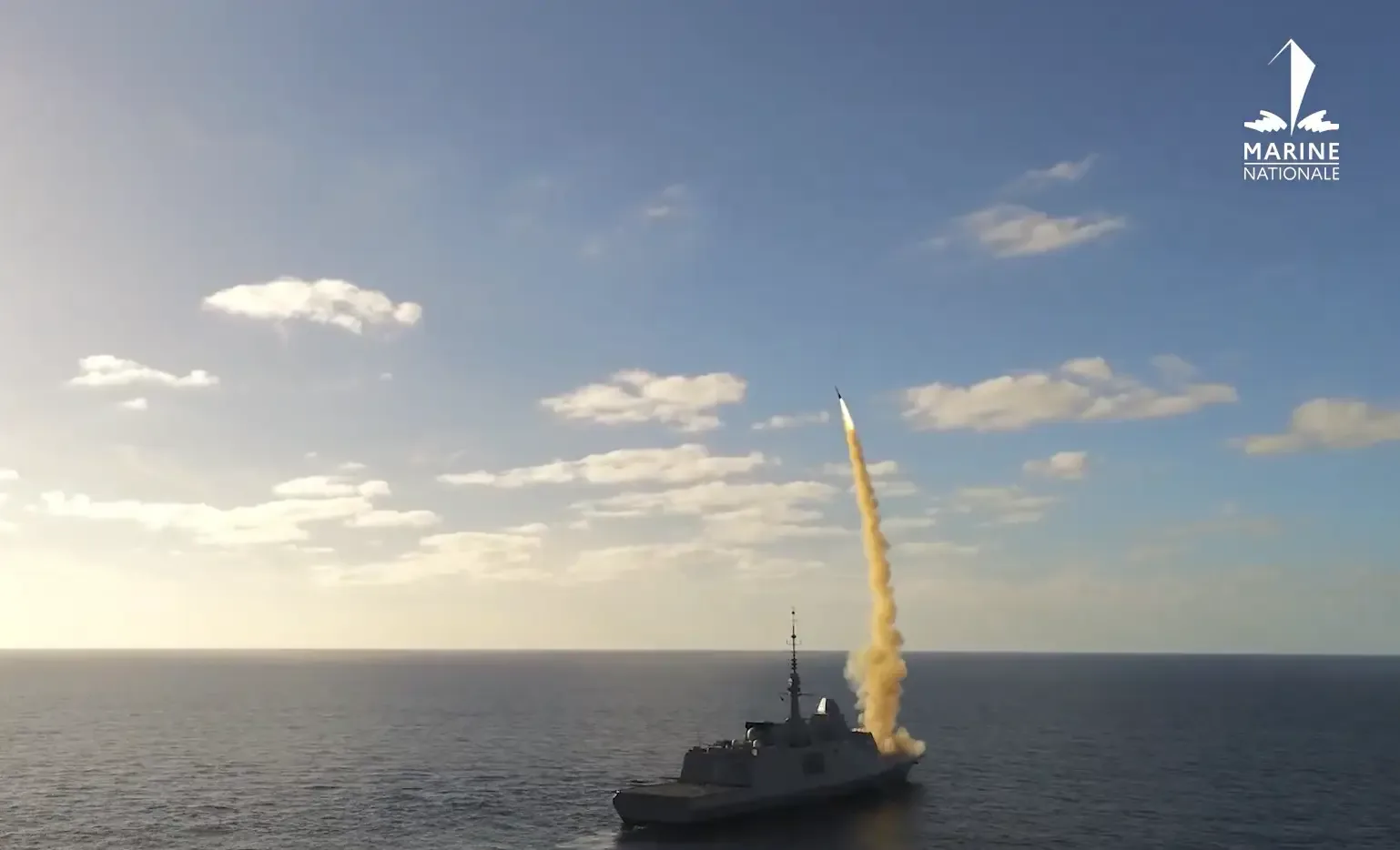
The 2024–2025 qualification firings
October 8, 2024 (campaign “Mercure”): the first development firing of the B1NT, from the DGA Essais de missiles range at Biscarrosse. The scenario involved several targets: one represented an enemy fighter and the other a friendly aircraft that had to be protected. The missile scored a direct hit on the threat. According to Eurosam, the firing showed the improvement in target discrimination provided by the new Ka-band seeker (Eurosam press release). The new MLT NG launcher and the fire control unit of the SAMP/T NG were also tested.
Late July 2025: a second firing, on July 30, validated the missile’s long-range capability, around 150 km (Eurosam press release of July 31, 2025). Representatives of France, Italy and the United Kingdom attended. The first deliveries go to the land-based SAMP/T NG of the French Air and Space Force and the Italian armed forces. In April 2026 Denmark signed for the SAMP/T NG, with deliveries from 2028. It is the first new European customer for the system.
From land to sea
The French ministry said from the first firing that, besides the SAMP/T NG, the B1NT would equip the naval air-defence platforms of the two countries. The first confirmed naval application is the Horizon destroyers (Forbin and Chevalier Paul in France, Andrea Doria and Caio Duilio in Italy), which will receive the B1NT in their mid-life upgrade. The upgrade contract was signed in 2023. According to Euro-SD, installation starts on the first Italian ship from mid-2026 and on the first French ship from mid-2028 (Euro-SD). In the future the B1NT is also planned for the British Type 45 destroyers.
For the French FDI there is no official date for introducing the B1NT. In November 2025 the Defence Committee of the French National Assembly confirmed that the 4th and 5th French FDI will be built with 32 Aster cells instead of 16. The first three will be upgraded later. France is, in other words, adopting the layout that Greece had already requested. French reports in 2026 say the FDI’s cells can accept the Aster 30 B1 and, in the future, the B1NT.
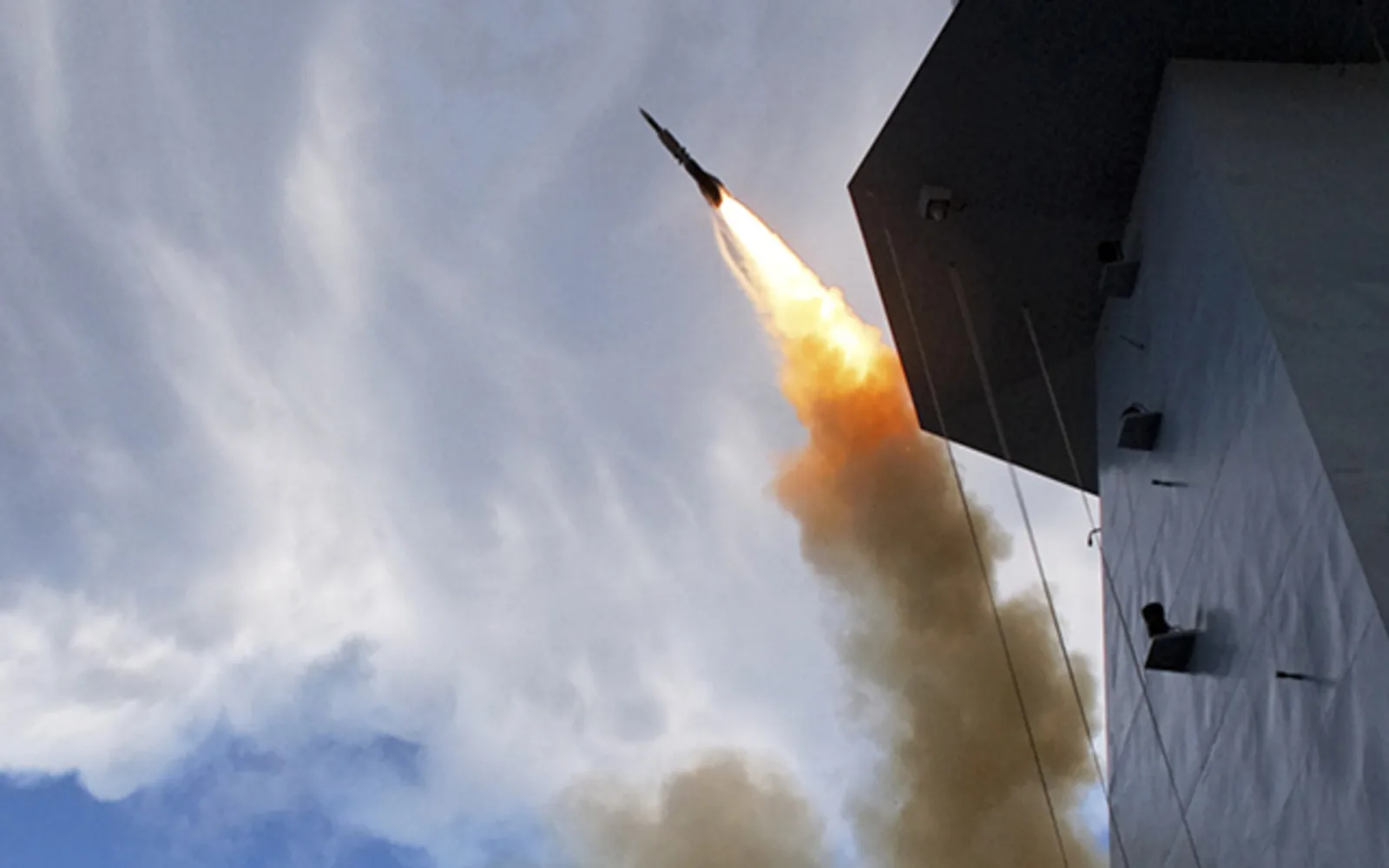
What applies to the Greek FDI
On March 24, 2022 the Ministry of National Defence signed a contract with MBDA for the weapons of the FDI HN frigates. It included the Aster 30 B1 anti-aircraft missile and the Exocet MM40 Block 3C anti-ship missile, for three frigates with an option for a fourth. The choice of the B1 gave the Greek FDI an anti-ballistic role from the start. Each Greek FDI has 32 Sylver A50 cells, and the Kimon loaded her first Aster 30 missiles at Brest in January 2026.
On the B1NT, the position is as follows:
- Confirmed: the B1NT has the same size and the same booster as the B1, so it fits the same canisters and Sylver cells. The radar of the Greek frigates is Thales’s Sea Fire (see how the Sea Fire radar works), made by the same company that makes the B1NT’s seeker.
- Under consideration: according to military sources, the acquisition of a number of Aster 30 B1NT for the FDI HN is being examined for the coming years.
- Open: full use of the B1NT also requires integration into the ship’s combat system and software.
The significance is practical. The B1 covers tactical ballistic missiles of the 600 km class. The B1NT would give the FDI a capability against medium-range ballistic missiles as well, such as the longer versions of the Turkish Tayfun announced by Ankara. Greece’s experience of the anti-ballistic dimension of air defence has come from the Patriot batteries of ELDYSA, not from the Navy. But it shows that anti-ballistic defence has unfortunately become a new “daily need”.

Frequently asked questions
What does B1NT mean?
Block 1 New Technology. It is the new version of the Aster 30 B1, with a Ka-band seeker and new software, for medium-range ballistic missiles.
How does it differ from the Aster 30 B1?
The B1 engages ballistic missiles of up to the 600 km class, with a Ku-band seeker. The B1NT reaches ballistic missiles of up to 1,500 km, with a Ka-band seeker and better target discrimination, in the same body and with the same booster.
Do the Greek FDI have the Aster 30 B1NT?
No. They have a contract for the Aster 30 B1 from 2022.
When does the B1NT enter service?
First on the land-based SAMP/T NG of France and Italy, after the 2024 and 2025 qualification firings. At sea it will go first on the Horizon destroyers, with the upgrade that starts on the first Italian ship in 2026 and the first French ship in 2028.
Can the B1NT go into the same cells as the B1?
It has the same size as the B1, so it fits the Sylver cells. It does, however, need integration into the software and combat system of each ship.