Economy & Energy
Ukraine’s prime minister claims 2,147 Russian attacks on the energy sector since 16 July, with no day without strikes
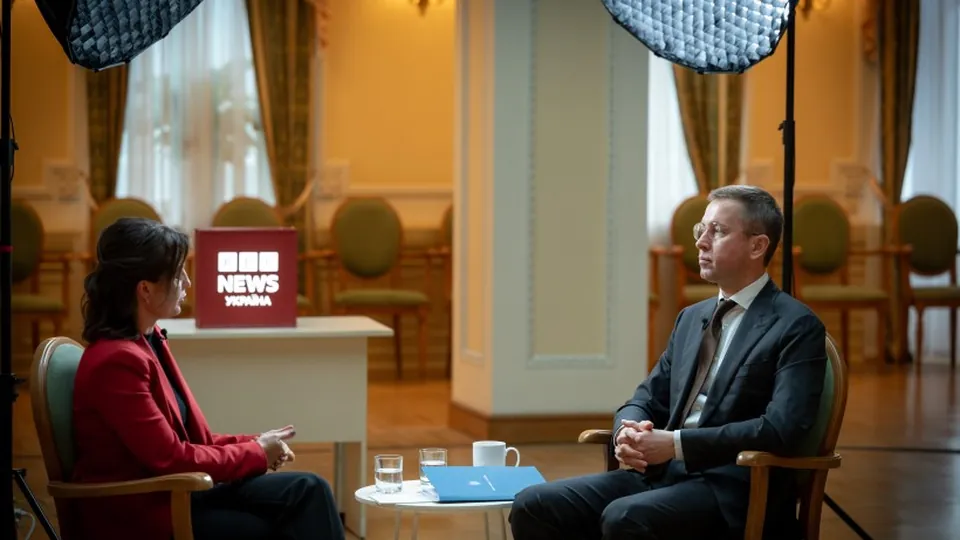
Prime Minister Sergii Koretskyi told BBC Ukraine that Russia has struck the energy sector 2,147 times since the renewed government took office on 16 July, and put business losses at $7.7 billion.

Ukrainian Prime Minister Sergii Koretskyi says Russia has attacked the country’s energy sector 2,147 times since the renewed government took office on 16 July, and that not a single day has passed without a strike. The figures come from an interview he gave to BBC Ukraine, which the Cabinet of Ministers published on 19 October. They are claims by the Ukrainian government and have not been checked independently.
Koretskyi said the number of attacks is “many times” higher than last year and that the target list has widened from electricity and heating to water supply. “The goal is obvious: to exhaust people,” he said.
What the government says it is doing
According to the Cabinet’s account, Kyiv is concentrating on protecting what can be protected and on expanding distributed generation, so that the system depends less on a few large plants. Together with partners it is building reserves of spare transformers and other equipment, so that damaged assets can be replaced quickly. Backup power is being strengthened at critical facilities, including water pumping stations. Citizens are urged to use state assistance programmes and, where they can, to install their own backup power.
The interview comes after a week of heavy strikes. Earlier Geopolitiki reports covered Russia fires 39 ballistic missiles and 128 drones at Ukrainian energy: 600,000 without power, dead in Kharkiv and Lutsk and, on the latest night of attacks, Ukraine: 16 ballistic missiles and over 200 drones in one night – 550,000 households without power, “again no warning from the partners”.
Economic cost and shipping
The prime minister put direct losses to businesses from Russian strikes this year at $7.7 billion, a figure attributed to him alone. He said more than one million square metres of warehouses, production sites and logistics space have been destroyed or damaged. The government is handing over state-owned premises so that companies can relocate and spread out their operations, and the 2026 state budget provides UAH 18 billion to cover interest under the “Affordable Loans at 5-7-9%” programme.
Koretskyi also said ships calling at Ukrainian ports cannot obtain international insurance because the risks are too high. The state has agreed to cover part of the losses, he said, noting that the agricultural sector and hundreds of thousands of workers depend on the sea route.
Budget and mobilisation
The prime minister said state revenues cover only about one third of Ukraine’s needs for defence, social payments and health care, with partner support covering the other two thirds. He also said changes to the system of military deferments would be finalised this week to make it fairer and to address abuses. According to the Cabinet, the changes will not affect truly critical enterprises; only cases in which critical status is used as a formality are being reviewed.
Koretskyi thanked members of the Verkhovna Rada for passing what he called difficult but critical bills, and said all decisions within the Cabinet’s remit had been adopted by 15 October.
Related reading: Sweden adds SEK 522 million in civilian aid for Ukraine ahead of winter, with most going to energy.
Source: Cabinet of Ministers of Ukraine.