Middle East & North Africa
CENTCOM calls Iran’s IMO complaint “false”, as the USS George H.W. Bush returns to the Arabian Sea
US Central Command rejected as “false” Iran’s complaint to the International Maritime Organization that US forces threaten Iranian seafarers over VHF channel 16. It said the only state attacking civilian mariners is Iran. The carrier USS George H.W. Bush is back in the Arabian Sea.

US Central Command (CENTCOM) dismissed as “false” Iran’s complaint to the International Maritime Organization (IMO) that US forces threaten and intimidate Iranian seafarers over the radio. In a post on X on Wednesday, October 14, in “claim – fact” format, CENTCOM wrote that Iran’s ambassador to the IMO had alleged that the US military uses “threatening, abusive and provocative language” and causes “serious anxiety and psychological pressure on the crews of civilian vessels”.
“This is false,” it said. “The highly successful US blockade of Iran has been in effect for months and is communicated professionally. The only state attacking civilian mariners transiting the region’s waters is Iran.” It added: “Despite these unjustified attacks, commercial traffic continues to transit the Strait of Hormuz with coordinated protection from US forces and regional partners.”
What Tehran alleges
The Iranian letter was submitted to the IMO late last week and concerns VHF channel 16, the international distress and safety frequency at sea. As relayed by The Maritime Executive, Tehran writes that “Iranian seafarers were subjected, in Persian, to threatening, abusive and provocative language and, in some cases, urged to abandon their vessels”.
It also argues that “neither armed conflict nor a naval blockade can justify turning an internationally protected maritime safety channel into a tool of military intimidation”. Iran cites a violation of the SOLAS convention and asked IMO bodies to take “appropriate measures” and to circulate the letter to all member states.
The US reinstated the blockade of all ships entering or leaving Iranian ports on July 14. CENTCOM had announced that by October 10 four ships had been disabled and 135 forced to turn back, and that 10 tankers linked to the Revolutionary Guards had been destroyed, as covered in our report on the Ocean Molica. The IMO records 106 incidents and 24 deaths in shipping since the war began on February 28. The Revolutionary Guards, for their part, threaten ships they consider “hostile”, as covered in our report on the three tankers hit by mines.
The George H.W. Bush is back in the Arabian Sea
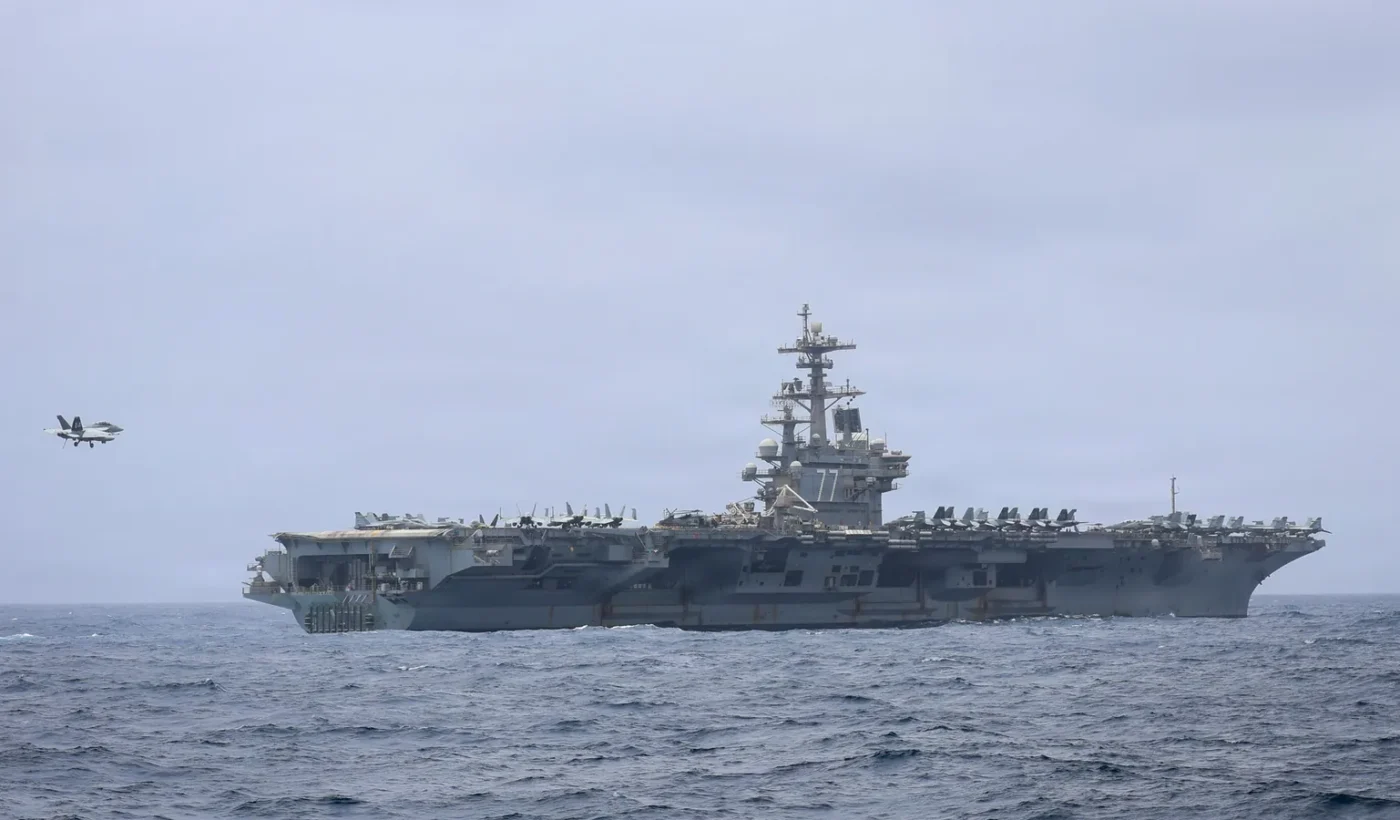
On Thursday, October 15, CENTCOM announced that the aircraft carrier USS George H.W. Bush (CVN 77) is “patrolling the Arabian Sea following a recent visit to Thailand”. “The carrier’s 5,000 crew members and embarked personnel continue to support CENTCOM operations in the Middle East as part of a scheduled deployment,” the statement says.
The carrier had arrived in Phuket on October 4 with the destroyer USS Delbert D. Black, on its first port call since leaving Norfolk in March. “The visit gives our sailors a well-earned chance to rest,” its commanding officer, Capt. Justin Easler, said at the time. Its departure from the Arabian Sea had not been announced, and the date of its return is not specified. The George H.W. Bush was ordered to deploy to the region in the spring and took part in Operation Epic Fury and in the blockade of Hormuz.