Europe
Strait of Hormuz: Britain and France lead planning of the multinational mission, with autonomous mine-hunting already in the region
A UK defence minister told the House of Commons on October 23 that London and Paris are leading planning for the multinational mission to secure commercial shipping in the Strait of Hormuz, and that the Royal Navy already has autonomous mine-hunting capability in the area.

The United Kingdom is leading, together with France, the planning of the Multinational Military Mission that will support the safe passage of merchant ships through the Strait of Hormuz, and the Royal Navy already has an autonomous mine-countermeasures capability in the region. This was the answer given in writing to the House of Commons on October 23 by Armed Forces Minister Louise Sandher-Jones, in reply to a question from Conservative MP for South Shropshire Stuart Anderson.
Anderson had asked on October 13 how the country contributes to multinational maritime security forces in the Red Sea and the Gulf. The minister replied that London supports these efforts with international partners, among them the US-led Combined Maritime Forces (CMF). On the Hormuz mission she noted that the Navy’s modernisation programme “has delivered an autonomous mine countermeasures capability, which is operating in the region and continues to innovate at pace”.
The equipment
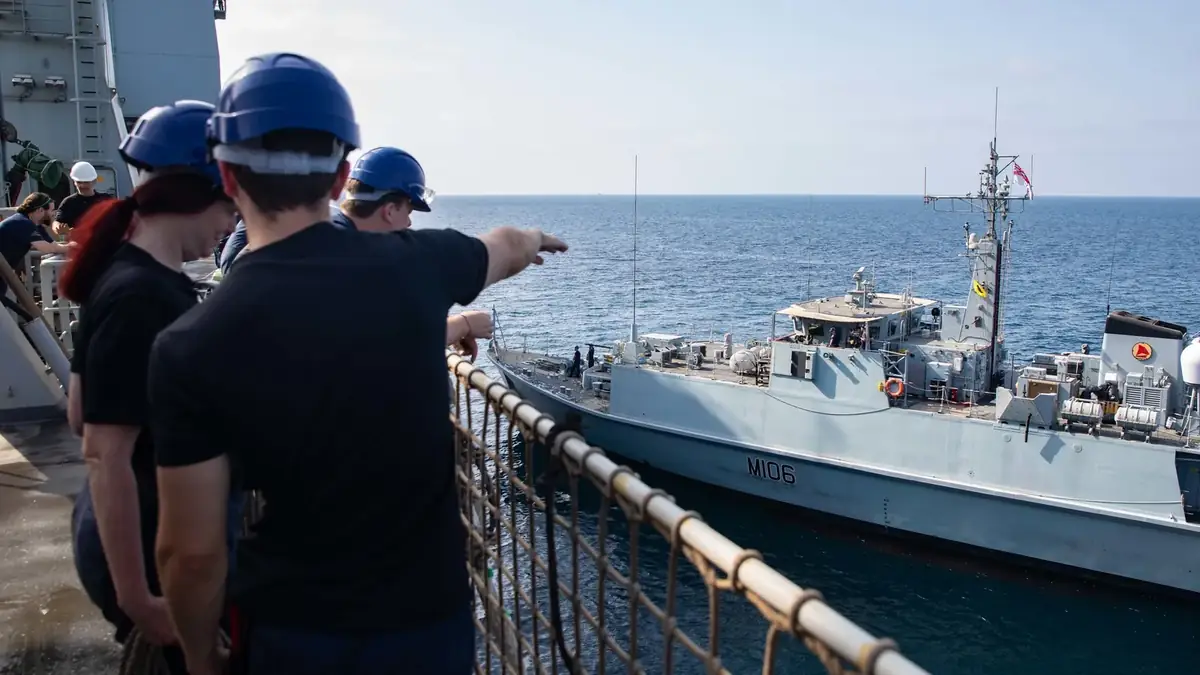
The Ministry of Defence has given Parliament further details on these assets. In an answer of September 14, Defence Minister Luke Pollard said the Defence Investment Plan commits £1.1 billion to the next phase of the Mine Hunting Capability (MHC) programme of autonomous mine hunting, procured jointly with France. Parts of it have already been deployed to support civilian shipping, reassure merchant-ship operators and carry out mine-clearance operations within the mission. An earlier answer in July describes the programme as part of the “hybrid navy”, with three offshore support ships and equipment equivalent to six mission systems, able to cover the whole process from detecting a mine to neutralising it.
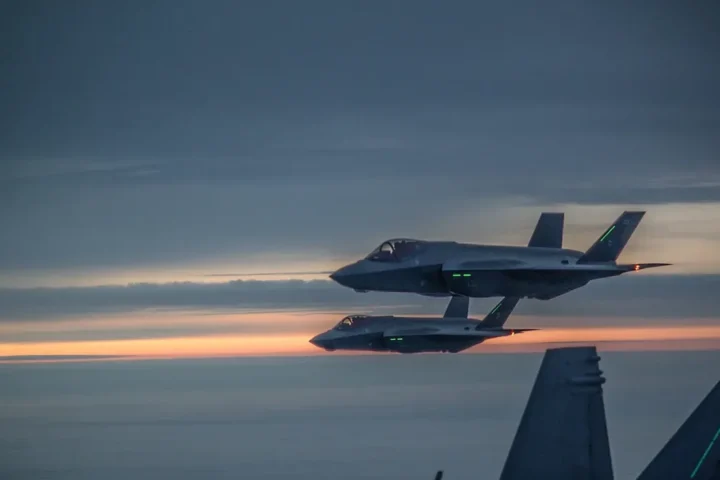
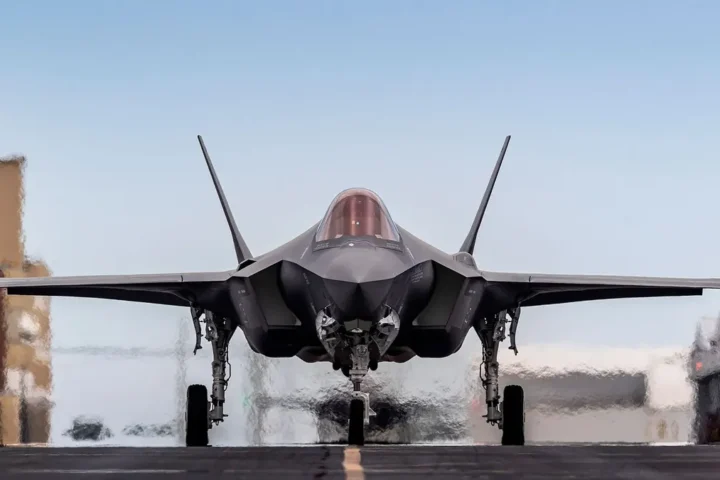
The British contribution to the mission was announced on May 12, at a videoconference of defence ministers with representation from more than 40 countries. It includes autonomous mine detection and disposal equipment, the modular “Beehive” system that deploys fast autonomous Kraken craft, Typhoon fighters for air patrols, mine-clearance specialists and the air-defence destroyer HMS Dragon, with new funding of £115 million for mine-hunting drones and counter-drone systems. The amphibious ship of the Royal Fleet Auxiliary, RFA Lyme Bay, was being upgraded so it can act as a “mother ship” for the autonomous assets. London calls the mission “purely defensive”, aimed at restoring commercial shipping’s confidence in a route through which one-fifth of the world’s oil passes.
The political side
The political side runs through the Foreign Office. In a written answer on October 16, the government recalled that the UN Convention on the Law of the Sea makes unilateral or discriminatory transit fees unlawful in straits used for international navigation, warning that continued disruption of traffic in Hormuz harms energy markets and supply chains. London, Foreign Office Minister Stephen Doughty added in another answer, is pressing Iran through partners to reopen the Strait “fully, safely and lawfully”. Tehran, for its part, keeps a blacklist of ships for passage.
On October 23, in the joint statement on the Omani Sultan’s state visit to London, the two countries affirmed Oman’s sovereignty over the Omani waters of the Strait and the importance of freedom of navigation in accordance with international law. The British presence in the region was also discussed in London, where Gulf defence chiefs met in the Dragon Group; see our report on the UK-Oman statement.