Air Force
Switzerland’s F-35A: government admits weaknesses in the “fixed price” negotiation and weighs changes to arms procurement
The Federal Council accepts six of the seven recommendations of the National Council’s oversight committee on the F-35A “fixed price” affair in full and one in part, and concedes that armasuisse’s legal service was barely involved in the negotiation.

The Swiss government admits that the legal service of armasuisse was barely involved in the negotiation for Switzerland’s F-35A jets. The admission is contained in the Federal Council’s position on the “Fixpreis F-35A” report of the National Council’s Control Committee (GPK-N), which the government approved at its October 21 meeting and made public on Friday, October 23. Of the committee’s seven recommendations, six are accepted in full and one in part.
In its answer to recommendation 4, on the legal service of armasuisse, the federal procurement agency, the government writes that the legal service took part “very little” in the F-35A purchase, because staff and certain specialist skills were then lacking for so large and complex a project. For that reason the Department of Defence (VBS) chose to involve an outside law firm, but its cooperation with armasuisse’s lawyers is described as “inadequate”. The legal service has since been reinforced and acts as the centre of expertise for arms procurement. Assignments to outside legal advisers now go exclusively through it, and the VBS internal audit checks them on a sample basis.
The starting point is the Federal Council’s selection of the American fighter on June 30, 2021. armasuisse then negotiated with the US government a fixed-price clause, recorded in the so-called “Note 55” of the Letter of Offer and Acceptance (LOA). In August 2024 the F-35 Joint Program Office hinted, without giving figures, that costs might rise. In late February 2025 the Defense Security Cooperation Agency (DSCA) informed Bern in writing that, in the American view, the “fixed price” had been a misunderstanding, and in mid-June 2025 the US confirmed this position to VBS representatives and named a specific amount for the first time. On June 27, 2025 the GPK-N decided to examine whether the Federal Council’s handling of the matter showed shortcomings after the fact. Its report is dated September 8, 2026.
What changes in large procurements
Recommendation 6, accepted only in part, concerns major negotiations. For projects of exceptional financial or political weight, especially where fundamental security or foreign-policy interests are at stake, the VBS will consider whether the negotiating mandate should be approved by the department’s leadership or by the Federal Council itself. The great majority of the roughly 4,000 procurements armasuisse handles each year will remain its responsibility. For high-risk projects the VBS will consider “peer reviews” at selected stages, by experienced armasuisse staff. In addition, under the KPM VBS project, an arms-policy analysis will be carried out already at the project study stage, before the tender is issued, and from mid-October 2026 the way this policy assessment is made is being set with the relevant departments. The government rejects only a second legal review of the negotiation result, which it considers to add no value.
It also accepts that risk surcharges in arms-project budgets will be calculated by quantitatively assessing each individual project risk, with first steps already taken in the risk assessment of the projects in the 2026 Armed Forces Dispatch (Armeebotschaft). For documentation, everything related to the matter and exchanged through Threema or other services must be recorded in good time, by service memo, in the case-management system (GEVER). The government considers sanctions against former employees who did not file documents in the archive inappropriate: there is no longer an employment basis and criminal prosecution would be disproportionate.
On one point the government disagrees directly with the committee. It regrets the impression that only the project head had read the contracts in full and says this does not reflect the facts: they were also read in full by the then Chief of Armaments (Rüstungschef) and by staff of armasuisse’s commercial division, whom the committee had not asked. The purchase involves nine LOAs in all, the main one being “SZ-D-SAA”. For transparency, the VBS let the Security Policy Committees of both chambers see the contracts on August 11 and told them the evaluation criteria on October 1, 2026.
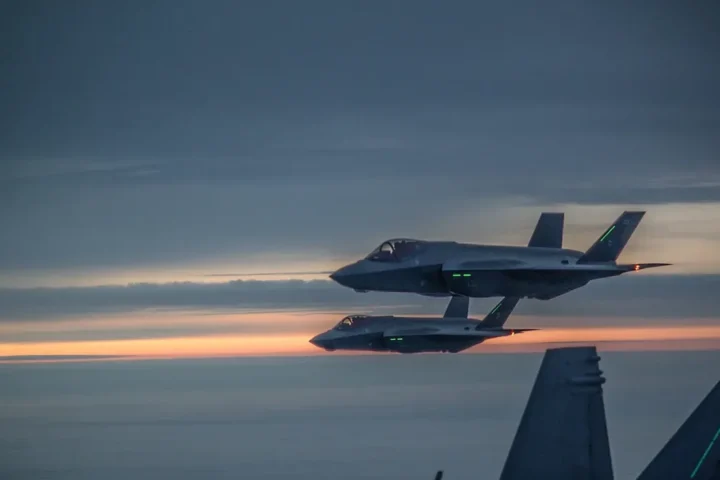
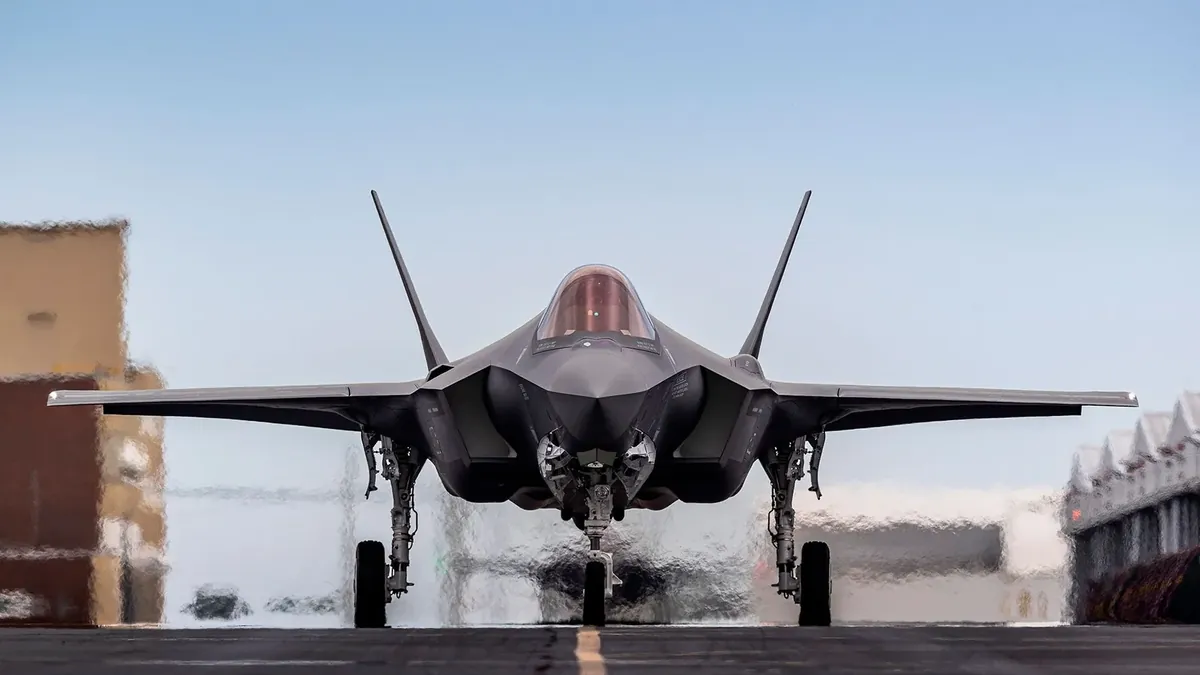
The programme is, meanwhile, moving ahead. On September 21 a delegation led by the chief of the army, Lt. Gen. Benedikt Roos, signed the forward bulkhead of the fuselage of the first Swiss F-35A at Lockheed Martin’s facility in Fort Worth. From mid-2027 the first eight aircraft will be stationed at Ebbing Air National Guard Base in Arkansas for the training of Swiss pilots and technicians, while Payerne will receive its own from mid-2028. Bern’s answer comes days after the Pentagon’s framework agreement with Lockheed Martin for 850 US F-35s; elsewhere in Europe Finland has already received its first F-35As, and Greece has launched its own F-35 programme.