Middle East & North Africa
Egypt: the National Defence Council under Sisi pledges “every form of support” to Saudi Arabia
Egypt’s National Defence Council, chaired by President Abdel Fattah el-Sisi, decided to provide “every necessary and possible form of support” to Saudi Arabia, according to the Egyptian presidency; the statement does not specify what form it will take.

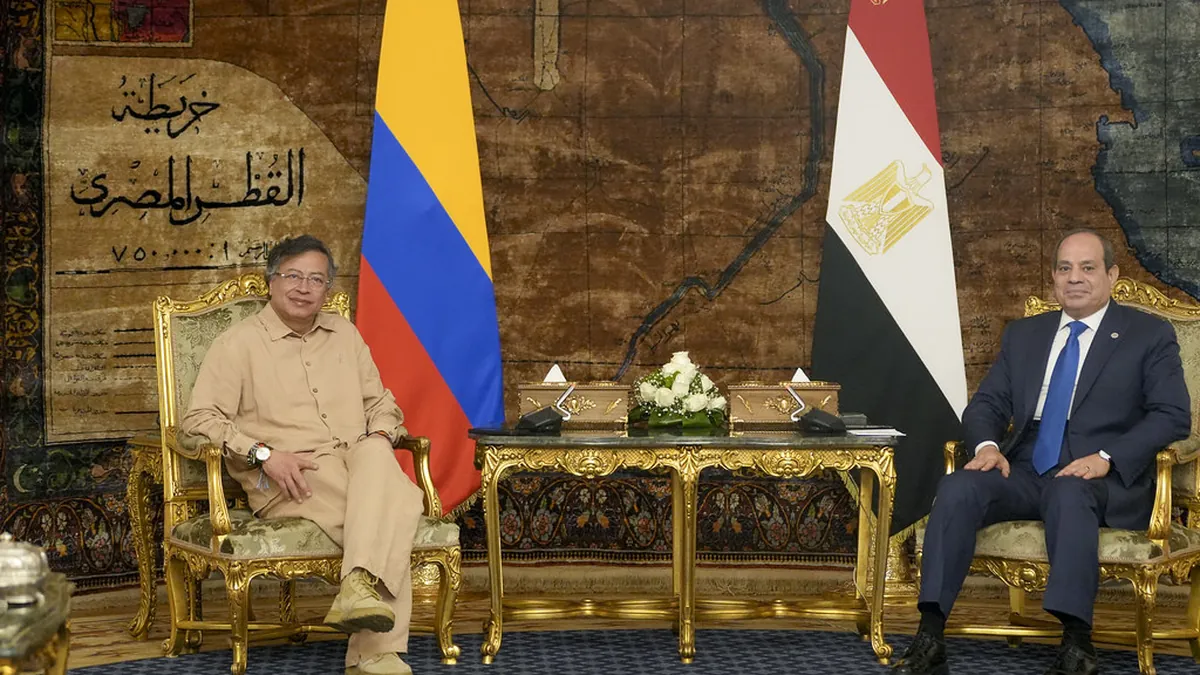
Egypt’s National Defence Council decided on Sunday, October 18 to provide “every necessary and possible form of support” to Saudi Arabia, to defend its security and stability. The meeting, at the Ittihadiya presidential palace in Cairo, was chaired by President Abdel Fattah el-Sisi, according to the statement of the spokesman of the Egyptian presidency.
The council examined the “dangerous” developments in the region, “especially the escalation of unacceptable attacks” against Saudi Arabia, and took three decisions. The first is “full solidarity” with Riyadh, on the grounds that Saudi Arabia’s national security is linked to Egyptian and Arab national security. The second is to provide “every necessary and possible form of support” to the kingdom, to defend its security, resources, territorial integrity and the holy places of Islam. The third is to intensify political and diplomatic efforts, in coordination with regional and international actors, for de-escalation across the region.
No troop deployment announced
The speaker of the House, the prime minister, the commander-in-chief of the armed forces and defence minister, the chief of the general staff, the ministers of interior, finance and foreign affairs, the head of the General Intelligence Service, the service commanders, the head of the Operations Authority and the head of Military Intelligence took part. The statement does not specify the form of support and does not announce a deployment of troops, as Egyptian Streets also notes. Reports that the council approved sending forces are not confirmed by the official text.
The meeting took place one day after Sisi said Egypt is ready to defend Saudi Arabia “if asked” and asked parliament to convene urgently to authorise such a move. The Egyptian parliament began the emergency session on Sunday in the New Administrative Capital. Under Article 152 of the Egyptian constitution, sending forces on combat missions abroad requires consultation with the National Defence Council and approval by two thirds of MPs.
Saudi Arabia is hit almost daily by missiles and drones from Yemen’s Houthis, targeting airports and energy facilities, including the recent attacks on Khamis Mushait. Egypt had kept its distance from the Mecca Agreement promoted by Riyadh.