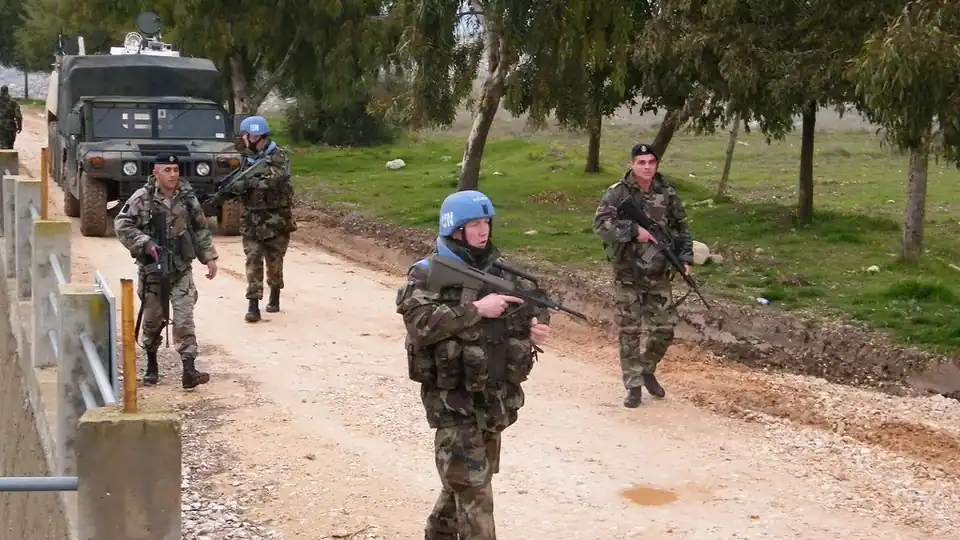
Middle East & North Africa
UNIFIL timeline: from 1978 to the end of the mandate in 2026
The key dates of the UN mission in south Lebanon, from the 1978 Israeli invasion and resolutions 425 and 426 to resolution 1701 and the final mandate that ends on 31 December 2026.

The United Nations Interim Force in Lebanon (UNIFIL) was created by the Security Council on 19 March 1978 and is due to end its mandate on 31 December 2026, with its withdrawal to run through 2027. In between lie an Israeli occupation of the south, a massacre at Qana, the 2000 withdrawal, the 2006 war and the resolution that still defines the mission, 1701.
Key points
- UNIFIL was set up by resolutions 425 and 426 (1978) after Israel invaded Lebanon, and its first troops arrived on 23 March 1978.
- For more than two decades it could not complete its mandate because Israel and its Lebanese auxiliaries held a zone in the south.
- Resolution 1701 (2006) added the tasks of monitoring the cessation of hostilities and helping the Lebanese army deploy in the south.
- Resolution 2790 (2025) set the final extension to 31 December 2026, with drawdown and withdrawal through 2027.
UNIFIL timeline: the main dates
| Date | What happened |
|---|---|
| 19 March 1978 | Security Council resolutions 425 and 426 establish UNIFIL to confirm the Israeli withdrawal, restore international peace and security and help the Lebanese Government restore its authority. |
| 23 March 1978 | The first UNIFIL troops arrive in the area. |
| June 1982 | Israel invades Lebanon again and reaches Beirut; UNIFIL stays behind the Israeli lines with a role limited to protection and humanitarian help. |
| 1985 | Israel withdraws partially but keeps a zone in the south manned by the Israel Defence Forces and the “South Lebanon Army”. |
| 18 April 1996 | Shelling of a UN compound at Qana; more than 120 Lebanese civilians are killed, according to the UN. |
| May to June 2000 | Israeli forces and their auxiliaries leave; on 7 June the UN completes the line later known as the Blue Line; on 16 June the Secretary-General reports the withdrawal as complete. |
| 12 July 2006 | Hizbollah attack across the Blue Line starts a 34-day war. |
| 11 August 2006 | Resolution 1701 calls for a full cessation of hostilities and expands UNIFIL. |
| Resolution 2790 (2025) | Resolution 2790 sets the final mandate extension; the UN says withdrawal then runs through 2027. |
1978: why the Security Council sent UNIFIL
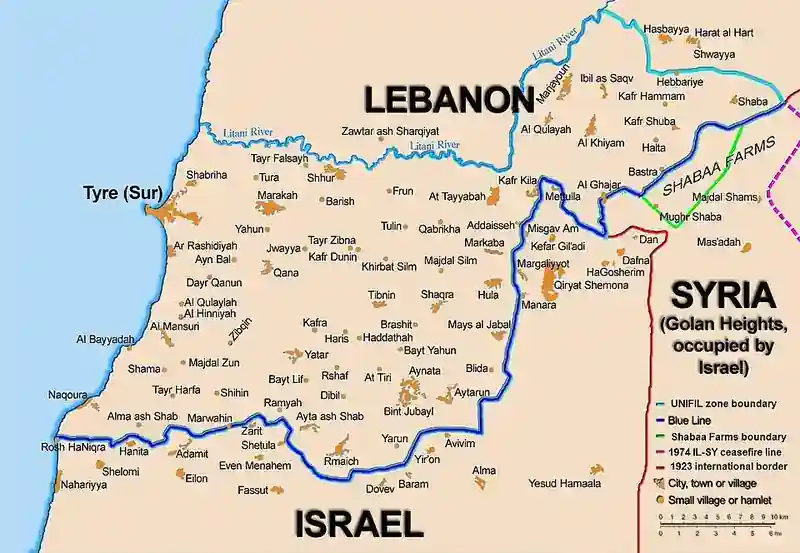
According to the UN’s own UNIFIL background, tension along the Israel-Lebanon border grew in the early 1970s as Palestinian armed groups relocated from Jordan to Lebanon. On 11 March 1978 a commando attack in Israel left many dead and wounded, and the Palestine Liberation Organization claimed responsibility. Israeli forces invaded Lebanon on the night of 14/15 March and within days occupied the whole south except the city of Tyre and its surroundings.
Lebanon protested to the Security Council on 15 March. On 19 March the Council called on Israel to cease its military action and withdraw “forthwith” from all Lebanese territory, and decided to establish UNIFIL. The force had three purposes: to confirm the Israeli withdrawal, to restore international peace and security, and to help the Lebanese Government return its effective authority to the area.
1982 to 2000: a mission that could not finish its job
In June 1982 Israel invaded again. The UN account says UNIFIL “remained behind the Israeli lines” for three years, limited to protecting and helping the local population where it could. After the partial Israeli withdrawal of 1985, Israel kept control of a zone manned by its own forces and by the “South Lebanon Army”. Lebanon demanded that Israel leave, viewing the occupation as illegal and contrary to UN resolutions, while Israel said the zone was a temporary security arrangement.
The cost of that stalemate was visible in April 1996, when more than 120 Lebanese civilians were killed and an estimated 500 wounded by Israeli fire. Most of the casualties came on 18 April, when a UN compound at Qana was shelled; four UN soldiers were also wounded. The Secretary-General’s Military Adviser investigated and his report went to the Security Council on 7 May 1996.
2000: the Israeli withdrawal and the Blue Line
On 17 April 2000 Israel formally notified the Secretary-General that it would withdraw by July. The pullout came faster than expected: from 16 May Israeli and auxiliary forces began vacating positions and by 25 May Israel said it had redeployed. UN cartographers, assisted by UNIFIL, identified a line on the ground conforming to Lebanon’s internationally recognised boundaries. It was not a formal border demarcation, but both governments agreed to respect it. That is the Blue Line.
On 16 June 2000 the Secretary-General reported that Israel had withdrawn in line with resolution 425, that the auxiliary forces had been dismantled and that all detainees at Al-Khiam prison had been freed. UNIFIL then found places where the Israeli technical fence and patrol tracks crossed the line, which delayed its deployment to the vacated areas.
2006: the war and resolution 1701
The UN records that the war began on 12 July 2006, when Hizbollah fired rockets across the Blue Line and captured two Israeli soldiers. The Secretary-General then reported that the start of the hostilities had “radically changed the context” in which UNIFIL operated, and that the force was restricted even in resupplying its positions. The fighting injured 16 UN staff and killed five.
On 11 August 2006 the Council adopted resolution 1701. It called for “the immediate cessation by Hizbollah of all attacks and the immediate cessation by Israel of all offensive military operations”, and created an area between the Blue Line and the Litani river free of “any armed personnel, assets and weapons other than those of the Government of Lebanon and of UNIFIL”. According to the UNIFIL mandate page, the resolution also tasked the mission with monitoring the cessation of hostilities, accompanying the Lebanese army as it deploys in the south and helping ensure humanitarian access.
2025 and 2026: the final mandate
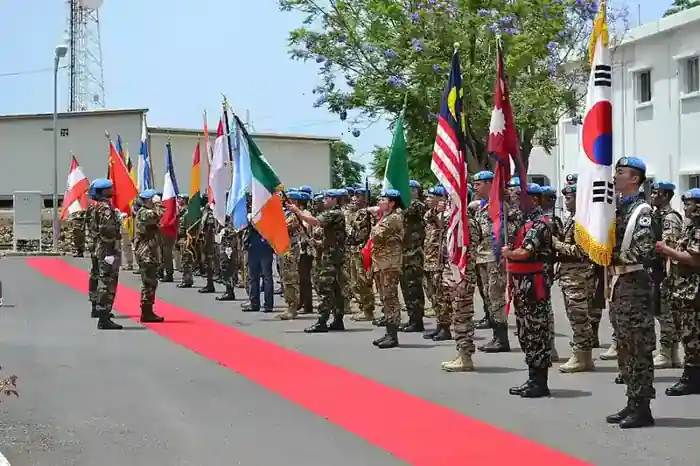
The UN says the most recent renewal, resolution 2790 (2025), “set out the final extension of the mission’s mandate until 31 December 2026, with its drawdown and withdrawal to then take place through 2027”. The mission is headquartered in Naqoura.
On 9 October 2026 UNIFIL said its peacekeepers remain “fully committed” to the mandate until the last day, and its Force Commander, Major General Diodato Abagnara, called the mission “the essential and impartial conduit” between south Lebanon and the wider international community. UNIFIL also said it had approved 110 quick-impact projects in 115 towns over the past four years, benefiting about 1.5 million people, and that the destruction of homes and infrastructure in the south continues to delay recovery.
What happens after UNIFIL?
The question is open. After a three-day visit to Lebanon, UN peace operations chief Jean-Pierre Lacroix said on 16 October that “the Lebanese authorities themselves have been very clear that they think there needs to be this third party – the UN – avoiding unattended escalation and incidents spiraling out of control between the Israel Defense Forces (IDF) and the LAF”. The UN said the Security Council is considering options for the post-UNIFIL period.
Geopolitiki has followed the run-up: see UN peacekeeping chief warns of a “security vacuum” as UNIFIL in Lebanon and MINURSO in Western Sahara wind down, UN peacekeeping chief Lacroix in Beirut as UNIFIL’s mandate heads for its 31 December end and Lebanon: EU preparing a training mission for the Lebanese army; Kallas: “There cannot be a security vacuum when UNIFIL leaves”.
Sources
UN: UNIFIL background, UNIFIL mandate, Lacroix visit, 16 October 2026, UNIFIL statement, 9 October 2026 and UNIFIL community impact, 2 November 2026.