Europe
Zelensky: territory only at leaders’ level in the November trilateral talks, with a US-Ukraine-EU-NATO meeting planned in Brussels
In an interview on October 25 Zelensky said territorial questions are a red line to be discussed only at leaders’ level, and that Europeans want a security meeting in Brussels with the US, Ukraine, the EU and NATO on October 27 or 28.

Territory only at the leaders’ level, everything else with the technical teams: that is the line with which Kyiv is going to the trilateral talks with the United States and Russia in November, as Ukrainian President Volodymyr Zelensky described it. In the same interview he revealed that Europeans are asking for a security meeting in Brussels in the week beginning October 26, with the US, Ukraine, the EU and NATO around the same table.
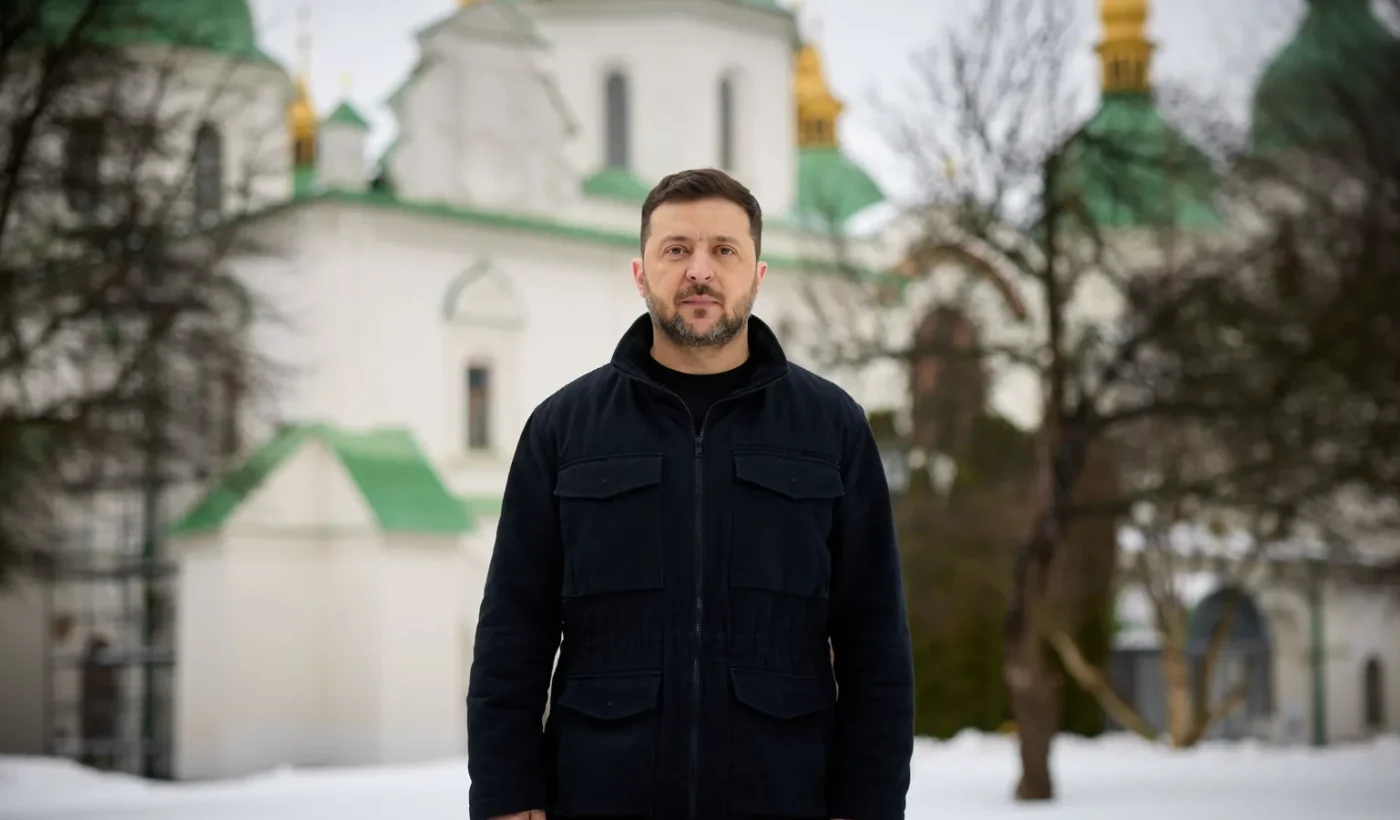
Zelensky spoke on Sunday, October 25, to journalist Alla Mazur for the programme “TSN. Tyzhden” on the 1+1 channel and the joint news telethon, and that evening posted the main excerpts on his official Telegram channel. “The territorial question is a red line, which can be discussed exclusively at the leaders’ level,” he said, recalling that the Americans have for some time raised the issue of exchanging territory, what they call “land swaps”. “First, we are not exchanging anything for nothing. We are ready to discuss,” he added. The remark comes days after US Secretary of State Marco Rubio said from Mumbai that the war “is about Donbas”.
Security guarantees and the army
Likewise, security guarantees cannot, he said, be dictated by the Russian side, while limits on the Ukrainian army and neutrality of the country are not even on the table. He sees NATO membership as the best solution, without ruling out other formats, such as bilateral guarantees with the US or a mechanism with the “Coalition of the Willing”. If funding is found, he wants to keep an army of 800,000, a number which, he stressed, he will negotiate neither with Moscow nor with Washington.
From the meeting of technical teams Zelensky wants a tangible result. As he recounted, the Americans asked him what specifically he wants. His answer was that if the end of the war is not feasible without the leaders, then there can be an energy ceasefire, an agreement on the sea and grain, an exchange of “all for all”, or a summit. “Energy, grain, people: these are the specifics,” he said, warning that if Putin is simply declaring himself ready to avoid escalation with America before the elections, “we will see very quickly in November whether it was a trick or not”. On the energy ceasefire his proposal is simple: Ukraine stops strikes on Russian refineries and diesel infrastructure and Russia stops hitting the Ukrainian power grid.
He put particular emphasis on sanctions. He does not want, he noted, the meeting of the three leaders to find Russia relieved of the measures. “Sanctions were imposed for aggression, not for the possibility of chatting,” he said. If Kyiv reaches the table with Putin without the tool of sanctions, without money or without the frozen Russian assets, then, as Trump once said, it will not have many cards in the deck.
The Brussels meeting and Moscow’s position
On Brussels, Zelensky explained that after the meeting on Tuesday, October 20, in Oslo with US special envoy Steve Witkoff, attended by Finnish President Alexander Stubb, Norwegian Prime Minister Jonas Gahr Støre, security advisers from Britain, France and Italy and the head of European Commission President Ursula von der Leyen’s office, Björn Seibert, and after the Witkoff-Putin meeting in St Petersburg the next day, Europeans are no longer content with a simple briefing. “They want a meeting in Brussels: the Americans, Ukraine and the EU at presidents’ level and NATO at secretary-general level,” he said, adding that the meeting is planned for Tuesday 27 or Wednesday 28 October.
From Oslo, he reported, two of the three problems Kyiv had raised were resolved, the restrictions on Starlink and Starshield and on intelligence sharing with the US. Air defence remains open: there is progress on Patriot missiles, but very slow, “slower than the flight of Russian missiles”.
In Moscow, Putin’s foreign policy adviser Yuri Ushakov placed the resumption of the trilateral talks after November 4, Russia’s National Unity Day. “Now the next deadline is November 4, our big holiday. After that we will be ready to resume negotiations,” he told Pavel Zarubin of Vesti, claiming that Russia was ready already after the Duma elections of September 18-20 but the Ukrainian side blew up the deal. For the first meeting after the break he lowered expectations: it will be, he said, “rather exploratory in nature”. Abu Dhabi has already been mentioned as a possible venue.
A humanitarian ceasefire is being prepared in parallel in Oleshky in occupied Kherson. Ukraine’s General Staff announced a pause in fire in the area from 03:00 Kyiv time on Tuesday, October 27. Zelensky said the proposal came from the American side and that the pause will last a few days so that humanitarian convoys from the US, Ukraine and Russia can arrive. The Russians must clear the roads of mines, and he estimates they will do so in a way that directs residents toward Russia.