
Analysis
Analysis: A new role for Greece’s F-16 Block 30 with APKWS and homegrown weapons
Analysis of a proposal to equip Greece’s F-16 Block 30 fighters with APKWS rockets for counter-drone missions and use them as test beds for Greek weapons.

Greece’s F-16 Block 30 fighters could be given a new mission against drones while serving as flying test beds for domestically developed weapons. This is a proposal for how to use an older fleet, not an announced Hellenic Air Force programme. The idea combines laser-guided APKWS rockets with a separate weapon-control interface, allowing the aircraft to contribute to air defence and Greek defence innovation without attempting to turn them into F-16V fighters.
The Block 30 remains an identifiable part of the Greek fighter inventory. Its future has been debated in Greece. That raises a practical question: what useful work can these aircraft perform alongside more modern F-16Vs and the future F-35 fleet? The proposed answer is to assign tasks for which a large number of relatively small precision weapons and rapid response matter more than the full sensor and networking suite of a newer fighter.
Why retain the Block 30 fleet?
The aim is to extend the operational value of Greece’s existing aircraft through specific, limited adaptations. Such a role would complement, rather than duplicate, the missions envisaged for upgraded F-16s and F-35s. It would also give the Hellenic Air Force a way to test whether the fleet can carry a useful quantity of less expensive interceptors for the growing drone threat. Decisions on aircraft life, cost and airworthiness would require the service’s own assessment; no fleet-wide conversion is being reported here.

APKWS and the drone threat
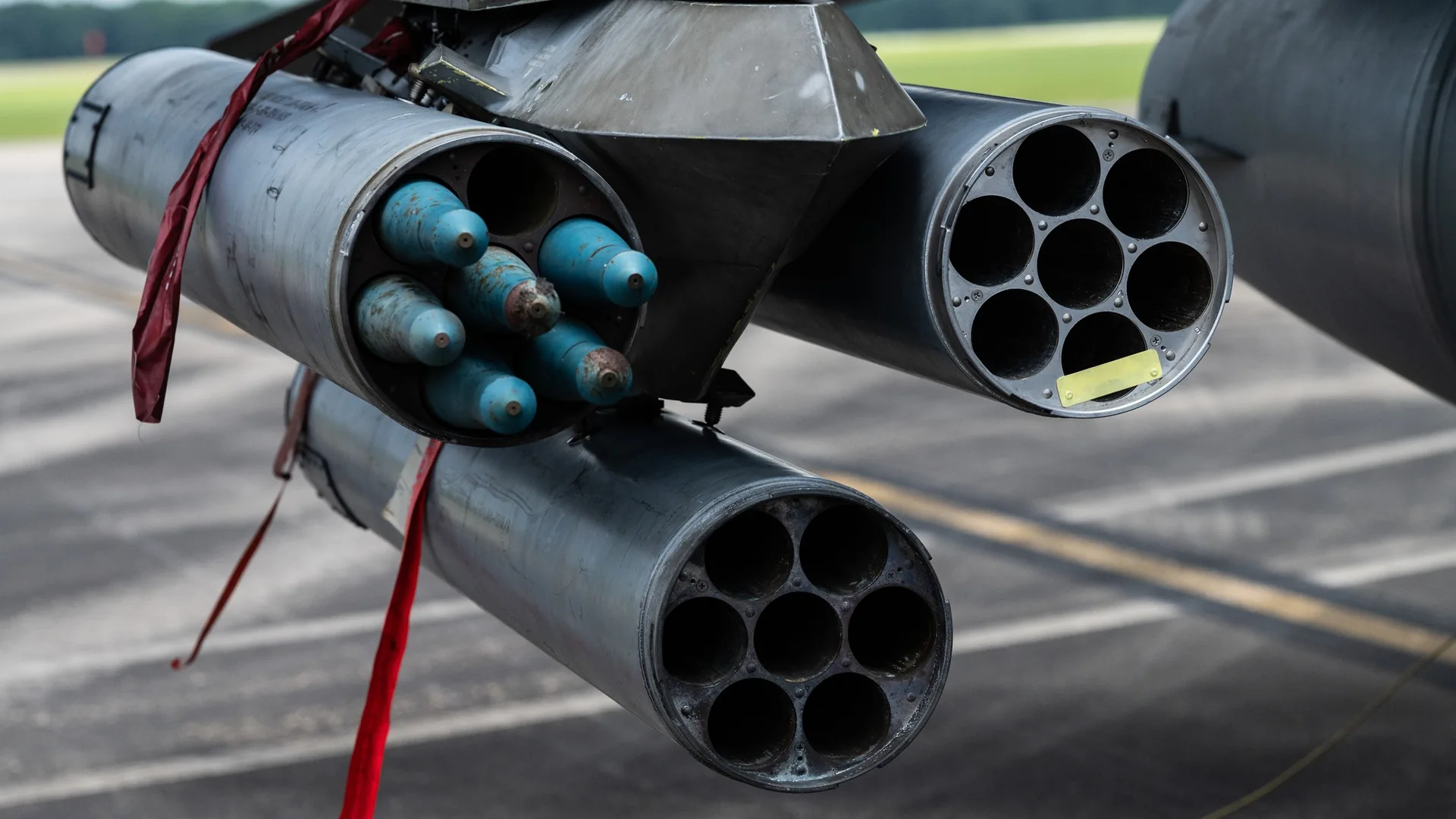
The Advanced Precision Kill Weapon System, or APKWS, adds laser guidance to a 2.75-inch rocket. BAE Systems describes its use against unmanned aircraft and low-flying cruise missiles, while the U.S. Air Force has documented rockets carried by F-16s. Those examples establish that the weapon concept is in service on the aircraft type. They do not establish that Greek Block 30 aircraft have been certified for it.
The proposal centres on APKWS-equipped rockets in LAU-131 launchers, giving a fighter multiple shots against small aerial targets instead of relying only on air-to-air missiles such as AMRAAM or IRIS-T. Multiple launchers could increase the number of available rounds, but the actual loadout, aircraft performance and engagement rate for a Greek Block 30 would have to be demonstrated. The laser-guided approach also requires dependable detection, target identification and designation. A targeting pod, another aircraft or a ground-based system could form part of that chain, subject to integration and testing.
A flying laboratory for Greek weapons
A second proposed role is to use selected Block 30s as test aircraft for Greek-made munitions, pylons and related systems. The concept draws on an aircraft-independent firing system, sometimes described as AIFS or UBAS, that gives the pilot a separate interface to a weapon rather than relying on changes to the aircraft’s central Operational Flight Program. Turkey has used a tablet-based UBAS interface for some domestic weapons on upgraded F-16s, but that example is not proof that an equivalent Greek system has been built or cleared for the Block 30.
An independent interface could make prototype work less dependent on access to sensitive aircraft software. It would not remove the need for flight-safety reviews, electrical and mechanical integration, safe-separation trials, live firing and formal certification. The proposed role fits the mission of the Hellenic Centre for Defence Innovation, which supports domestic technologies, but there has been no announced ELKAK or Air Force project to adopt this specific F-16 plan.
What an Aegean mission might require
In the hypothetical scenario, a naval or ground radar detects a group of drones approaching a sensitive area in the Aegean. A Block 30 carrying APKWS rockets is scrambled, receives target information and uses laser designation to engage. Another aircraft or ground element could assist with designation while a separately configured Block 30 supports weapon trials. This is a planning illustration, not a description of an existing Greek tactic. Its feasibility depends on the engagement geometry, available sensors, command links, rules of engagement and the certification of the proposed stores.
The analysis calls for a focused investment in pods, interfaces and crew training to put the older fighters to work in two areas of direct Greek interest: protection against unmanned threats and testing of nationally developed equipment. Any decision would rest on the Hellenic Air Force determining whether the aircraft, weapons and support systems can safely deliver those roles.