
Analysis
NATO Article 5 explained: what it covers and why Greece joined
Article 5 is NATO's collective defence clause. This explainer sets out what the treaty text says, where it applies and how Greece and Turkey joined under it in 1952.

Article 5 of the North Atlantic Treaty is NATO’s collective defence clause. It says that an armed attack against one or more members in Europe or North America “shall be considered an attack against them all”, and that each member will then take “such action as it deems necessary, including the use of armed force”. Greece joined the Alliance under that guarantee on 18 February 1952, together with Turkey.
Key points
- Article 5 obliges every Ally to assist an attacked member, but each decides for itself what action it deems necessary; NATO says the help may or may not involve armed force.
- It has been invoked once, after the 11 September 2001 attacks on the United States.
- Article 6 defines where an attack counts. A protocol signed on 22 October 1951 revised that definition when Greece and Turkey were admitted.
- The treaty text names no required identity for the attacker, and Article 1 binds every Ally to refrain from the threat or use of force.
- NATO’s own history describes Greece’s membership as a security guarantee that the country welcomed.
What does Article 5 actually say?
The North Atlantic Treaty was signed in Washington on 4 April 1949 by 12 countries, according to NATO. The treaty is short, 14 articles and just over 1,000 words. Article 5 sets the core pledge: the Allies agree that an armed attack against one or more of them in Europe or North America shall be considered an attack against them all, and that each, exercising the right of individual or collective self-defence recognised by Article 51 of the UN Charter, will assist the party attacked “by taking forthwith, individually and in concert with the other Parties, such action as it deems necessary, including the use of armed force, to restore and maintain the security of the North Atlantic area”.
Two limits are written into the text. Any such attack and all measures taken must be reported at once to the UN Security Council, and the measures end when the Council has taken the steps needed to restore international peace and security. And the wording leaves each Ally to judge its own response. NATO’s explanation of collective defence says the assistance “may or may not involve the use of armed force” and that Article 5 turns the right of self-defence into a mutual assistance obligation.
Has Article 5 ever been invoked?
Once. NATO says it invoked Article 5 for the first and only time after the terrorist attacks of 11 September 2001 on the United States. It adds that the clause underpins the Alliance’s deterrence and defence activity, including exercises and the deployment of standing forces, even though it has been formally applied only that once.
Article 4 is a lower step. It provides that the Allies will consult together whenever, in the opinion of any of them, the territorial integrity, political independence or security of any of the Parties is threatened.
For the difference between Articles 4 and 5, this AP explainer is a useful companion.

Where does Article 5 apply?
Article 6 answers that. For the purposes of Article 5, an armed attack is deemed to include an attack on the territory of any of the Parties in Europe or North America, on the territory of Turkey, or on the islands under the jurisdiction of any of the Parties in the North Atlantic area north of the Tropic of Cancer. It also covers attacks on the forces, vessels or aircraft of any Party when in or over those territories, or in the Mediterranean Sea or the North Atlantic area north of the Tropic of Cancer.
That wording is the product of enlargement. A footnote on NATO’s published treaty text records that the definition of the territories to which Article 5 applies “was revised by Article 2 of the Protocol to the North Atlantic Treaty on the accession of Greece and Turkey signed on 22 October 1951”. Greek territory, mainland and islands in Europe, falls within the “territory of any of the Parties in Europe”; the full text is on the NATO website.
How did Greece come to join?
NATO’s history page for Greece sets the scene: after the Second World War Greece was one of the first battlegrounds of the Cold War, the Truman Doctrine brought American aid in 1947, and the civil war ended in 1949. In 1950 Greece sent troops to support the United Nations in Korea, which, in NATO’s words, put a seal on Athens’ choice to commit to the West. King Paul I signed the instrument of accession in Athens on 11 February 1952, and on 18 February Greece was formally welcomed as one of NATO’s first new members, along with Turkey.
Two days later, in Lisbon, Foreign Minister Sophocles Venizelos addressed the North Atlantic Council for the first time. He said, in the words NATO preserves, that Greece was convinced that “a truly efficient system of collective security constitutes the best means of preserving peace and ensuring justice and liberty”.
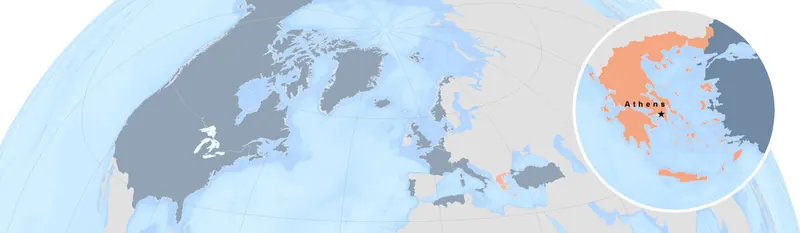
NATO describes what membership was meant to deliver. Greece’s frontier to the north, 1,200 kilometres long and shared with Bulgaria and Yugoslavia, had long been its greatest security challenge, and Athens felt threatened by Bulgaria’s military superiority. Membership, the page says, would keep regional tensions in check. It also covered the sea: NATO notes that Greece’s endless coastline and myriad islands were as hard to defend, after the devastation of war and civil war, as the land border. The accession is summed up in a line from the same page: Greece’s membership “was a security guarantee”.
What did membership mean in practice?
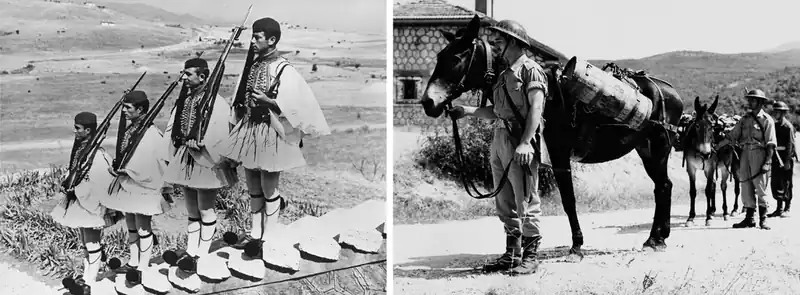
Within months NATO created the Allied Land Forces Southeastern Europe command, LANDSOUTHEAST, in June 1952, based in Izmir and responsible for an area from the Caucasus to the western shores of Greece. It was commanded by an American, with one Greek and one Turkish deputy. In October 1953 NATO established the Sixth Allied Tactical Air Force, its easternmost air headquarters, charged with the air defence of Greece and Turkey. In 1953 Athens and Washington also signed a bilateral agreement for American bases on Greek territory, including on Crete, which the NATO page presents as an added security guarantee.
Does Article 5 cover an attack by one Ally on another?
The treaty does not say. Article 5 speaks of an armed attack “against one or more of them” and sets no condition about who the attacker is; NATO’s published explanation does not address an attack by one member on another, and the treaty provides no procedure for it. What the text does contain is Article 1, in which the Parties undertake to settle any international dispute by peaceful means and “to refrain in their international relations from the threat or use of force in any manner inconsistent with the purposes of the United Nations”. That obligation binds every Ally towards every other Ally. Article 7 adds that the treaty does not affect the Parties’ rights and obligations under the UN Charter, or the Security Council’s primary responsibility for international peace and security.
That is the legal frame for any dispute between Allies. We examined a recent attempt to stretch the clause to a non-member in Fidan invokes NATO Article 5 to defend Makkah pact, but the comparison misses its test, and the legal vocabulary of the Aegean in UNCLOS explained: sea zones, islands and the Aegean dispute. For another treaty that shapes the region see Montreux Convention explained: who can pass the Bosphorus and the Dardanelles.
Sources: The North Atlantic Treaty, NATO; Collective defence and Article 5, NATO; Greece and NATO, NATO history.