

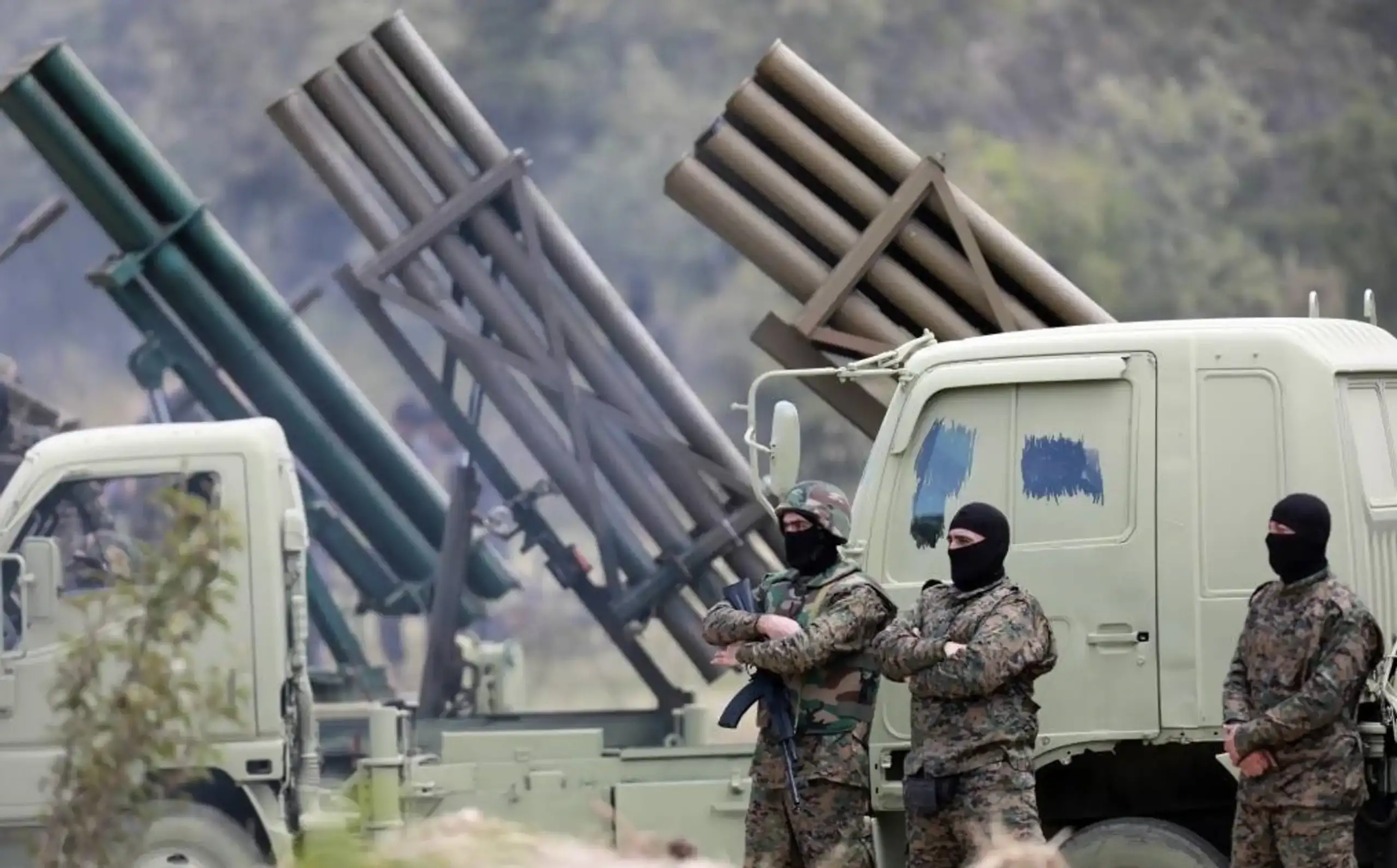
Since October 8, 2023, Israel has launched a decisive military campaign against Hezbollah, focusing more on the group’s elite Radwan Force. This offensive has resulted in severe losses for Hezbollah, including the deaths of high-ranking commanders. As Israel intensifies its efforts, the leadership structure of Hezbollah is in turmoil, leaving its leader Hassan Nasrallah isolated and the group’s ability to mount large-scale operations significantly weakened.
Hezbollah Leadership Devastated by Israeli Strikes

Since Hezbollah’s first attack on Israel on October 8, 2023, the Israel Defense Forces (IDF) have embarked on a decisive military campaign, focusing on the organization’s top leadership, particularly the elite Radwan Force. The Radwan Force, known for its special operations and its plans to invade northern Israel, has suffered devastating losses. Over 2,000 Israeli airstrikes have crippled Hezbollah’s capacity for large-scale attacks, leaving its leader, Hassan Nasrallah, isolated at the top, facing the Mossad and the IDF.
Radwan Force’s Command Decimated
One of the most significant blows came with the elimination of Ibrahim Aqil, commander of the Radwan Force, and Nasrallah’s right-hand man, Fuad Shukr. Aqil played a crucial role in planning Hezbollah’s ambitious “Conquer the Galilee” operation, aimed at invading Israeli territory, according to the IDF. He was also linked to numerous high-profile attacks, including the 1983 bombing of the U.S. Embassy in Beirut, which resulted in heavy casualties.
Alongside Aqil, Israel has neutralized several other key figures within Hezbollah’s command. Abu Hassan Samir, head of Radwan’s training unit, and Samer Abdul-Halim Halawi, commander of the coastal region, were among the dead. The strikes also claimed the lives of Abbas Sami Maslamani, Hassan Yussef Abad Alssatar, and other senior Hezbollah officials, all close associates of Nasrallah. The leadership structure of Hezbollah’s elite force has been left in tatters, creating a void that the group is struggling to fill with less experienced personnel.
Leadership Crisis for Hezbollah
The continual loss of its top officers has triggered a severe leadership crisis within Hezbollah. With Nasrallah now isolated, only a few of his trusted commanders remain alive. Ali Karaki, a veteran leader, narrowly survived an Israeli strike in recent days, and there are rumors of serious injuries. Israel’s Defense Minister Yoav Gallant stressed that Nasrallah is now “alone at the top,” marking a new phase in the conflict.
The systematic targeting of Hezbollah’s leadership, particularly its elite forces, has thrown the organization into disarray, significantly weakening its ability to conduct coordinated operations against Israel. This is evident from the disorganized and sudden rocket launches, which have been sporadic amid relentless Israeli strikes on Hezbollah’s ammunition depots and bases.
Morale Within Hezbollah Deteriorates
Hezbollah’s morale has taken a major hit as Israel continues to target leaders, even within Beirut—an area previously considered off-limits for direct attacks. The IDF, unconstrained by previous red lines, is demonstrating that even Hezbollah’s most senior leaders are not immune to targeted strikes, regardless of their location. This is a direct response to Nasrallah’s earlier threats of an “unrestricted and boundless war,” as well as Hezbollah’s recent, albeit partially successful, efforts to eliminate Israel’s military intelligence infrastructure along the border.
Can Hezbollah Recover?
While Hezbollah maintains significant support from Iran and theoretically still holds a vast arsenal in Lebanon, the loss of key commanders like Ibrahim Aqil and Abu Hassan Samir severely hampers its operational effectiveness. The group’s ability to launch a large-scale offensive, such as the planned invasion of Galilee, has been largely neutralized—at least for now.
Nasrallah now faces a critical juncture, perhaps even more severe than in 2006. Can Hezbollah swiftly regroup and restore its shattered leadership in time to counter a potential Israeli ground invasion of Lebanon? Or will it be forced to scale back its activities, much like Hamas, and face the consequences of its support for the Palestinian organization?