
History
Cuban Missile Crisis explained: timeline of October 1962
The Cuban Missile Crisis brought the U.S. and the Soviet Union closest to nuclear war in October 1962. A day-by-day timeline, the quarantine, the Turkey deal and how it ended, from official records.

The Cuban Missile Crisis of October 1962 was the moment the United States and the Soviet Union came closest to nuclear war. It began when a U.S. U-2 spy plane photographed Soviet missile sites under construction in Cuba on 14 October and ended on 28 October, when Nikita Khrushchev announced that the missiles would be dismantled and removed.
Key points
- Soviet leader Nikita Khrushchev agreed in July 1962 with Cuba’s Fidel Castro to place nuclear missiles on the island, according to the U.S. State Department’s Office of the Historian.
- President John F. Kennedy chose a naval “quarantine” of Cuba on 22 October instead of an air strike and invasion, which the Joint Chiefs of Staff had urged.
- The crisis ended through secret diplomacy: a public pledge not to invade Cuba, and a private understanding that U.S. Jupiter missiles in Turkey would be removed.
- It produced the White House-Kremlin “Hotline” and, later, the Limited Test Ban Treaty.
How did the Cuban Missile Crisis start?
The background was the failed U.S.-backed Bay of Pigs invasion of 1961 and the Kennedy administration’s covert Operation Mongoose against Fidel Castro’s government. In July 1962 Khrushchev reached a secret agreement with Castro to station Soviet nuclear missiles in Cuba, which the Office of the Historian describes as a deterrent against any future invasion attempt.
Construction of several missile sites began in the late summer. U.S. surveillance flights found evidence of a wider Soviet arms build-up, including Il-28 bombers, and on 4 September Kennedy publicly warned against the introduction of offensive weapons into Cuba. On 14 October a U-2 took photographs clearly showing sites for medium-range and intermediate-range ballistic missiles under construction. The images were processed and shown to the White House the next day.
Timeline: the key days, October 1962
| Date | What happened |
|---|---|
| 14 October | A U-2 photographs medium-range and intermediate-range ballistic missile sites under construction in Cuba. |
| 15 October | The images reach the White House; Kennedy convenes his closest advisers. All of the Joint Chiefs of Staff favour an air strike followed by an invasion. |
| 22 October | Kennedy orders a naval “quarantine” of Cuba, writes to Khrushchev and addresses the nation on television. U.S. forces move to DEFCON 3. |
| 24 October | Khrushchev calls the “blockade” an “act of aggression”. Some Soviet ships turn back from the quarantine line; others are stopped and allowed to proceed. |
| By 26 October | Reconnaissance shows the missile sites nearing operational readiness and U.S. forces are placed at DEFCON 2, meaning war involving the Strategic Air Command is imminent. |
| 26 October | Khrushchev sends a long private message proposing to remove the missiles in return for a pledge not to invade Cuba. The ABC News correspondent John Scali had earlier passed on a similar offer from a Soviet agent. |
| 27 October | A second Khrushchev message demands the removal of U.S. Jupiter missiles from Turkey. A U.S. U-2 is shot down over Cuba. Kennedy answers the first message and ignores the second. |
| 28 October | Khrushchev announces publicly that the missiles will be dismantled and removed from Cuba. |
| 20 November | The U.S. ends the naval quarantine, after the Soviet Union agrees to withdraw its Il-28 bombers. |
What was the “quarantine”?
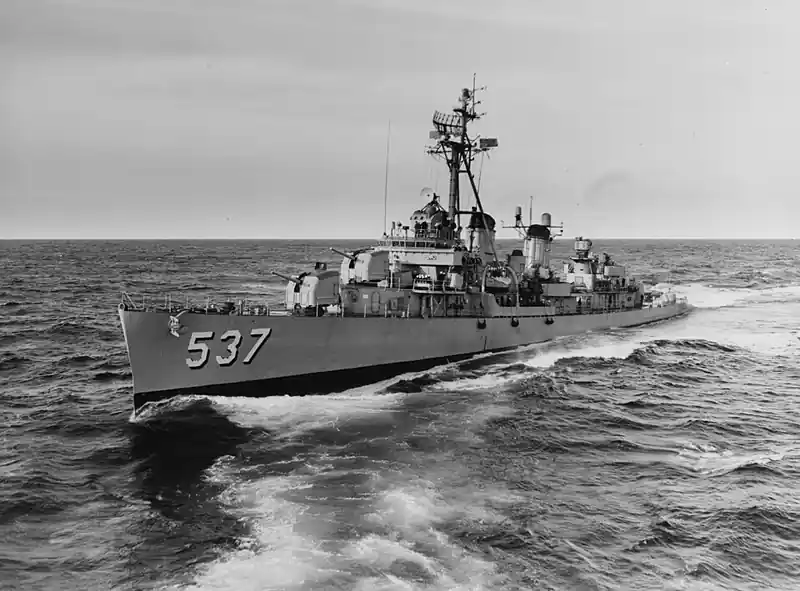
Kennedy ordered a “quarantine” of Cuba on 22 October. The Office of the Historian explains why the word mattered: a blockade assumes a state of war exists, while a quarantine did not, and the choice also allowed the U.S. to win the support of the Organization of American States. Some advisers, including all the Joint Chiefs, wanted an air strike followed by an invasion; others preferred stern warnings. The president took a middle course.
In his television address that evening Kennedy said it would be U.S. policy “to regard any nuclear missile launched from Cuba against any nation in the Western Hemisphere as an attack by the Soviet Union on the United States, requiring a full retaliatory response upon the Soviet Union.”
How did the crisis end?
By 26 October Kennedy told his advisers it appeared that only a U.S. attack on Cuba would remove the missiles, though he wanted to give diplomacy a little more time. That evening Khrushchev’s message, which the Office of the Historian calls long and emotional, raised the prospect of nuclear catastrophe. “If there is no intention to doom the world to the catastrophe of thermonuclear war,” Khrushchev wrote, “then let us not only relax the forces pulling on the ends of the rope, let us take measures to untie that knot.”
The next day brought a harder line. In a letter on 27 October, published in the State Department’s Foreign Relations of the United States series, Khrushchev wrote: “Your missiles are located in Turkey.” He proposed that the Soviet Union remove from Cuba “the means which you regard as offensive” if the United States did the same in Turkey, with United Nations inspection of both pledges.
Kennedy chose to answer the first message and ignore the second. His reply proposed that Soviet missiles leave Cuba under United Nations supervision, in return for a U.S. guarantee not to invade. Attorney General Robert Kennedy then met the Soviet ambassador, Anatoly Dobrynin, in secret and indicated that the U.S. planned to remove the Jupiter missiles from Turkey anyway and soon, but that this could not be part of any public settlement.
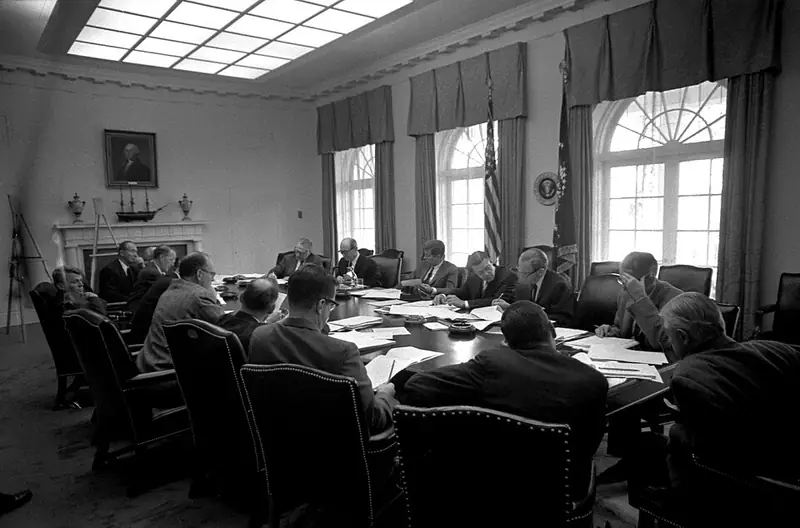
On 28 October Khrushchev wrote to Kennedy that the Soviet government had “given a new order to dismantle the arms which you described as offensive, and to crate and return them to the Soviet Union.” The Jupiter missiles were removed from Turkey in April 1963.
Why did Turkey matter in the crisis?
Khrushchev’s argument was one of symmetry. In his 27 October letter he noted that U.S. missiles were located in Britain, Italy and Turkey, “literally next to” the Soviet Union, and asked why the Soviet Union should not have the same right to security that Washington claimed. The Turkish deployment was the one Moscow chose to name as the price of its withdrawal from Cuba, which shows how weapons stationed on an ally’s soil can become a bargaining chip between great powers.
What did the crisis change?
The Office of the Historian identifies two lasting results. First, Kennedy, Khrushchev and their advisers had struggled throughout to understand each other’s intentions while the world stood near nuclear conflict, so a direct telephone link between the White House and the Kremlin, the “Hotline”, was established. Second, both superpowers began to reconsider the nuclear arms race and took the first steps towards a nuclear Test Ban Treaty.
The questions of deterrence, signalling and crisis communication it raised are still debated. For a current example, see our report UN First Committee opens debate with Ukraine, Iran, Japan and others split over nuclear deterrence, and the European angle in Finland joins France’s European nuclear deterrence initiative.
Sources: U.S. Department of State, Office of the Historian, The Cuban Missile Crisis, October 1962; Foreign Relations of the United States, 1961-1963, Volume VI, Kennedy-Khrushchev Exchanges: Document 66 (Khrushchev to Kennedy, 27 October 1962) and Document 68 (Khrushchev to Kennedy, 28 October 1962).