
Greece
How the Dodecanese Became Greek: History, 1923 to 1948
The Dodecanese passed from Turkey to Italy at Lausanne in 1923 and from Italy to Greece in 1947, with union celebrated in 1948. Here is what the treaties actually say.

The Dodecanese became Greek through two treaties and one ceremony. In 1923 Turkey renounced its rights over the islands in favour of Italy; in 1947 Italy ceded them to Greece “in full sovereignty”; and on 7 March 1948 the union was celebrated. The text of the 1947 treaty is the key to today’s argument over their status.
Key points
- Article 15 of the Treaty of Lausanne (1923) records Turkey renouncing all rights and title over the islands in favour of Italy.
- Article 14 of the Treaty of Peace with Italy (signed 10 February 1947, in force 15 September 1947) cedes the Dodecanese to Greece “in full sovereignty”.
- The same article says the islands “shall be and shall remain demilitarised” in a separate paragraph; Turkey is not among the treaty’s signatories or ratifying states.
- The union with Greece was celebrated on 7 March 1948, and the islands became a regular prefecture on 23 April 1955.
Which islands are the Dodecanese?
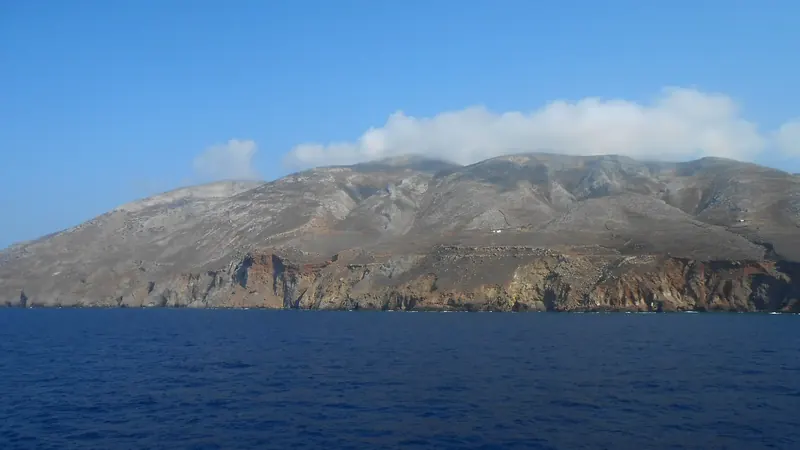
The 1947 treaty does not use a modern map. Article 14 names the islands one by one, in the Italian spellings of the time: Stampalia (Astypalaia), Rhodes, Calki (Chalki), Scarpanto (Karpathos), Casos (Kasos), Piscopis (Tilos), Misiros (Nisyros), Calimnos (Kalymnos), Leros, Patmos, Lipsos (Lipsi), Simi (Symi), Cos (Kos) and Castellorizo (Kastellorizo), “as well as the adjacent islands”. That last phrase matters, because it carries the smaller islets with each island group.
How did Italy come to hold the islands?
The route runs through Lausanne. The conference there lasted from 20 November 1922 to 24 July 1923 and revised the Treaty of Sèvres. In Article 15 of the resulting treaty, Turkey “renounces in favour of Italy all rights and title” over thirteen named islands, from Stampalia to Cos, which the text describes as “now occupied by Italy”, together with their dependent islets and the island of Castellorizzo.
Article 16 goes further. Turkey renounces all rights and title over territories and islands outside the frontiers the treaty lays down, their future being “settled or to be settled by the parties concerned”. Ankara therefore signed away any claim to the Dodecanese in 1923, twenty-four years before they passed to Greece. For the wider settlement, see our explainer Treaty of Lausanne explained: borders, islands and minorities.
What did the 1947 treaty say about the Dodecanese?
The Treaty of Peace with Italy was signed at Paris on 10 February 1947 by the Allied and Associated Powers, a list that includes Greece, and by Italy. It entered into force on 15 September 1947, when the Soviet Union, the United Kingdom, the United States and France deposited their instruments of ratification with the French Government. Greece deposited its own on 28 October 1947.
Section V of the treaty is headed “Greece (Special Clause)” and consists of Article 14 alone, in three paragraphs:
- Paragraph 1: Italy “hereby cedes to Greece in full sovereignty” the listed islands.
- Paragraph 2: “These islands shall be and shall remain demilitarised.”
- Paragraph 3: the procedure and technical conditions of the transfer are to be settled by agreement between the United Kingdom and Greece, with foreign troops withdrawn within 90 days of the treaty coming into force.
Read as written, the cession in paragraph 1 is complete and unconditional. The demilitarisation clause sits in its own paragraph, and nothing in the article makes Greek sovereignty depend on it or provides for the islands to revert if it is breached. The treaty’s signatories and ratifying states are listed in the registered text, and Turkey does not appear in either list.
How did the islands become Greek in 1948?
The treaty settled the law; the handover took a further year of administration. According to the Hellenic Parliament Foundation, the islands first spent a year under Military Command before moving to a civil General Administration modelled on that of the “New Countries”, the territories liberated in the Balkan Wars. The incorporation of the Dodecanese was solemnly celebrated on 7 March 1948.
Several milestones followed, all recorded by the Foundation:
- 15 May 1948: Dr Nikolaos Mavris, from Kasos, took office as General Governor, appointed after the islanders asked for a governor from among their own.
- 5 March 1950: Dodecanesians voted in Greek parliamentary elections for the first time and elected four Members of Parliament.
- 23 April 1955: the General Administration was abolished and replaced by the Prefecture of the Dodecanese, under the same institutional framework as the rest of Greece.
The Foundation also describes the reconstruction effort. It says the Military and Administrative Commands, working with the Ministries of Restructuring and Agriculture and with Marshall Plan funds, allocated 28 billion drachmas to infrastructure and to the care of 32,300 poor people and orphans, and 5.5 billion drachmas to rebuild housing damaged by bombing. In 1952, 1,580 farming families received aid through the distribution of 4,400 hectares on Rhodes and Kos. Hospitals, a sanatorium and orphanages were founded, and the Foundation puts tourism at 25,000 visitors a year to Rhodes in the first five years of Greek administration.
Why does the Dodecanese treaty matter today?
Because Ankara reads Article 14 as more than it says. The Turkish Foreign Ministry’s published background note argues that the Dodecanese were ceded to Greece on the explicit condition that they remain demilitarised, that sovereignty is directly tied to that status, and that Greece has been violating it since the mid-1960s. These are Ankara’s claims, and they rest on a treaty to which Turkey is not a party.
Set against the text, the picture is different. Article 14 grants sovereignty in paragraph 1 without any condition, and the 1923 Lausanne text shows that Turkey itself renounced the islands. The Lausanne restrictions on Greek forces apply only to four islands, which Article 13 names as Mytilene, Chios, Samos and Nikaria, and they are of a different kind: no naval base and no fortification, forces limited to the normal conscript contingent plus gendarmerie and police. The Dodecanese clause is a separate text with separate wording. The Law of the Sea dimension, including the full maritime zones that islands generate, is covered in UNCLOS explained: sea zones, islands and the Aegean dispute, and the neighbouring straits regime in Montreux Convention explained: who can pass the Bosphorus and the Dardanelles.
This explainer does not settle every legal question around demilitarisation. It records what the treaties say, what the Greek state itself documents about the union, and what Ankara argues, so that readers can see where the two accounts part company.
Timeline at a glance
| Date | Event | Source |
|---|---|---|
| 24 July 1923 | Lausanne: Turkey renounces the islands in favour of Italy (Art. 15) | Treaty of Lausanne |
| 10 February 1947 | Treaty of Peace with Italy signed; Art. 14 cedes the Dodecanese to Greece | UNTS No. 747 |
| 15 September 1947 | Treaty enters into force | UNTS No. 747 |
| 28 October 1947 | Greece deposits its ratification | UNTS No. 747 |
| 7 March 1948 | Incorporation of the islands celebrated | Hellenic Parliament Foundation |
| 5 March 1950 | First Dodecanese vote in Greek elections; four MPs elected | Hellenic Parliament Foundation |
| 23 April 1955 | Prefecture of the Dodecanese replaces the General Administration | Hellenic Parliament Foundation |
Sources
This article rests on the Treaty of Peace with Italy, signed at Paris on 10 February 1947 (United Nations Treaty Series No. 747); the Treaty of Lausanne, 24 July 1923 (Articles 12 to 16); the Hellenic Parliament Foundation, General Administration of the Dodecanese, 1948-1955; and, for Ankara’s position, the Turkish Foreign Ministry, Background Note on Aegean Disputes. Quotations from the treaties are exact.