
Greece
Imvros and Tenedos explained: what Turkey promised the Greeks at Lausanne
Lausanne Article 14 promised the Greeks of Imvros and Tenedos self-government and protection. Helsinki Watch and the European Court of Human Rights record what Turkey did instead.

Imvros and Tenedos are two small Aegean islands near the mouth of the Dardanelles that Greece held in 1912 and that returned to Turkey under the 1923 Treaty of Lausanne, on one condition: Article 14 promised their Greek population self-government and protection, and exempted them from the Greek-Turkish population exchange. Turkey did not keep that promise, and the Greek community fell from about 9,000 in 1920 to a few hundred by 1992, according to a Helsinki Watch report.
Key points
- Lausanne Article 14 guaranteed Imvros and Tenedos a special administration made up of local people, a local police force and protection of persons and property for the non-Muslim population.
- A 1992 report by Helsinki Watch (Human Rights Watch) concluded that these provisions were never observed, and that laws of 1927 and 1964 ended Greek-language teaching and community ownership of property.
- In 2009 the European Court of Human Rights found unanimously that Turkey violated property rights of the Greek Orthodox foundation of Tenedos, and ordered restitution of a cemetery, a chapel and a former monastery.
- A Greek school reopened on Imvros in 2013 after nearly half a century; a small community has returned, but the numbers remain modest.
Where are Imvros and Tenedos, and why do they matter?
Helsinki Watch describes the two islands as lying in the north-east corner of the Aegean, near the mouth of the Dardanelles. Greece captured them during the Balkan Wars of 1912, and they reverted to Turkey in 1923 because, in the report’s words, Turkey considered them important to its security. Their position at the entrance to the Straits is the reason the Lausanne negotiators treated them separately from the other Aegean islands.
The islands are also a test of a larger question: whether the minority protections Turkey signed at Lausanne have ever been applied in practice. Our Treaty of Lausanne explained: borders, islands and minorities covers the treaty as a whole.
What did the Treaty of Lausanne promise the Greeks of Imvros and Tenedos?
Three groups of articles matter. Article 12 confirms Greek sovereignty over the Eastern Mediterranean islands, but expressly excludes Imbros, Tenedos and the Rabbit Islands. Article 14 then sets the terms for those islands. It states that they, “remaining under Turkish sovereignty, shall enjoy a special administrative organisation composed of local elements and furnishing every guarantee for the native non-Moslem population in so far as concerns local administration and the protection of persons and property.” Order was to be kept by a police force recruited from the local population and placed under the local administration, and the Greek-Turkish population exchange was not to be applied to the inhabitants (treaty text).
Articles 40 and 41 add rights that apply to all non-Muslim minorities in Turkey: the same treatment in law and in fact as other Turkish nationals, an equal right to run their own schools and institutions “with the right to use their own language”, and primary-school instruction in the children’s own language where a considerable proportion of the population is non-Muslim. Nothing in Article 14 makes these guarantees depend on how Greece treats its own Muslim minority.
What did Turkey do after 1923?
According to Helsinki Watch, the provisions of Article 14 were never observed. Ankara took over the administration of the islands, including the judiciary, the police, the port authorities and customs, and chose the members of the administrative council itself. It confiscated the land of those who had left and did not let the owners return. The report quotes a British naval liaison officer, Captain E. A. Nottingham Parker, who wrote to his government in 1926: “The Turkish government has taken no steps to administer Imbros and Tenedos in accordance with the Treaty of Lausanne.”
| Year | Measure | What it did (per Helsinki Watch, 1992) |
|---|---|---|
| 1927 | Local Government Act No. 1151 | Denied self-administration and outlawed teaching of Greek in schools, which the report says violated Articles 40 and 41 of Lausanne |
| 1964 | Law No. 502 | Abolished the island school system, again banned teaching of Greek and forbade community ownership of property, except church buildings |
| 1965-66 | Open agricultural prison on Imbros | 13,444 dekars of fertile land expropriated in 1966 for the prison |
| 1960-1990 | Church property | About 200 churches and chapels reportedly destroyed |
The report records that Greek was taught again in the 1950s, but that a flare-up over Cyprus in 1963 led to Turkish measures against the island communities. It adds that the Turkish government has contended that its policy was a response to actions against the Turkish communities in Western Thrace and Cyprus. That is Ankara’s explanation, not a legal justification: Article 14 contains no condition of reciprocity, and Helsinki Watch concluded that Turkey had denied the rights of the Greek community on Imvros and Tenedos in violation of the Lausanne Treaty and of international human rights law.
How many Greeks were left?
The report gives the following figures, attributed to the sources it names: about 9,000 Greeks on the two islands in 1920, when Imvros was inhabited almost entirely by Greeks and Tenedos was about 80 per cent Greek; 2,622 on Imvros and 1,400 on Tenedos by the early 1970s; and, in 1992, about 480 on both islands according to the Constantinopolitan Society of Athens, or 330 on Imvros according to the Panimbrian Committee, almost all of them elderly. The same report says Turkish settlers had been moved onto Imvros, and that about 7,200 Turks lived there.
The Helsinki Watch report also quotes the Panimbrian Committee’s allegations of harassment of the remaining Greeks. We do not repeat them here, because the report itself says the Committee could not name its witnesses; the figures above, the laws and the expropriations are the documented part.
What did the European Court of Human Rights decide?
In 2009 the Strasbourg court ruled twice in cases brought by the foundation of the Greek Orthodox church on Tenedos, which is registered under Turkish law and whose statute follows the Lausanne provisions on minority religious foundations. In its judgment of 3 March 2009, the Court unanimously found a violation of the protection of property (Article 1 of Protocol No. 1) because Turkish courts refused to register the foundation’s land in its name, and awarded EUR 100,000 for pecuniary damage and EUR 5,000 for costs.
In a second judgment on 6 October 2009, covering further properties, the Court again found a violation unanimously. The registry’s press release says the foundation had held the properties for a very long time and that the refusal to register them “could not be said to have been sufficiently foreseeable”. Given the nature of the properties, the Court held that the only adequate redress for the cemetery, a chapel and a former monastery was restitution and entry in the land register in the foundation’s name. For the other properties it set an alternative of EUR 173,000 if Turkey did not register them.
Is the Greek community coming back?
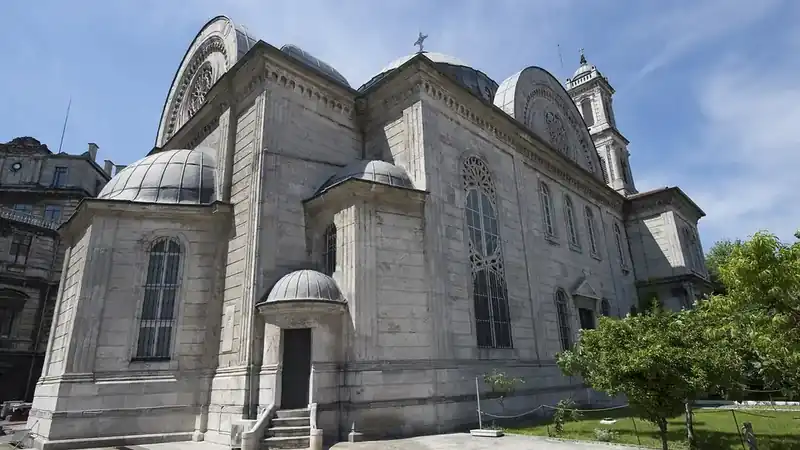
A Greek-language primary school reopened on Imvros in September 2013, nearly half a century after the 1964 ban; Anadolu Agency reported at the time that it would start with four pupils. An AFP report of August 2026, carried by Turkish Minute, says an islander estimates that around 600 Greeks have returned since the school reopened, up from fewer than 70 in 2005. AFP itself notes this is a modest number on an island of more than 11,000 residents, and the same islander says that the community’s culture “is dying out”.
The report adds that every 15 August hundreds of people go back to Imvros for the Feast of the Dormition, with a liturgy led by Ecumenical Patriarch Bartholomew I, who was born on the island. That link to the Ecumenical Patriarchate is one reason Athens treats the islands as part of the wider question of Greek communities in Turkey, which also includes the closed Halki seminary (see Halki seminary explained: closed by Turkey since 1971) and the 1955 attacks on Istanbul’s Greeks (Istanbul pogrom of 1955 explained: what US records show).
What the record shows
Read together, the primary texts support a plain conclusion. Lausanne gave Imvros and Tenedos a protected status that Turkey was bound to apply, and an independent human-rights monitor found in 1992 that it had not. Turkish laws of 1927 and 1964 ended Greek-language teaching and community property, and the European Court has since held, more than once, that Turkish courts breached the property rights of the island community’s foundation. The 2013 school and the August pilgrimage show that a Greek presence survives; whether it grows depends on Ankara actually applying the treaty it signed.
Sources: Treaty of Lausanne, text; Helsinki Watch, Denying Human Rights and Ethnic Identity: The Greeks of Turkey (1992); European Court of Human Rights, press release on Bozcaada Kimisis Teodokum Rum Otodoks Kilisesi Vafki v. Turkey (No. 2), 6 October 2009; AFP report of 21 August 2026.