Greece
Treaty of Sèvres explained: what it gave Greece and why it never took effect
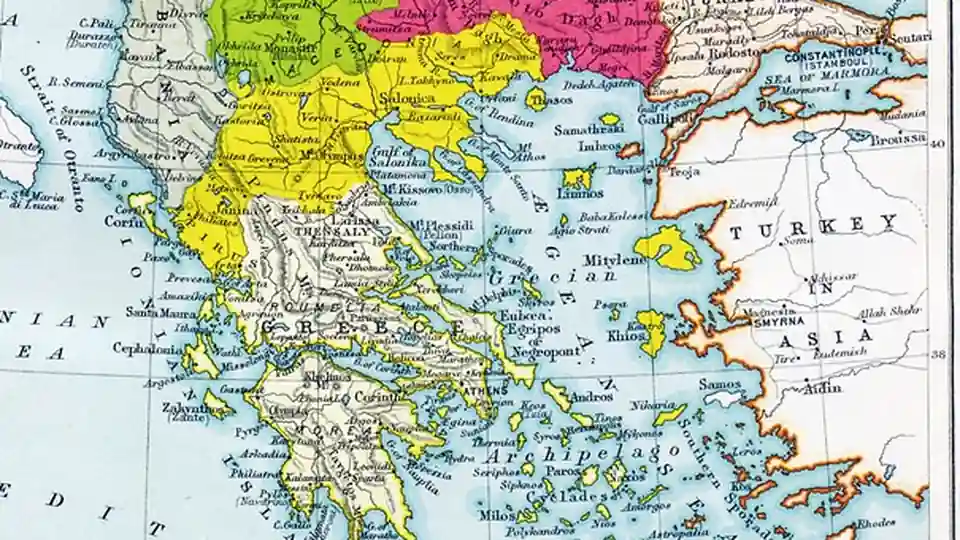
The Treaty of Sèvres of 10 August 1920 would have given Greece Eastern Thrace, Imbros, Tenedos and the administration of Smyrna. Its own text also speaks of massacres and expulsions. It was replaced by Lausanne.

The Treaty of Sèvres, signed on 10 August 1920, was the peace settlement that would have given Greece Eastern Thrace, the Aegean islands of Imbros and Tenedos and the administration of Smyrna. It never took effect: the Treaty of Lausanne replaced it in 1923, and the surviving text is still the clearest record of what the Allied powers once agreed for Greece, and what they wrote about the treatment of Christians in the Ottoman Empire.
Key points
- Sèvres (10 August 1920) gave Greece Eastern Thrace and the islands of Imbros and Tenedos, and placed Smyrna under Greek administration.
- Smyrna stayed under nominal Turkish sovereignty, with a path to union with Greece after five years if the League of Nations Council agreed.
- Turkey also renounced the Dodecanese in favour of Italy, and the treaty opened the Straits to all shipping.
- The treaty text itself refers to massacres, deportations and the 1915 abandoned-property law, and calls for those responsible to be handed over for trial.
- It was never adopted. The Treaty of Lausanne (1923) replaced it and returned Eastern Thrace, Imbros and Tenedos to Turkey.
What was the Treaty of Sèvres?
It was the peace treaty between the Allied and Associated Powers and Turkey after the First World War. The text names the British Empire, France, Italy and Japan as the Principal Allied Powers, and lists Armenia, Belgium, Greece, the Hedjaz, Poland, Portugal, Romania, the Serb-Croat-Slovene State and Czechoslovakia among the other Allied Powers. Turkey was the other party. The preamble records that an armistice had been granted to Turkey on 30 October 1918 at the request of the Ottoman government.
The World War I Document Archive at Brigham Young University, which reproduces the English text from the 1924 Carnegie Endowment edition of The Treaties of Peace 1919-1923, labels it as a treaty that was “never adopted, superseded by the Treaty of Lausanne”.
What did Sèvres give Greece?
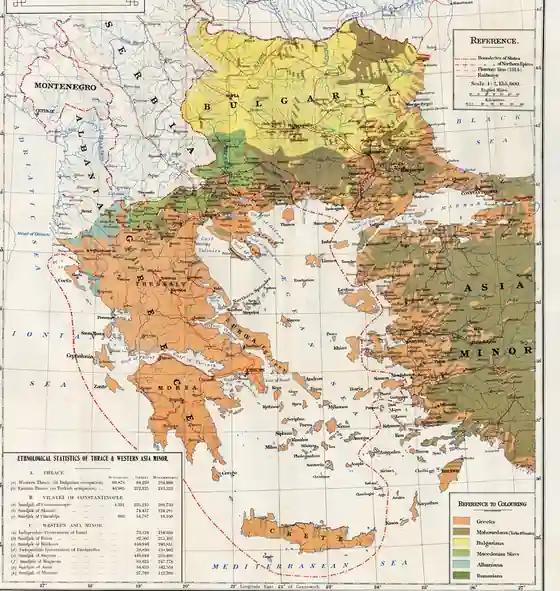
Article 84 is the core of the Greek chapter. In it Turkey renounced “in favour of Greece all rights and title” over the former Ottoman territories in Europe outside the frontiers the treaty drew for Turkey, which meant Eastern Thrace up to a line a short distance west of Constantinople. The same article added that Turkey “further renounces in favour of Greece all her rights and title over the islands of Imbros and Tenedos”. The islands of the Sea of Marmara were excluded from the transfer.
Article 84 also confirmed the 1914 decision of the Conference of London on Greek sovereignty over Lemnos, Samothrace, Mytilene, Chios, Samos and Ikaria, subject to the islands placed under Italian sovereignty and the islands lying less than three miles from the Asian coast.
What did Sèvres say about Smyrna?
Smyrna got a special regime in Articles 65 to 83. The city and the territory around it stayed under Turkish sovereignty on paper, but Article 69 transferred “the exercise of her rights of sovereignty” to the Greek government, with a Turkish flag to stay hoisted over an outer fort. Under Article 70 Greece was responsible for the administration, and Article 71 allowed it to keep the forces needed for order.
Article 72 required a local parliament elected on a system that ensured proportional representation, including racial, linguistic and religious minorities. It also allowed Greece to postpone elections for as long as needed for the return of inhabitants “banished or deported by the Turkish authorities”, but not longer than a year.
The final status was left open. Under Article 83, after five years the local parliament could ask the Council of the League of Nations for the definitive incorporation of Smyrna and the surrounding territory into the Kingdom of Greece, and the Council could require a plebiscite first. What followed in 1922 is covered in our article Smyrna 1922 explained: what US diplomatic records show.
What did the treaty say about the Dodecanese and the Straits?
Article 122 did not go to Greece. In it Turkey renounced in favour of Italy the islands of Astypalaia, Rhodes, Chalki, Karpathos, Kasos, Tilos, Nisyros, Kalymnos, Leros, Patmos, Lipsi, Symi and Kos, which Italy then occupied, plus Kastellorizo (spelled in the text with Italian forms such as Stampalia, Scarpanto and Castellorizzo). Their later union with Greece is told in How the Dodecanese Became Greek: History, 1923 to 1948.
Part III opened the Straits, including the Dardanelles, the Sea of Marmara and the Bosphorus, to every vessel of commerce or war and to military and commercial aircraft “without distinction of flag” (Article 37). A Commission of the Straits would control the waters. Article 178 ordered that fortifications in the zone and on the islands of Lemnos, Imbros, Samothrace, Tenedos and Mytilene be disarmed and demolished, and forbade rebuilding them.
What did it say about the massacres and the expelled Christians?
Part IV, on the protection of minorities, is among the most direct passages in any treaty text of the period. Article 141 bound Turkey to protect life and liberty for all inhabitants without distinction of birth, nationality, language, race or religion. Article 142 recorded that, “in view of the terrorist regime which has existed in Turkey since November 1, 1914”, conversions to Islam since that date were not recognised.
The same article referred to “the massacres perpetrated in Turkey during the war” and obliged the Turkish government to help in the search for all persons who had “disappeared, been carried off, interned or placed in captivity” since 1 November 1914. Article 144 declared the 1915 law on Abandoned Properties unjust and “null and void”, and committed the Ottoman government to facilitate the return of people “forcibly driven from their homes by fear of massacre or any other form of pressure” since 1 January 1914, with their property restored without compensation to present occupiers.
Article 230 went further and required Turkey to hand over to the Allied Powers those responsible for massacres committed during the war, to be tried by a tribunal the Allies would designate. These are the words of the Allied powers in a treaty text, and they show that wartime massacres in Turkey were dealt with in a formal peace settlement, in a text that names Greece among the Allied Powers. The treaty also set out arrangements for voluntary reciprocal emigration in Article 143 and, in Article 89, referred the Turkey-Armenia frontier to arbitration by the President of the United States.
Why did Sèvres never take effect?
The archive record says only that it was never adopted and was superseded by the Treaty of Lausanne. The Lausanne text of 24 July 1923 drew a different map. Article 2 set the Greek-Turkish frontier in Thrace along the Maritsa (Evros) and the Arda, so Eastern Thrace beyond that line stayed with Turkey. Article 12 confirmed Greek sovereignty over Lemnos, Samothrace, Mytilene, Chios, Samos and Ikaria, while Imbros and Tenedos, which Sèvres had given to Greece, “remain under Turkish sovereignty” under Article 14.
Article 14 of Lausanne promised those two islands a special administrative organisation “composed of local elements” with “every guarantee for the native non-Moslem population” and exempted their inhabitants from the population exchange. How that promise fared is the subject of Imvros and Tenedos explained: what Turkey promised the Greeks at Lausanne. Lausanne also confirmed Italian sovereignty over the Dodecanese, including Kastellorizo (Article 15), and carried its own minority clauses in Articles 37 to 45, which are examined in Treaty of Lausanne explained: borders, islands and minorities.
Why does Sèvres still matter?
Sèvres is a document, not a policy. It shows what the principal Allied powers wrote down in 1920 about Thrace, the islands and the Straits, and it records in their own words their findings about massacres and forced displacement. For Greece, it also marks how far the 1923 settlement departed from that text, in territory and in the safeguards for Greek communities that remained in Turkey.
Lausanne is the treaty in force, and its Article 14 on Imbros and Tenedos and its minority clauses are the obligations that apply. The 1920 text imposes nothing today, and anyone citing it should note that it was never adopted.
Sources: Peace Treaty of Sèvres, World War I Document Archive; Treaty of Sèvres, Section I, Articles 1 to 260; Treaty of Lausanne, World War I Document Archive. Both texts are from the Carnegie Endowment edition of The Treaties of Peace 1919-1923 (1924).