Middle East & North Africa
Gulf: GCC defence ministers approve a forward headquarters of the Unified Military Command in Kuwait
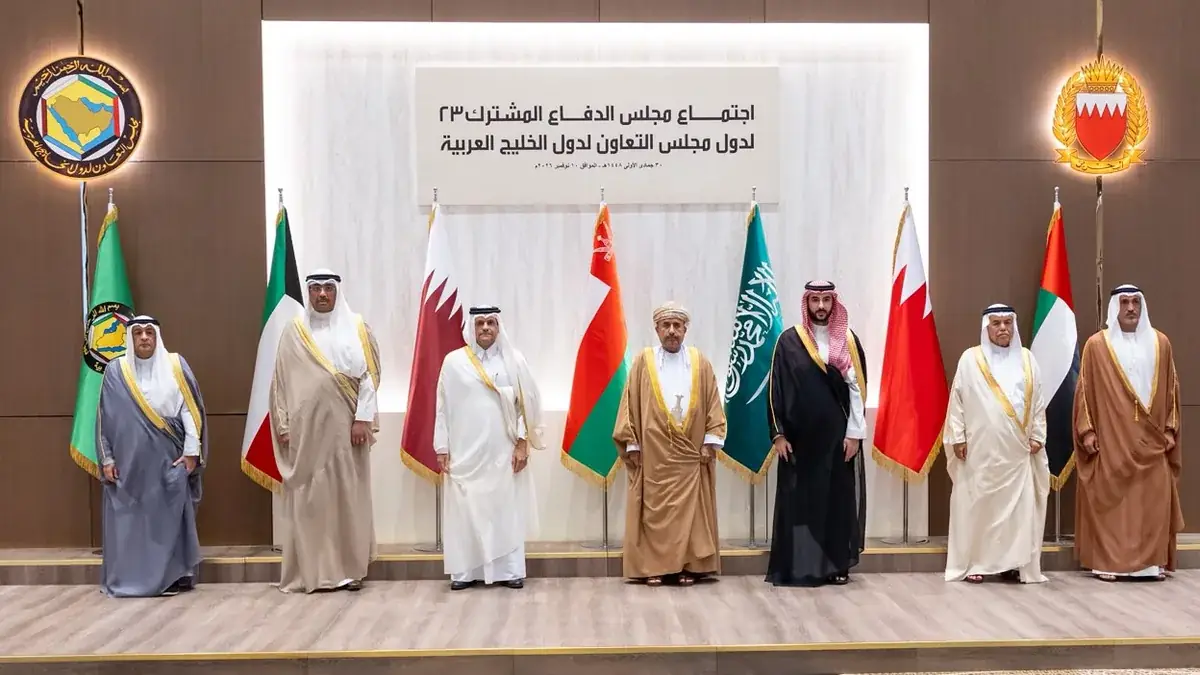
The defence ministers of the six Gulf Cooperation Council states approved the creation of a forward headquarters of the Unified Military Command in Kuwait, at the 23rd Joint Defence Council in Manama on November 10.

The defence ministers of the six member states of the Gulf Cooperation Council (GCC) approved the creation of a forward headquarters of the Unified Military Command in Kuwait and the assignment of appropriate forces to it. The decision was taken on Tuesday, November 10 in Manama, at the 23rd session of the Joint Defence Council, chaired by Bahrain’s Minister of Defence Affairs, Lieutenant General Abdullah bin Hassan Al Nuaimi.
It was announced by GCC Secretary-General Jasem Mohamed Albudaiwi in a statement from the General Secretariat. He noted that the session’s agenda also contained other “important decisions” that will take the Gulf states’ military cooperation to “wider horizons of integration”. The member states, many of which host large American bases, came under missile and drone attack from Iran after the US–Israeli war on Tehran began on February 28.
The meeting was attended by the defence ministers of Bahrain, Kuwait, Oman, Qatar, Saudi Arabia and the United Arab Emirates. Kuwait was represented by Sheikh Abdullah Ali Abdullah Al-Salem Al-Sabah and Saudi Arabia by Prince Khalid bin Salman. The Saudi minister wrote on X that the meeting confirms the common aim of coordination and integration so that the Gulf states can strengthen their military and defence capabilities against any threat.
Iran and the Houthis at the centre
Albudaiwi referred to the directives given by Gulf leaders at the extraordinary summit in Jeddah in April, for strengthening joint military action. He condemned in the strongest terms the “treacherous Iranian attacks” that damaged civilian facilities and infrastructure of the member states and honoured the sacrifices of the armed forces and the dead of recent events. Kuwait has repeatedly been a target, with Iranian strikes even on desalination plants since the start of the war.
The secretary-general also dwelt on the Houthi attacks on Saudi Arabia and the targeting of holy sites, saying the kingdom’s security is an “integral part” of the security of all GCC states. In recent days the Houthis have targeted the East-West pipeline and the capital Riyadh with missiles and drones, as covered in our report on the new attack near Medina.
The Unified Military Command was established in 2013 and has its headquarters in Riyadh, while the joint “Peninsula Shield” force has existed for decades. The new element in Kuwait brings a joint command structure to the northern end of the Gulf, near the border with Iraq, from where armed groups aligned with Tehran have launched drones against countries of the region. Kuwait’s Ministry of Defence said the ministers also discussed the readiness of the armed forces and the protection of economic resources.