Europe
Hellenic Navy chief tours Italian minehunter in Venice as Dendias asks Rome for two
Vice Admiral Dimitrios Kataras visited the Italian minehunter ITS Chioggia on the sidelines of the Trans-Regional Seapower Symposium in Venice, days after Defence Minister Nikos Dendias raised the transfer of two used Italian minehunters to Greece.

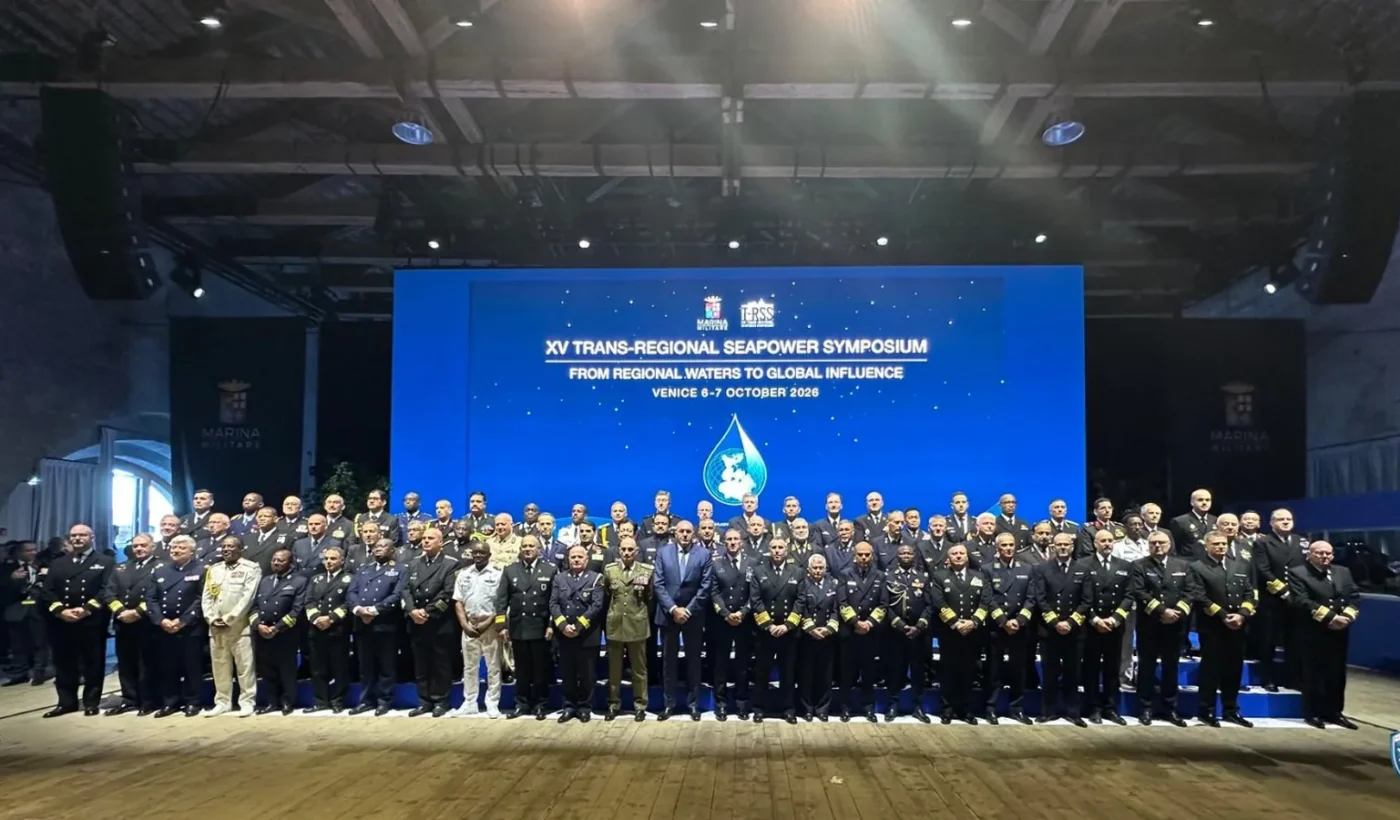
The Chief of the Hellenic Navy General Staff (HNGS), Vice Admiral Dimitrios Kataras, was in Venice on October 6 and 7 for the 15th Trans-Regional Seapower Symposium (T-RSS 2026), organised by the Italian Navy. According to the Hellenic Navy’s announcement (in Greek), the symposium brought together navy chiefs, representatives of international organisations, academics and defence-industry executives.
This year’s theme was the world’s “midland seas”, seas such as the Mediterranean that link continents. The full title was “From Regional Waters to Global Influence: generating effects across the midland seas of the world”, with a focus on the role of Maritime Regional Security Complexes (M-RSC). According to the HNGS, the aim was to exchange views and develop common approaches to stability and security in the global maritime environment.
Bilateral contacts with six navies and two operations
On the sidelines of the symposium the HNGS chief held bilateral meetings with the navy chiefs of Italy, France, Sweden, Australia and Georgia. He also met the commander of NATO’s Allied Maritime Command (MARCOM), the commander of the European naval operation IRINI, which enforces the arms embargo on Libya, and the director of the US Navy’s International Programs Office (Navy IPO).
According to the HNGS, the talks covered the situation in the Eastern Mediterranean and the Red Sea and ways of deepening cooperation. The contact with his Italian counterpart carries particular weight, since the Hellenic Navy is acquiring two Bergamini-class FREMM frigates from Italy. Italy is also among the countries preparing for the Red Sea after the escalation around the Bab el-Mandeb Strait.
Visit to the minehunter Chioggia
Vice Admiral Kataras also visited the Italian minehunter ITS Chioggia, a Gaeta-class ship berthed in Venice. Mine warfare and seabed protection are fields in which Mediterranean navies are investing again, as undersea pipelines and cables have become critical infrastructure and a potential target.
Chioggia (M 5560) is a coastal minehunter of the second series of the Gaeta class. She was built by Intermarine at Sarzana, laid down in November 1992 and launched in April 1994. She displaces 720 tonnes at full load and measures 52.45 metres in length, 9.87 metres in beam and 3 metres in draught (4 metres when minehunting). She is powered by one GMT main diesel, while three Isotta Fraschini generating sets provide 1,460 kW. She makes 15 knots (6 knots while minehunting) and has a range of 2,500 nautical miles. Armament is one 12.7 mm Browning machine gun, and the crew numbers 44. Like all ships of the Lerici/Gaeta family, she has a glass-reinforced polyester hull, giving her a very low magnetic signature.
The ship is based at La Spezia and in the Italian Navy does more than minehunting. From December 2024 to March 2025 she took part in Operation “Fondali Sicuri” in the Central Mediterranean, monitoring natural gas pipelines and undersea cables with her sonar and the remotely operated underwater vehicles she carries for locating and identifying objects on the seabed.
The visit to Chioggia also has a Greek angle. A few days earlier, on October 5, Defence Minister Nikos Dendias had met his Italian counterpart Guido Crosetto, also in Venice, on the sidelines of the defence ministers’ meeting of the Adriatic and Ionian Initiative (ADRION). “At a bilateral level I discussed with my Italian counterpart the possibility of Greece being granted two used Italian minehunters,” Dendias said, as NemesisHD reported at the time.
It has not been announced which ships are under consideration or on what terms, nor whether the HNGS chief’s visit to Chioggia is connected to the discussion, but the timing is striking. The Italian Navy operates minehunters of the Lerici and Gaeta classes, the latter being the class of Chioggia, and is preparing the new-generation Cacciamine di Nuova Generazione (CNG), so units of the current generation will be retired gradually.
Venice is one of the few international meetings where Europe’s navies sit at the same table as those of the Indo-Pacific and Africa. For the Hellenic Navy, which takes part in operations from Libya to the Red Sea and is modernising its fleet with new ships, such contacts support cooperation with allied navies.