Military & Defense
EU maritime network MARSUR exchanges live data with NATO systems in Portugal trial
The European Defence Agency demonstrated live MARSUR data exchange with national and NATO systems at REPMUS 2026 off Portugal, while a classified upgrade awaits approval.

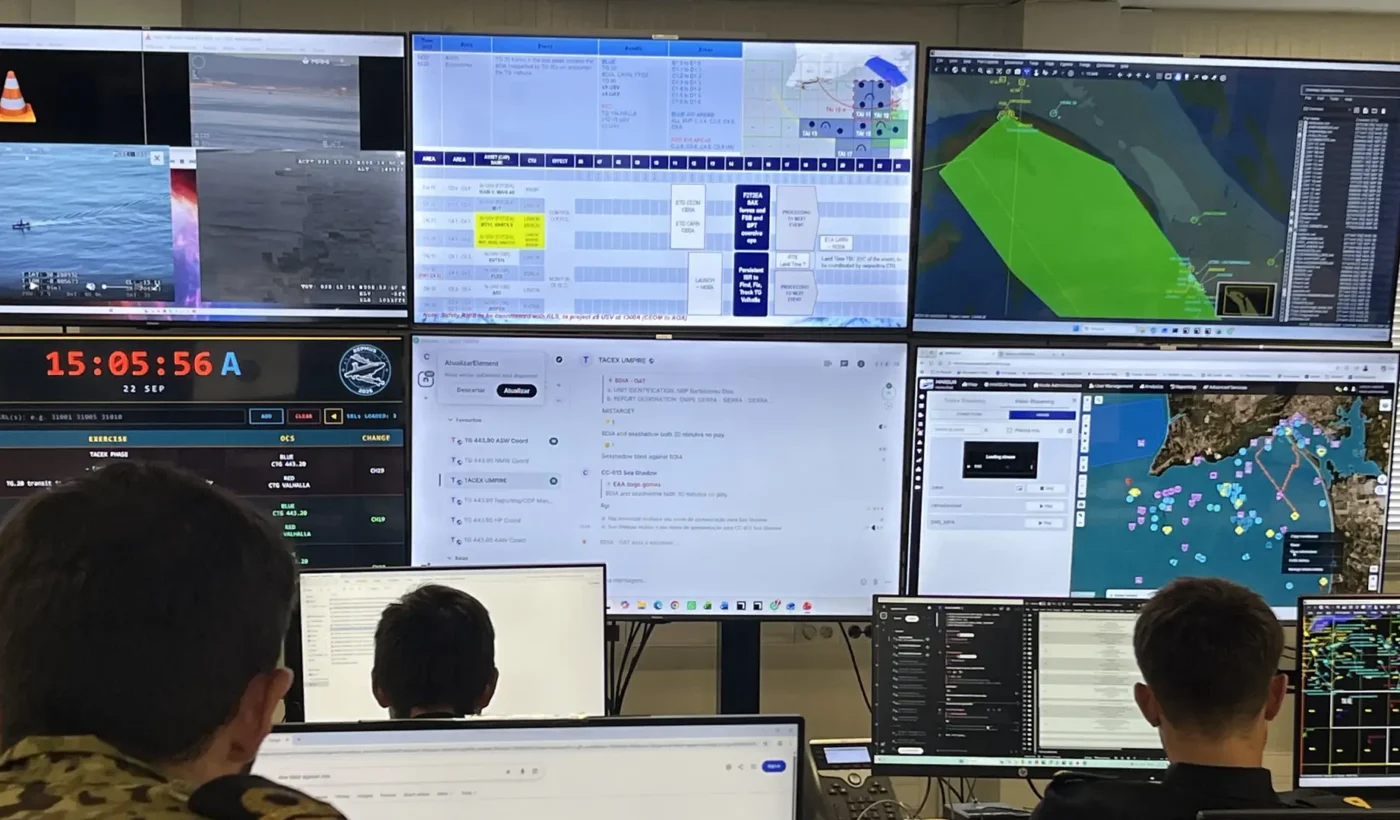
The European Defence Agency has demonstrated that its MARSUR maritime surveillance network can exchange information in real time with national command systems and NATO sources during the REPMUS 2026 exercise off Portugal. The agency announced the result on 23 September, describing a live test of a network intended to give participating European navies a shared picture of activity at sea.
The trial took place during Robotic Experimentation and Prototyping using Maritime Unmanned Systems, an exercise running from 31 August to 25 September near Portugal’s coast. The Portuguese Navy hosted the event with the involvement of the EDA and NATO. The test brought information from participating nations and systems into MARSUR, including data originating from uncrewed platforms, and distributed it across the network using a data-exchange standard implemented for the exercise.
MARSUR is a federated maritime surveillance network: its purpose is to let national participants share information while retaining their own command systems. The EDA says naval inputs, radar, satellites and open-source information can contribute to a common operational picture. The latest demonstration addressed the practical question of whether those feeds could be exchanged live with national and NATO systems during a large multinational exercise.
Jürgen Scraback, the EDA’s head of maritime domain, described the result as a step beyond an interoperability design demonstrated only on paper. The agency reported that representatives of many of the 23 participating EU nations also tested procedures and national scenarios. These included monitoring vessels associated with sanctions evasion and protecting underwater infrastructure. The exercise therefore covered both the technical movement of data and ways participating services might use it.
Portugal’s President António José Seguro and Sweden’s chief of navy, Rear Admiral Johan Norlén, received briefings during the exercise, according to the EDA. Their visits came as European governments have placed greater attention on maritime domain awareness, including the security of seabed infrastructure and the ability to share information between allied command structures. The agency presented MARSUR as complementary to NATO’s own maritime surveillance arrangements.
The EDA has submitted a funding request to upgrade MARSUR to EU Secret-level classification. Its proposal would modernise 18 network nodes and link the system with the European External Action Service’s secure operational network. The agency says the current network operates at an unclassified, protected level. It is technically ready for EU Restricted classification, but the proposed route is to pursue the higher EU Secret level directly.
That upgrade has not been approved. The EDA says that, subject to European Council approval later in 2026, work would start in 2027 and a fully classified network could operate by 2028. The result in Portugal establishes a live interoperability test; the classified network and its timetable remain dependent on the funding decision.