Land Forces
101st Combat Aviation Brigade begins 32-week virtual reality trial of NeuroTrainer cognitive system at Fort Campbell
Pilots of the U.S. Army’s 101st Combat Aviation Brigade began a 32-week pilot test of the NeuroTrainer virtual reality system on 20 October, part of a Department of War assessment of cognitive training for aircrew.

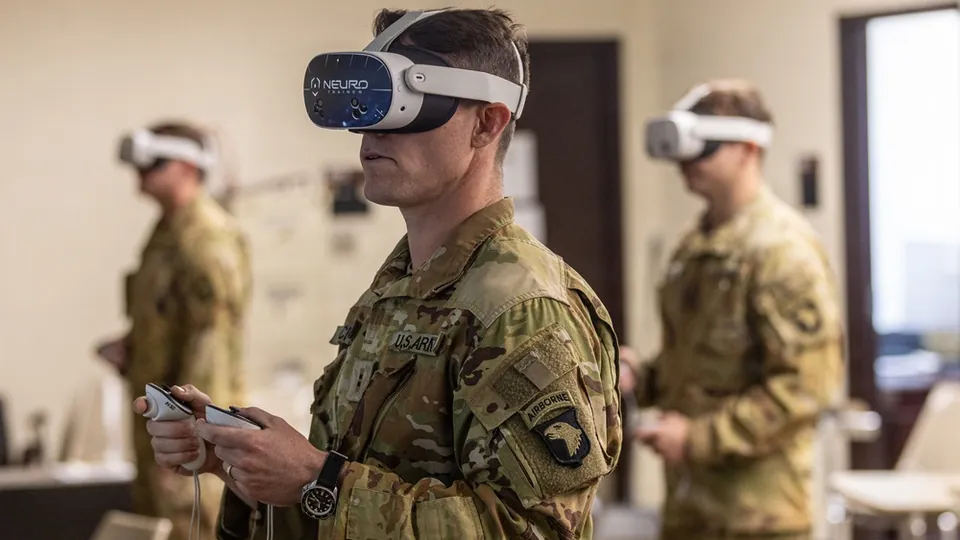
Helicopter pilots of the U.S. Army’s 101st Combat Aviation Brigade at Fort Campbell, Kentucky, have begun a 32-week trial of NeuroTrainer, a virtual reality system meant to build mental endurance and sharpen cognitive performance. The brigade started the pilot test on 20 October 2026, according to a story published by the brigade on DVIDS, the U.S. military’s media distribution service.
The trial is part of a wider effort directed by the Department of War, the U.S. defence department. The department identified specialised units in July to test the system and to determine whether it works well enough to be built into aviation training.
What is being tested
NeuroTrainer is described as an Oculus-based trainer designed to prime, or “awaken”, the brain for tasks that demand heavy mental effort. For the 101st brigade, the story names low-level flight and night-time air assault missions as examples of such tasks.
The brigade’s Holistic Health and Fitness team is monitoring the tests. Victor Rodriguez, a cognitive performance specialist with the team, said the device could raise awareness of underlying issues affecting pilots. In his words, the performance results could help the team “recognize when to discuss stress, oversaturation, or emotional regulation” with them.
How the pilot works
The first phase is a design validation period. Soldiers of the brigade take part in a group onboarding session and receive individual familiarisation training, and are then evaluated in a helicopter simulator. Chief Warrant Officer 5 Derrick Nunley, who coordinates the pilot testing, said the unit was chosen because it flies every aircraft platform and can give feedback from rotary-wing experts. He also pointed to its heavy-lift battalion, which he described as the only one in the U.S. Army.
Chief Warrant Officer 2 Eric Low, a CH-47 Chinook maintenance test pilot who tried the system, said it had “a little bit of a learning curve” at the start. Once he got the hang of it, he said, it felt like a video game that challenged hand-eye coordination and the ability to track several objects at once. Participants overall rated the challenge as moderate, according to the story.
Other units in the same assessment
The Fort Campbell test mirrors assessments the Department of War has directed at other units, the story says: the U.S. Navy Aviation Weapons School, a U.S. Air Force special operations squadron and the 75th Ranger Regiment. The results from all of them are meant to help the department decide whether NeuroTrainer can strengthen the aviation mission and build the mental resilience of aircrew.
The company’s case
Noah Rolland, chief executive of NeuroTrainer, said there is wide interest in cognitive performance across the department, and that the open question is how to know whether brain training is effective. He argued that pilots are being given more information and more hardware in the cockpit, so that they are looking and listening to several layers of data at once. “The human being is the slowest part of the process,” he said, adding that the aim is to keep humans in the loop by improving what he called their processor, the brain.
The statements about the system’s purpose come from the company chief and from the brigade’s own staff; the pilot is meant to test them, and no results have been published. The story does not say when findings will be reported or whether the system would be bought for wider use.