Asia-Pacific
South Korea weighs sending the Cheonghae Unit to the Gulf of Oman – Seoul: “Under no circumstances” will we be involved in war
South Korea is considering extending the operating area of its Cheonghae anti-piracy naval unit from the Gulf of Aden to the Gulf of Oman, just outside the Strait of Hormuz, while the defence ministry insists it will not be drawn into a war.

The South Korean government is considering extending the area of operations of the Cheonghae Unit, the naval anti-piracy detachment stationed off Somalia since 2009, from the Gulf of Aden to the Gulf of Oman, in the waters just outside the Strait of Hormuz. According to the Korea JoongAng Daily, the plan would be included in the annual proposal to extend the mission, which the National Assembly must approve before the current authorisation expires on December 31. The addition of a maritime patrol aircraft is also being considered, with no decision taken.
Responding to criticism that this amounts to an indirect mission in Hormuz, the Ministry of National Defense sent a message to reporters on Friday, October 16, according to Yonhap. “Under no circumstances will we be involved in war or combat,” it said. “We are considering the government’s role in protecting our citizens and our economic interests, and nothing has been decided so far.” When a concrete plan takes shape, the ministry added, it will proceed “in close communication with the National Assembly” and explain it clearly to the public.
On Thursday Defence Minister Kang Shin-chul had told parliament: “We are reviewing various options for the Cheonghae Unit’s mission and the extension of its deployment.” According to the Korea Times, the review follows a US request to allies for a military contribution to the security of the Strait, but the ministry insists that any expansion would concern the existing duties of anti-piracy and protection of shipping. President Lee Jae-myung had ruled out sending combat troops on September 18. One of the options for the patrol aircraft is the P-8A Poseidon.
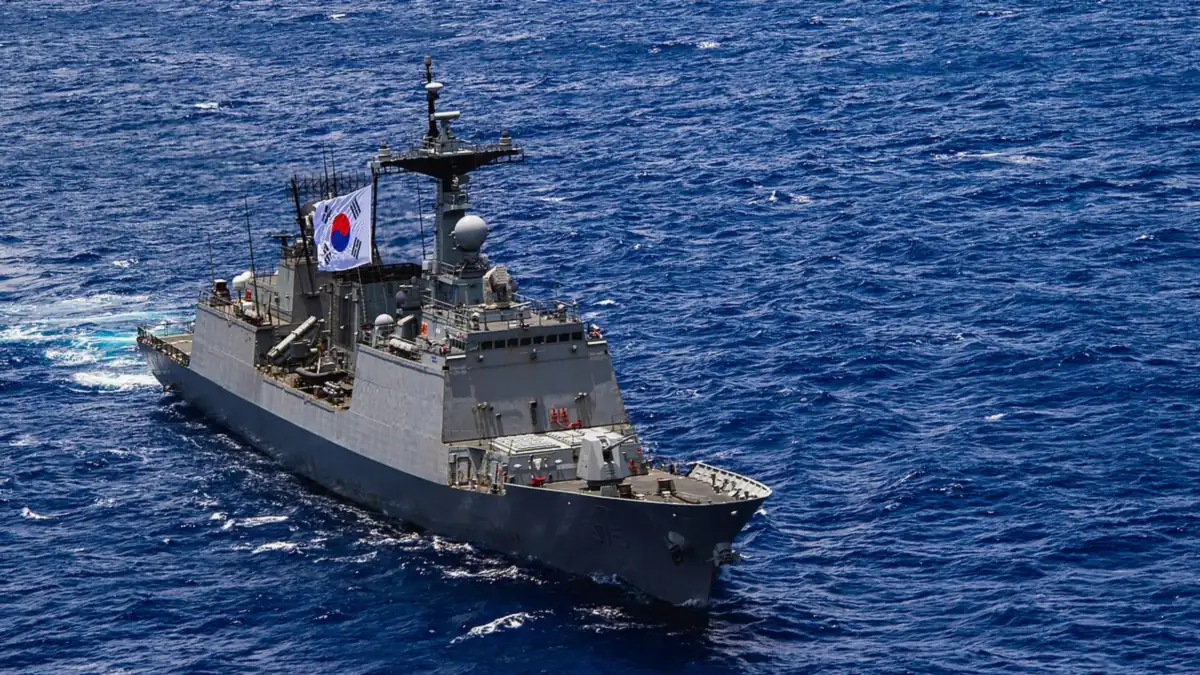
The mission’s mandate provides for at least one KDX-II class destroyer of at least 4,000 tonnes, one naval helicopter, up to three fast boats and at most 320 personnel. It names the Gulf of Aden but also allows operations in other waters when needed to protect South Korean citizens. With that clause, Seoul had extended the unit’s activity towards Hormuz in January 2020 without fresh parliamentary approval. The 49th mission left Busan on October 4 with the destroyer Chungmugong Yi Sun-sin.
Seoul’s decision comes as attacks on ships in the area have reached a record, with CENTCOM and Tehran trading accusations over the safety of seafarers, while at home Seoul is also watching the threat from North Korea, with a congressional report putting its fissile material at up to 90 warheads.