Asia-Pacific
South Korea launches the submarine Seo Hui, the second 3,600-tonne Jangbogo-III Batch-II boat
South Korea’s Navy launched the submarine Seo Hui (SS-088) at Hanwha Ocean’s Okpo shipyard on November 3. It combines AIP with lithium-ion batteries and is due for delivery in 2028.

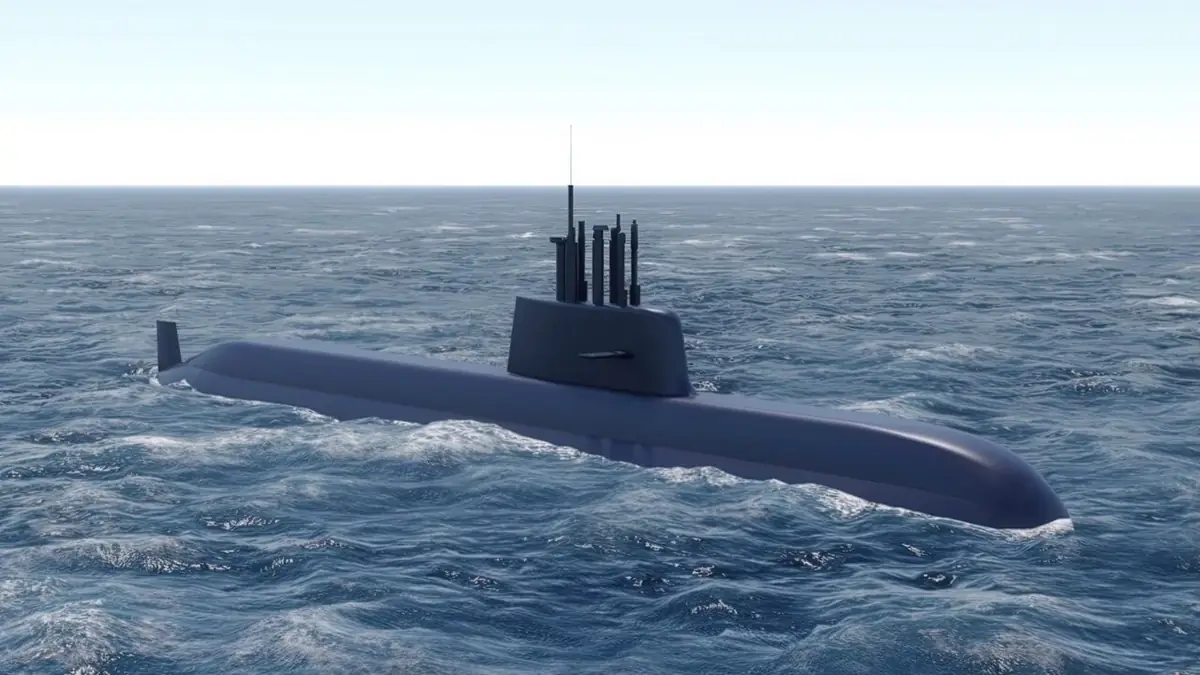
The South Korean Navy launched on Tuesday, November 3, the submarine Seo Hui (SS-088), the second 3,600-tonne vessel of the Jangbogo-III Batch-II class. The ceremony took place at Hanwha Ocean’s Okpo shipyard on Geoje island, with about 200 guests including National Assembly Speaker Cho Jeong-sik, whose wife Cho Mi-sun cut the launching rope, Korea Times and Korea Herald report.
The Defense Acquisition Program Administration (DAPA) and the Navy announced that the boat, named after the Goryeo-dynasty diplomat and statesman Seo Hui, will undergo sea trials and be delivered in 2028, before entering active service. The launch came five years after the construction contract was signed with Hanwha Ocean, while the first boat of the series, Jang Yeong-sil, was launched in October 2025.
The characteristics of Seo Hui
Seo Hui is about 89 metres long and larger than the Batch-I submarines of 3,000 tonnes, the Dosan Ahn Changho, An Mu and Shin Chae-ho. The Navy and DAPA cite an improved combat management system and sonar, allowing multiple targets to be detected at long range and precisely engaged. Besides torpedoes and mines, the boat can carry ballistic and cruise missiles through an expanded vertical launching system.
Propulsion is a hybrid system combining Hanwha Ocean’s air-independent propulsion (AIP) with domestically made lithium-ion batteries from Hanwha Aerospace. The Herald writes that combining AIP and lithium in a single system is a world first and gives the boat the longest underwater endurance among diesel-electric submarines, a claim that comes from the South Korean Navy and DAPA. DAPA notes that the system passed multiple safety checks and land-based tests. The boat also has noise and vibration reduction technology, an auxiliary propulsion system in case the main one fails, and a periscope for visual observation when the electro-optical sensors are not working.
70 domestic systems and the export role
Compared with Dosan Ahn Changho, 12 additional domestically made systems were installed, bringing the total to 70. Lee Sang-woo, head of DAPA’s nuclear-powered submarine programme team, called Seo Hui “a milestone proving the excellence of South Korean submarine design and construction” and expects it to strengthen the Navy’s readiness and submarine exports. Rear Admiral Lee Koo-sung of Naval Headquarters described it as a “modern national strategic asset” able to counter threats effectively thanks to its underwater capabilities.
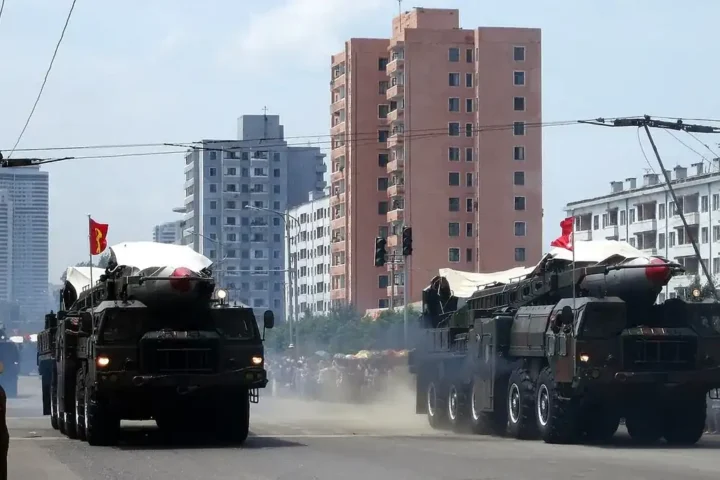
The Korea JoongAng Daily notes that Seoul is strengthening its undersea deterrence as North Korea’s fleet expands, including the new 5,000-tonne destroyers Kang Kon and Choe Hyon. The Batch-II version has also been offered to Greece, in the KSS-III proposal. For North Korea’s latest weapons tests, see our report on the cluster-warhead test.