Drones
Latvia: second drone alert in two days, in the Balvi and Ludza municipalities near the Russian border
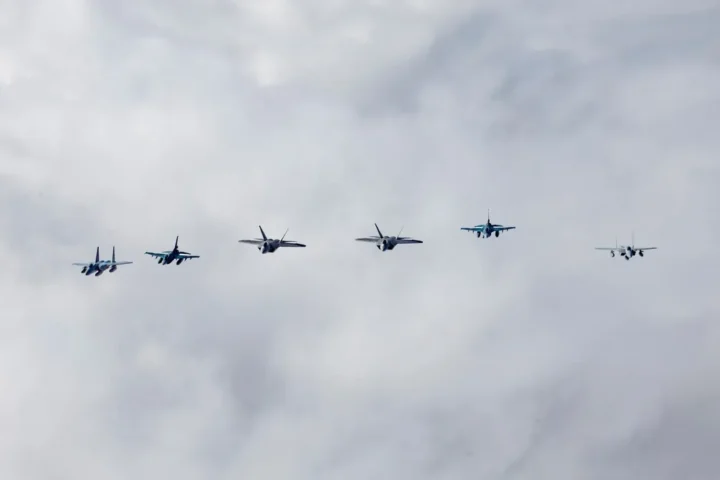
Latvia sounded a drone alert for the second time in two days, in the eastern municipalities of Balvi and Ludza, and NATO air-policing fighters were activated. The army later said the object is believed to be on the ground in Latvia.

Latvia sounded a drone alert for the second time in two days, as the National Armed Forces (NBS) warned of a threat in the country’s airspace, this time in the Balvi and Ludza municipalities in the east, near the border with Russia. The alert sounded around midnight on Monday into Tuesday, November 3, and, the Latvian army said, the fighters of NATO’s Baltic air-policing mission were activated.
“TAKE ACTION! We inform you that there is a threat in Latvian airspace,” the NBS wrote in a post on X, urging residents of the two municipalities to stay indoors and follow the two-walls rule. Anyone who sees a low-flying object or anything suspicious should not approach it but call 112, they added. The warning reached residents’ mobile phones at around 00:10 local time, Poland’s Interia writes.
The drone in the Balvi municipality
The army later said the danger had passed and that the object is believed to be on the ground in Latvia, in an area near the Russian border. Interia writes that the drone fell in the Balvi municipality and the search for it continues. The same night the Operational Command of the Polish Armed Forces announced it had mobilised air-defence forces and assets as a precaution because of massive Russian strikes on targets in Ukraine.
Sunday’s BLAZE incident
Just on Sunday, November 1, an orange alert had been declared in the Krāslava and Ludza municipalities, when an unknown drone entered Latvian airspace at 18:59 and left 17 minutes later, crossing into Russia again. The army used the BLAZE air-defence drone and at 19:19, near the Latvian-Russian border, decided to activate its self-destruct mechanism to avoid the risk of crossing it, the Latvian army said on X.
Ukrainian drones have repeatedly strayed into the airspace of Finland, Estonia, Latvia and Lithuania: Ukraine attacks Russian oil export ports on the Baltic and some of the drones go astray, Reuters writes. In Latvia such an incident led earlier this year to the fall of the government. Moscow accuses Kyiv of using NATO airspace as cover for its attacks, while Kyiv replies that Russian jamming diverts some of its drones. NATO countries generally put the blame on Russia, since it started the war by invading its neighbour.