Drones
Spain plugs its ARACNE counter-drone system into the national air defence network during the ATLAS 26 exercise
Indra and EM&E announced that the ARACNE counter-drone system, already in service with the Spanish armed forces, was integrated into the national air defence architecture during the ATLAS 26 exercise in Huelva on October 19-23.

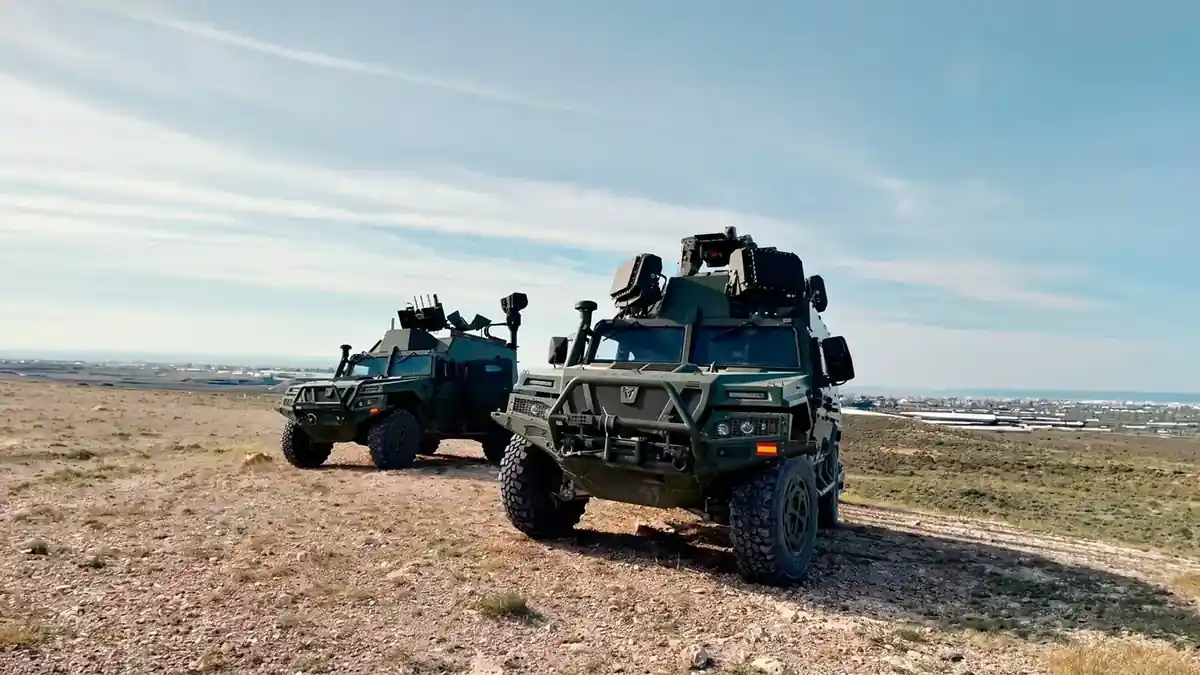
Spain has taken a step that interests the whole of Europe: linking its defence against drones to the same network as classic air defence. The ARACNE system, developed by Indra and Escribano Mechanical & Engineering (EM&E) and already in service with the Spanish armed forces, was integrated operationally into the country’s air defence architecture during the ATLAS 26 exercise, held in Huelva from October 19 to 23, as Indra announced on Friday, October 23.
The link was made through the COAAAS+ anti-aircraft artillery operations centre, also an Indra product, which brought ARACNE into the air defence system of the Aerospace Operations Command (MOA). Counter-drone assets and anti-aircraft artillery thus worked together with a common picture of the situation. According to the two companies, this architecture shortens the decision cycle, speeds up detection, identification, classification and prioritisation of threats, and allows the most suitable sensor and the most suitable means of neutralisation to be assigned to each target according to its nature and trajectory, the degree of danger and the rules of engagement. The aim is a scalable response to mass attacks, without overlap or waste of resources.
What ARACNE combines
ARACNE combines different sensors and neutralisation means, which the C4ARMS command and control system links with the higher echelons of air defence so the response can be adapted to the mission and the tactical environment. On the EM&E side, the OTEOS electro-optical sensor handles precise identification and tracking, GUARDIAN remote weapon stations neutralise various types of drones, and the Brontes jammer adds strong electronic jamming against unmanned aircraft.
Mobility is the other distinguishing feature. Thanks to Indra’s NEMUS radars, ARACNE can accompany units during manoeuvres and protect command posts, logistics units, convoys and combat elements without depending only on fixed positions, preserving freedom of action and continuity of operations.
The exercise and the contract
ATLAS 26 brought together units of the armed forces and security bodies under unified command and validated common procedures against Class I and II unmanned aircraft in demanding scenarios. The companies stress that the system entered service in just two years and link the test to European initiatives for a “drone wall” on the eastern flank and for border protection, where, they note, Spain has experience and a leading role.
The contract with a temporary joint venture of Indra and EM&E was signed in February 2025 and, as Infodefensa has reported, covers 14 systems with a budget of just over €30 million, with the mobile configuration based on two VAMTAC vehicles. Indra had publicly presented ARACNE and COAAAS as Special Modernisation Programmes of the Spanish armed forces at the 2E+I Ejército 35 forum in Toledo in late September.
Air defence also occupies Spain at sea, where Navantia and the Spanish Navy are planning an air-defence variant of the F110 frigate. Greece, for its part, is acquiring the Israeli Drone Dome counter-drone system against Turkish drones and loitering munitions.