Asia-Pacific
Taiwan: China holds “area denial” drills in the Western Pacific with the Liaoning – Defence Minister Koo’s reply and what the G7 said
Taiwan’s defence minister Wellington Koo confirmed on November 10 that China is conducting “area denial” drills with the Liaoning carrier group in the Western Pacific; G7 foreign ministers restated opposition to coercion in the Strait.

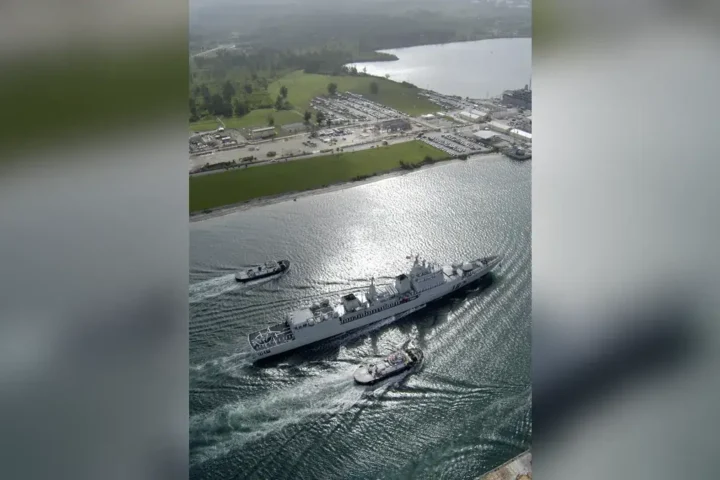
Taiwan’s Defence Minister Wellington Koo confirmed on Tuesday, November 10 that China is conducting “area denial” drills in the Western Pacific with the Liaoning aircraft carrier group and other naval training formations. Mr Koo spoke to reporters in Taiwan’s legislature, the Legislative Yuan, and described Beijing’s moves as a form of military intimidation that, he said, aims to undermine peace and stability in the Indo-Pacific.
The term refers to the “anti-access/area denial” (A2/AD) doctrine: one side tries to keep a third power out of the theatre of conflict. For Taiwan this means that in the event of a Chinese attack, American and allied forces would find the road to the island closed.
Taiwan’s armed forces, the minister added, are closely monitoring the activity. They will use joint intelligence, surveillance and reconnaissance (ISR) assets and exchange information with allies, to keep a continuous picture and react accordingly. There has been no official announcement of a drill from Beijing. In October China’s defence ministry had called the Liaoning’s training in the Western Pacific an annual routine to test combat capabilities far from the coast, on the open sea, aimed at no particular country.
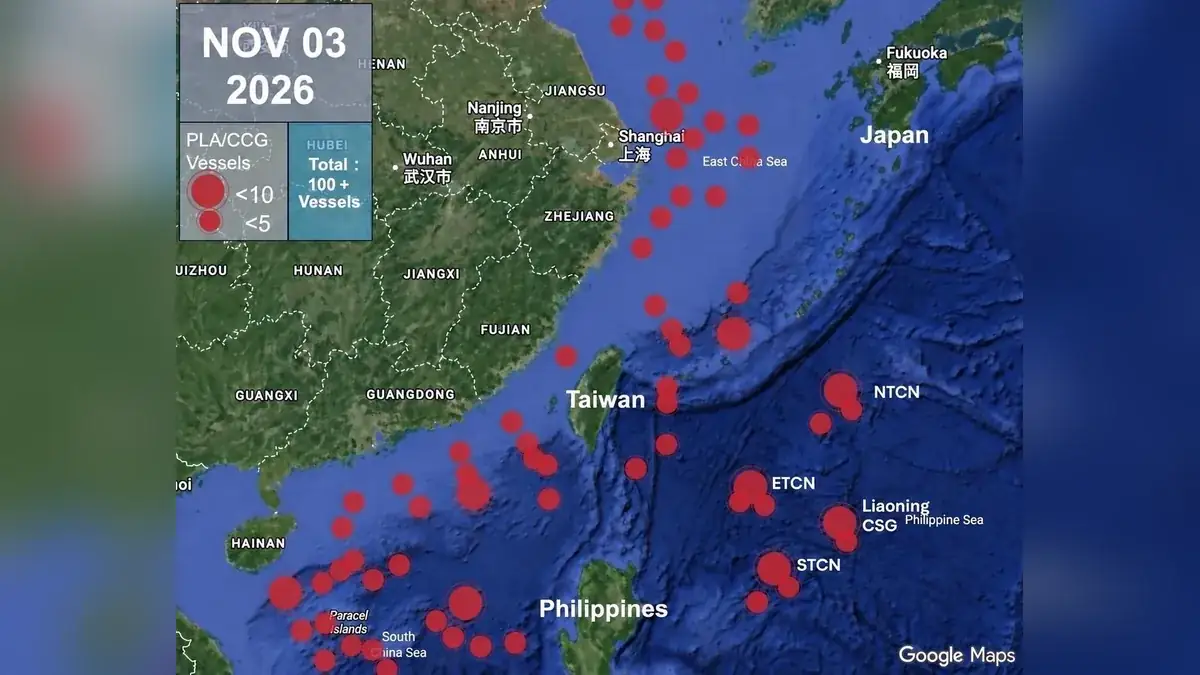
Mr Koo’s confirmation comes a week after the Secretary-General of the National Security Council, Joseph Wu, posted a map showing more than 100 ships of the Chinese Navy and Coast Guard deployed from the East China Sea to the South China Sea, with the Liaoning group in the Philippine Sea. Mr Wu had written then that Taiwan “will not provoke, but will not yield to any pressure” (more on the 100 Chinese ships in the Western Pacific).
The defence ministry’s daily tally shows lower activity around the island itself. Between 06:00 on Monday, November 9 and 06:00 on Tuesday, November 10, four sorties of Chinese aircraft, eight warships and one official ship were detected. Taiwan responded with fighter patrols, Navy ships and shore-based missile systems. On Saturday, November 7 the ministry had recorded 11 aircraft sorties and 10 warships, while on November 3 sorties had reached 49. The drills come shortly before next week’s APEC summit in Shenzhen, where a new meeting of Donald Trump with Xi Jinping is expected, and with Taiwan’s local elections in late November.
The G7 position on the Taiwan Strait
The previous day, Monday, November 9, G7 foreign ministers in Paris restated their “strong opposition” to any unilateral attempt to change the status quo by force or coercion in the East China Sea, the South China Sea and the Taiwan Strait. The wording appears in the briefing of Japan’s Foreign Ministry on the meeting, which Japanese minister Toshimitsu Motegi attended. The seven condemned North Korea’s nuclear and missile programmes and agreed to cooperate against cybercrime, such as cryptocurrency thefts. It was the fourth in-person meeting of the ministers this year, the same one at which Europeans asked for a seat in the talks on Ukraine.