Europe
Titania: UK launches second military satellite and trials space-watching sensors, one in Cyprus
The MoD says Titania, built by Dstl and BAE Systems, is the second satellite in the ISTARI programme, and Project Inaros will trial three space-watching sensors, including one in Cyprus.

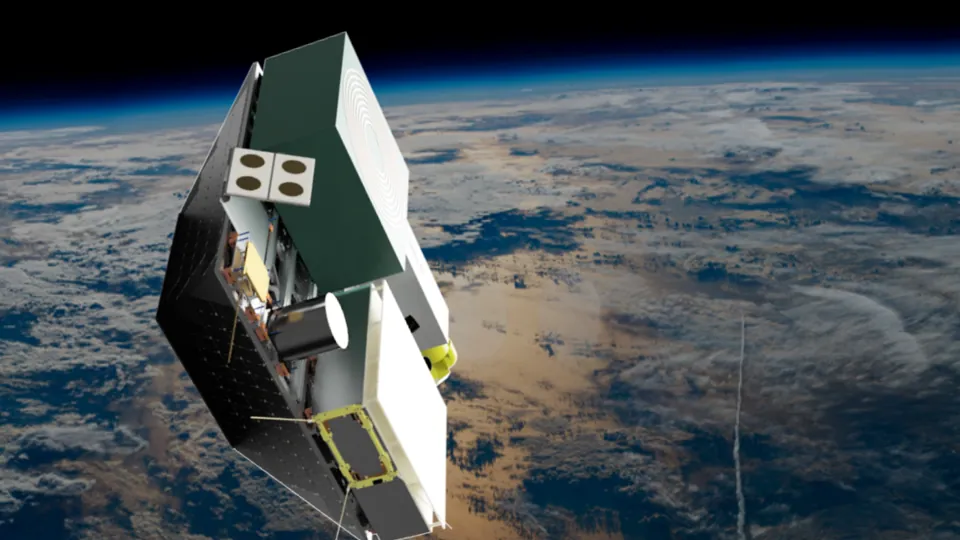
The United Kingdom has put a second military observation satellite into orbit. The Ministry of Defence (MoD) announced on 7 November that Titania, a British-built spacecraft, is now operating, and that it has started a trial of ground-based sensors, called Project Inaros, to watch for threats to UK satellites.
According to the MoD, the launch was completed in the previous month. Titania follows the satellite Tyche and is run by UK Space Command under the ISTARI programme, which is meant to give British forces space-based intelligence, surveillance and reconnaissance.
What Titania is
The ministry describes Titania as weighing around 100 kg, roughly the size of a washing machine, and says it circles the Earth about every ninety minutes. It was designed and built in Hampshire by the Defence Science and Technology Laboratory (Dstl) together with BAE Systems, under a contract the MoD values at £9.5 million.
Two more satellites are planned in the same family: Juno, with Surrey Satellite Technology Limited (SSTL), and Oberon, with Airbus Defence and Space. Air Chief Marshal Sir Harv Smyth, the Chief of the Air Staff, said the ability to observe the Earth from space was critical to national resilience and military advantage.
Project Inaros and the Cyprus site
Project Inaros is a trial of three ground-based sensors that the MoD says use neuromorphic technology, which mimics biological processes by detecting changes in light. The sensors were developed by the British-Australian company Optera with the National Security Strategic Investment Fund. They will be placed at sites in the UK, Australia and what the ministry calls British facilities on the island of Cyprus.
The MoD says the data will help units such as No. 1 Space Operations Squadron, No. 2 Space Warning Squadron and the new No. 3 Space Effects Squadron protect satellites used for navigation, mobile networks and missile warning. It adds that the technology could eventually become an early-warning system for unusual activity near UK satellites.
The money behind it
The announcement is tied to more than £3 billion of planned defence spending on space over four years, which the ministry links to the Defence Investment Plan and the Strategic Defence Review. Defence Secretary Wes Streeting said that having Titania in orbit and Inaros watching over satellites means threats can be seen sooner.
The ministry gave no figures for the cost of Inaros, no launch date for Juno or Oberon, and no details of where on Cyprus the sensor will be installed. Those points were not covered in the official statement.