Drones
U.S. Army tests drone swarms and armed robot vehicles in live-fire demonstration in Germany
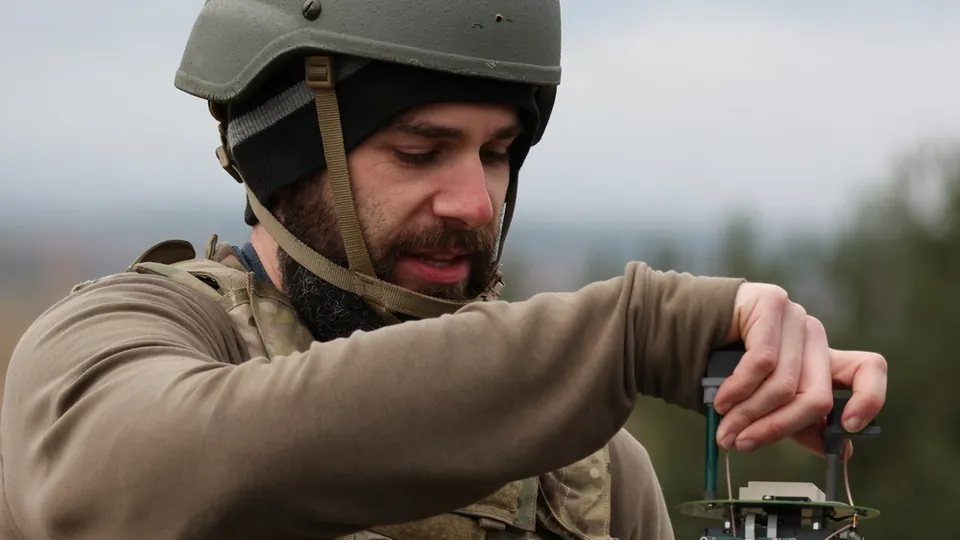
The U.S. Army's DEVCOM Armaments Center and U.S. Army Europe and Africa tested drones and unmanned ground vehicles with live fire at Grafenwoehr on 12 November, with soldiers of the 173rd Airborne Brigade flying some of the drones.

The U.S. Army has put drones, armed robotic vehicles and containerised launch systems through a live-fire test at the Grafenwoehr Training Area in Germany, as it looks for cheaper ways to strike targets at long range while keeping soldiers out of danger.
The demonstration took place on 12 November 2026. It was run by the U.S. Army Combat Capabilities Development Command (DEVCOM) Armaments Center together with U.S. Army Europe and Africa and the 7th Army Training Command, according to a U.S. Army release published through DVIDS.
What was shown
In the main live-fire sequence, a TRV-150 drone dropped smoke on a target. A group of drones was then launched from an HIV3 swarm drone launcher mounted on an unmanned ground vehicle called R3NEGADE, and the drones carried out an autonomous strike. Soldiers of the 173rd Airborne Brigade separately hit a target with a first-person-view drone.
A second R3NEGADE carried a remotely operated weapon station fitted with a Javelin missile, which the Army said showed how unmanned vehicles can carry different weapons for different missions. A TRV-400 aircraft with the developmental FIR3FLY anti-armour capability was also on static display, as part of a containerised system meant to store drones and deploy them remotely when needed.
Alex Tomosieski, programme manager for the Remote Rapid Response Autonomous Contingency Team (R3ACT), said the aim is to place modular air and ground platforms inside containers so commanders can pre-position capabilities and “deploy unmanned assets where they are needed”.
Cost and scale
Affordability was a central theme. Developers combined commercially available technology with existing Army weapons and equipment, hoping to field systems across many more units rather than relying only on expensive, specialised platforms. Troy Brannon, who leads the Expanded Maneuver-Air portfolio at DEVCOM Armaments Center and led the demonstration, called it “the art of the possible” and said the Army needs “scalable, cheap, affordable, lethal options”.
Command Sgt. Maj. Thinh Huynh, DEVCOM’s command sergeant major, said soldiers must be involved from the start so the equipment works for them. Sgt. Dean Aguirre, a drone operator with the 173rd Airborne Brigade, said the people who will operate such systems should have a voice in how they are developed.
Link to Europe and NATO
The Army said holding the event in Germany tied the technology to the needs of U.S. forces in Europe, who regularly train with NATO allies. The photo caption released with the story says the demonstration supports NATO integration under the Eastern Flank Deterrence Initiative. The Army also presented the test as supporting two elements of its new operational framework, “How the Army Fights”: strike and endurance.
Unmanned ground systems are also drawing industry interest in Europe. Geopolitiki earlier reported on Milrem Robotics and Chugach sign memorandum to explore U.S. production of unmanned ground systems.
The release describes an evaluation and a technology demonstration, not a procurement decision, and gives no figures on cost, range or numbers of systems.