Air Force
U.S. Air Force chief Wilsbach: ATOMS data link goes from concept to combat in six months and feeds new MAF NEXUS programme
Gen. Ken Wilsbach says the ATOMS connectivity tool went from development to combat-tested in six months and will feed a new programme, MAF NEXUS, for the mobility fleet.

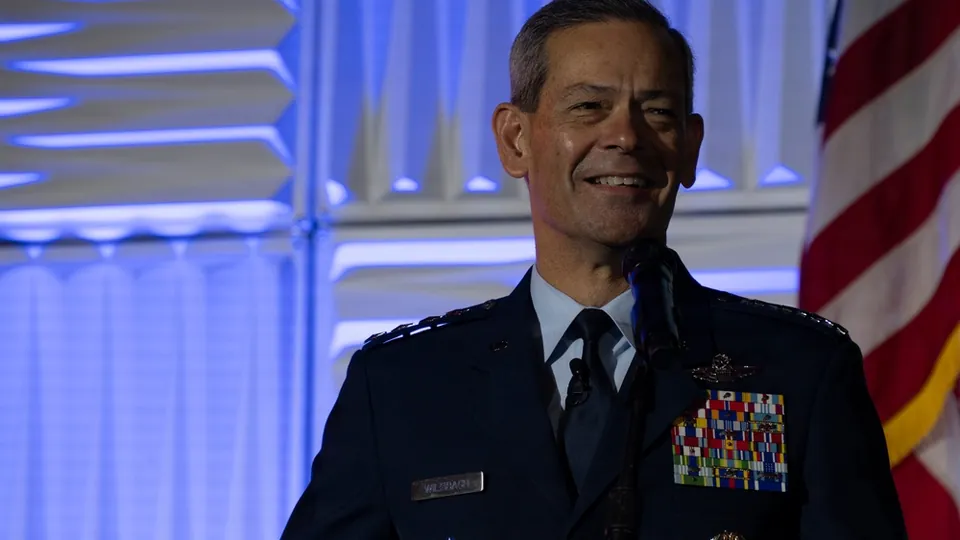
The chief of staff of the U.S. Air Force, Gen. Ken Wilsbach, told a gathering of airlift and tanker specialists in Florida on 6 November that a connectivity tool for cargo and refuelling aircraft has gone from development to a combat-tested capability in about six months, and will now become a formal programme of record called MAF NEXUS.
Wilsbach was giving the keynote address at the 2026 Airlift/Tanker Association Symposium in Kissimmee, which ran from 5 to 7 November and is attended by Air Mobility Command (AMC) leaders, government agencies and industry. According to the account published by AMC, he argued that the Joint Force can project combat power only as fast as the mobility fleet can move and sustain it.
What ATOMS does
The system is the Airlift/Tanker Open Mission System, known as ATOMS. Wilsbach said it uses beyond-line-of-sight connectivity to give crews a common operational picture, and that AMC compressed what would traditionally have been years of development and testing into six months. He said dozens of airlift and air-refuelling aircraft in the mobility air force (MAF) are already connected this way, so that crews land with more situational awareness than they had at take-off.
Experimentation with ATOMS is feeding MAF NEXUS, a programme intended to connect the mobility fleet further and to support dynamic tasking and command-and-control. Wilsbach said aircraft of both the combat air force and the mobility air force need to be fully integrated into battlefield networks, and that “we must move faster” because reliable connectivity at the edge remains a gap.
Changing how the service buys
The general also linked modernisation to acquisition. He said the U.S. Air Force needs open architectures that can be updated with data, software-defined systems that can be improved without hardware changes or depot maintenance, and pipelines able to close vulnerabilities and add capabilities “within hours, not months”. He described this as part of adapting faster than adversaries in a contested environment.
Warfighting priority at AMC
A second AMC account of the symposium reports that the command commander, Lt. Gen. Dan Tulley, has set warfighting as one of AMC’s three priorities. Tulley framed the central question as whether the command can “deliver, maneuver and sustain the Joint Force at a speed required under attack”, and said the answer must be yes.
Col. Frank Laras, commandant of the U.S. Air Force Expeditionary Operations School, said training is being adapted to a changed battlefield, with more stress and pressure built into courses in partnership with other training organisations. His stated aim was that airmen “sweat harder at home, so we bleed less in combat”.
Why it matters
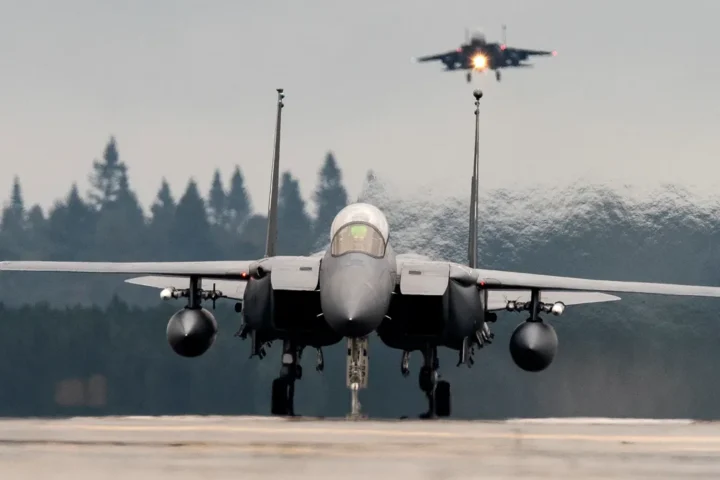
Cargo aircraft and tankers are the backbone of any long-distance deployment, from moving air-defence units to keeping fighters in the air over long ranges. Linking them into the same networks as combat aircraft is therefore a priority for planners who expect contested airspace and degraded communications. The briefings did not give a budget, a schedule or a number of aircraft for MAF NEXUS, and those details remain to be announced.
Sources: Air Mobility Command accounts of the 2026 Airlift/Tanker Association Symposium, published on the DVIDS service.