Asia-Pacific
China rejects trilateral nuclear talks with US and Russia and accuses Japan of nuclear ambitions
Foreign Ministry spokesperson Mao Ning said it is "neither fair, reasonable nor realistic" to ask China to join trilateral nuclear talks, and criticised Japan over nuclear submarines and its non-nuclear principles.

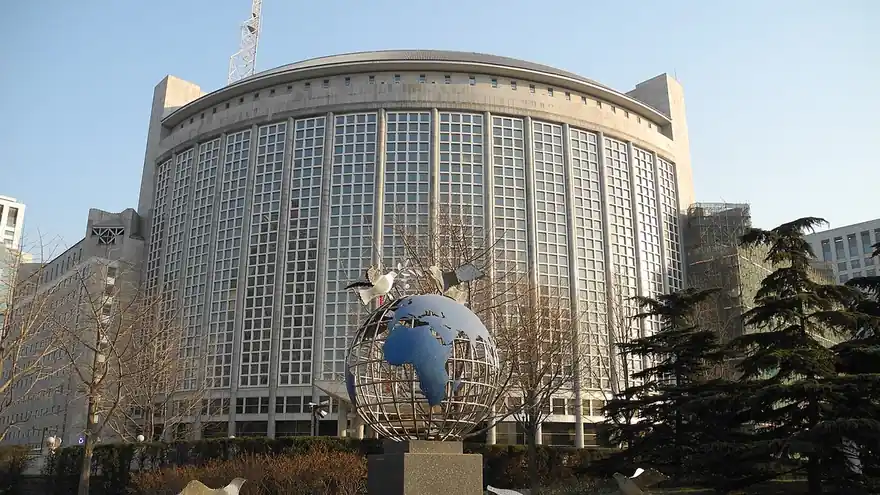
China has rejected the idea of joining nuclear disarmament talks with the United States and Russia “at this stage”, and accused Japan of “inflating ambitions” of acquiring nuclear weapons. Both positions were set out by Foreign Ministry spokesperson Mao Ning at the regular press conference on 16 October.
“Neither fair, reasonable nor realistic”
A reporter from the German news agency DPA noted that US President Donald Trump had said Washington is holding talks with Russia and China on denuclearisation, and asked whether Beijing could confirm talks with the American side. Mao Ning did not confirm any talks. She said China had set out its position “on multiple occasions” and that the United States, “sitting on an enormous nuclear arsenal”, should fulfil its “special and primary responsibility for nuclear disarmament”.
She added that China’s nuclear strength is “by no means at the same level with that of the U.S. and Russia”, and that it is “neither fair, reasonable nor realistic” to ask China to join what she called “so-called trilateral nuclear disarmament negotiations at this stage”. The transcript gives no further detail of what Mr Trump said.
Beijing on Japan’s nuclear debate
The spokesperson was also asked about Japan. The question, from the Chinese state broadcaster CGTN, said that Japanese Prime Minister Sanae Takaichi told a House of Representatives budget committee session on 14 October that there was room to consider remarks suggesting US nuclear-armed vessels could be allowed to enter Japanese ports in a crisis. The question added that she had also said her government would “seriously consider” introducing nuclear-powered submarines, while taking into account developments in Australia and South Korea. These descriptions come from the question as published by the Chinese ministry, not from a Japanese record, and have not been checked against one.
Mao Ning said the remarks “once again revealed Japanese authorities’ inflating ambitions of possessing nuclear weapons”. She accused the Japanese government of trying to “progressively ease nuclear restrictions”, of moving to drop the three non-nuclear principles and of seeking to deploy nuclear weapons in Japan, and said such moves “pose a serious threat to peace and stability in Asia”. These are statements by the Chinese government, not established facts.
In a follow-up, a reporter from Phoenix TV said Japanese Defence Minister Shinjiro Koizumi had questioned China’s criticism, saying that countries without nuclear weapons or strategic bombers were being criticised by countries that have both. Mao Ning replied that Japan, as a defeated nation in the Second World War and a non-nuclear-weapon state party to the Non-Proliferation Treaty, has obligations under international law not to possess nuclear weapons, and that it was “high time that Japanese politicians caught up on history and law”.
Background
Japan’s possible acquisition of nuclear-powered submarines has already drawn criticism from North Korea, as Geopolitiki reported in North Korea calls Japan’s nuclear-powered submarines a “dark intention” and a “stepping stone” to nuclear weapons. The full Chinese transcript is on the Foreign Ministry website.