Europe
EU unveils new Arctic strategy: cable hub, icebreaker pooling and satellite upgrades
The EU has presented a Joint Communication on the Arctic that proposes an Arctic Cable Hub, joint icebreaker procurement and extended satellite coverage, as Russia expands its presence in the High North.

The European Commission and the EU’s top diplomat have set out a new strategy for the Arctic, presenting it on 20 October as a plan to harden the Union’s security presence in the High North. At the press conference, High Representative Kaja Kallas said: “Europe will not be a bystander in the Arctic.”
The document is a Joint Communication titled “European Northern Neighbourhood: A New Strategy for the Arctic”. The College of Commissioners adopted a separate communication, “Vision 2040 for Fisheries and Aquaculture”, on the same day.
Why Brussels is turning north
In her remarks, published by the European External Action Service, Kallas said the Arctic is warming three to four times faster than the global average, which opens access to resources and new shipping routes. She also pointed to a growing Russian military presence in the region, including reopened Soviet-era bases and new weapons tests. Drone incursions, GPS jamming, cable sabotage and shadow-fleet traffic were listed among the risks.
Kallas said Chinese investment in Arctic ports, minerals and infrastructure needs “careful scrutiny”. Three EU members, Denmark, Finland and Sweden, are Arctic states, and more than half a million EU citizens live in the region, she added.
Four priorities
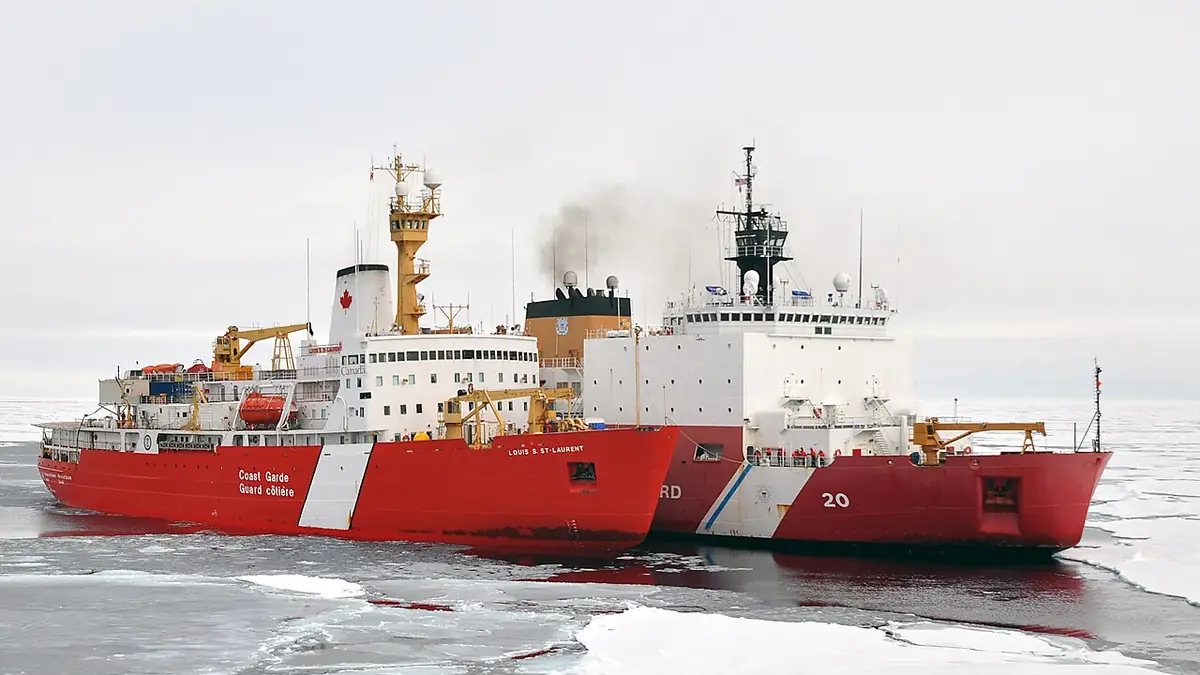
Security comes first. The strategy proposes extending the Copernicus and Galileo satellite systems to improve detection of Arctic threats, and creating an Arctic Cable Hub to monitor and repair undersea infrastructure, which could grow into a wider Maritime Security Hub. It also points to joint procurement and pooling of icebreakers and to better military mobility through Arctic ports, airports and corridors. The European Defence Fund is investing 260 million euros in cold-weather aircraft, textiles and over-the-horizon sensors. Kallas stressed that these steps complement NATO’s collective defence role, and added: “Because in the Arctic, icebreakers are the measure of power.”
The second priority is partnership with Norway, Iceland, Canada, the United Kingdom, the United States and other like-minded countries, with respect for their sovereignty. The third covers economic security and sustainable development: supply chains with trusted partners, renewable energy, transport and digital links, including the Rail Nordica project, a long-term pan-Arctic data cable and a secure submarine cable between Greenland and Europe. The fourth says investment must be sustainable, respect the rights of Indigenous Peoples and benefit Arctic communities.
What is still open
Asked about money and timetables, Kallas said talks on the next EU long-term budget are continuing. She named the upgrade of satellites to cover the Arctic more fully as the most concrete near-term step, and said it could move faster than the rest. No timetable was given for the Cable Hub or for icebreaker procurement. On surveillance around Greenland, she said the planned hubs would serve information sharing and that cooperation is open to like-minded countries, including the United States “if they so wish”.
Context
The strategy follows a series of Arctic moves by European governments. Earlier coverage on Geopolitiki includes the European Arctic summit and on the UK’s updated Arctic Policy Framework, which set out a national approach to the region.