Europe
European Parliament demands Russia return deported Ukrainian children, citing 20,651 verified cases
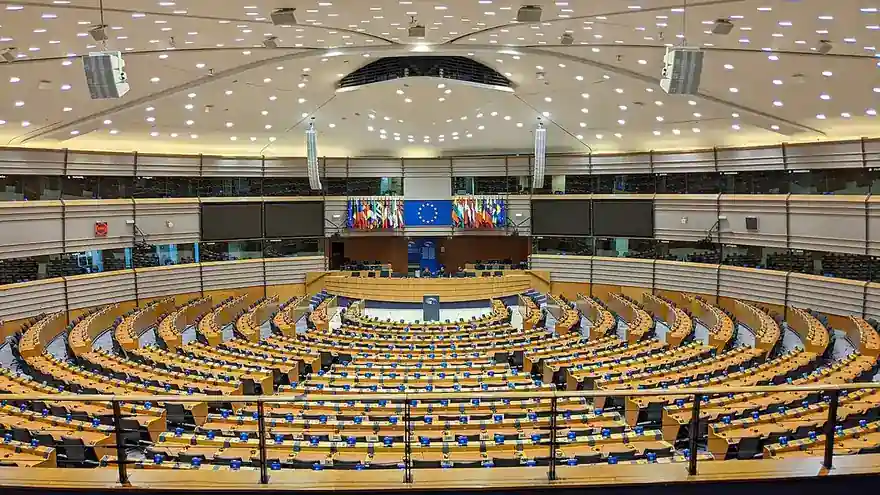
MEPs adopted a resolution by 536 votes to 8 on 12 November demanding the unconditional return of Ukrainian children deported or forcibly transferred by Russia, and backing the ICC warrants.

The European Parliament adopted a resolution on Thursday, 12 November 2026, demanding that Russia return all Ukrainian children who were deported or forcibly transferred during the war. According to the Parliament’s press service, the text passed with 536 votes in favour, 8 against and 37 abstentions.
In the resolution, MEPs condemn what they describe as Russia’s systematic deportation, forcible transfer, illegal adoption, forced Russification, indoctrination and militarisation of Ukrainian children, and demand that these practices stop immediately. They call on Russia to return the children, safely and unconditionally, from Russian-controlled territory to unoccupied Ukraine.
The figures cited in the text
The resolution states that, as of September 2026, 20,651 cases of deportation and forcible transfer of Ukrainian children by Russia have been verified, while approximately 1.6 million Ukrainian children are estimated to remain under Russian occupation. It adds that, as of 28 October 2026, 2,752 Ukrainian children deported, forcibly transported or rescued from Russian-occupied territories have so far been returned. These are the figures given in the Parliament’s text; the press release does not say which body compiled each of them, and Russia’s position is not part of the document.
Children and any peace deal
MEPs insist that the return of the children is an obligation under international law and must never be used as a bargaining instrument or made conditional upon territorial concessions, prisoner exchanges or other political agreements. They argue that it must be a central priority in all diplomatic initiatives and negotiations on any peace agreement ending the war, and that no lasting peace can disregard the rights of these children or the accountability of those responsible.
The vote comes as Russia, Ukraine and the United States held talks in Abu Dhabi that ended their first day without a deal, with a prisoner swap among the subjects discussed, as Abu Dhabi talks: Russia, Ukraine and the U.S. end four-hour first day with no deal, as prisoner swap and security guarantees are discussed reported. The resolution itself rules out making the children’s return conditional on such exchanges.
Accountability and sanctions
Parliament also reiterated its full support for the International Criminal Court and its unhindered work, including the arrest warrants issued against Russian President Vladimir Putin and Maria Lvova-Belova, the Children’s Rights Commissioner for the Russian President, for the war crime of unlawful deportation and transfer of children. MEPs stress that accountability must reach beyond the top leadership to the whole chain of perpetrators and enablers.
The text calls on EU member states to strengthen practical cooperation with Ukraine, international partners and organisations to speed up the identification, documentation, tracing and return of missing and deported children, and to further expand existing EU sanctions against officials and entities identified as responsible for child deportations. It also backs cooperation with Europol, Eurojust and the Ukrainian Ombudsman in gathering information and locating children who were unlawfully transferred.
A European Parliament resolution expresses the Parliament’s position and calls on others to act; it is not itself a sanctions decision.