Middle East & North Africa
UN relief chief Fletcher to governments on Gaza winter aid: “No more delay”
UN relief chief Tom Fletcher says waiting for Israeli elections or a new government is no excuse for stalling winter aid to Gaza, as the ILO reports 85.1 per cent unemployment.

The UN’s Emergency Relief Coordinator, Tom Fletcher, has accused governments of stalling on support for Gaza as winter conditions worsen, saying the delay is no longer acceptable. His remarks, reported by UN News on 11 November 2026, followed what he described as repeated assurances of support from foreign ministers and partners.
According to Fletcher, those partners also said that progress would be hard until after Israeli elections, and have now been told to wait for the formation of a government. “In case anyone has any doubt about international humanitarian law: this is not an acceptable excuse, as the international community and Board of Peace have made clear,” he said.
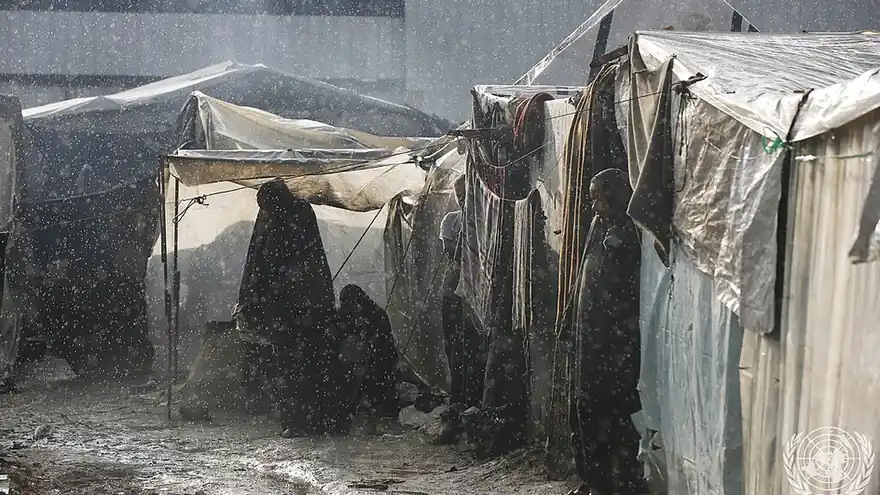
Tents under winter weather
UN News reports that people in Gaza face freezing temperatures and harsh storms that collapse or flood the tents in which thousands are living. Fletcher said the risk is needless, because the weather would not be such a threat where decent shelter exists and where decent tents and winter kit had been supplied. The UN’s earlier warnings on the same risk are set out in our report Gaza heads into a fourth winter in tents: UN reports aid convoys hit by incidents and 950,000 people at flood risk.
Fletcher said the UN has had a “clear plan” for the supplies that must reach Gaza, which should have arrived “not in weeks, but weeks ago”. The list he cited includes durable shelter, warm clothes, blankets, bedding and safe heating solutions, as well as generators, fuel, engine oil, spare parts, equipment to pump out water, to remove debris and to clear explosive ordnance.
His appeal was direct: “Open all the crossings, not just one. Let our vital NGO partners work. Allow the commercial markets to function. Stop this collective punishment. Fund the plan.”
ILO: aid alone cannot restore livelihoods
On the same day, the International Labour Organization (ILO) called on international partners to increase financial support for a jobs-led recovery plan in the Occupied Palestinian Territory. The UN Resident and Humanitarian Coordinator, Ramiz Alakbarov, said humanitarian assistance alone cannot restore livelihoods, essential services or the institutional foundations needed for sustainable recovery.
The ILO figures cited by UN News are stark. In Gaza, 252,000 jobs were lost between the third quarters of 2023 and 2025, unemployment reached 85.1 per cent and labour income losses totalled $2.77 billion, with women and young people facing particularly limited prospects. ILO Director-General Gilbert F. Houngbo said that “behind every job lost is a person, a family and a future placed at risk”.
The ILO’s Decent Work and Recovery Programme supports emergency employment, enterprise recovery, social protection and stronger labour institutions. Over the past three years, the agency says, it has helped generate approximately 130,000 paid workdays and contributed to social allowances reaching more than 30,000 older persons and persons with disabilities.
All figures and quotations above are attributed to the United Nations and its agencies as reported by UN News.