Middle East & North Africa
Iran designates Argentina’s Navy and Air Force as terrorist organisations – answering Milei’s decision on the IRGC
Iran’s foreign ministry has put Argentina’s Navy and Air Force on its list of terrorist organisations, in retaliation for President Javier Milei’s government designating the Revolutionary Guards as terrorists.

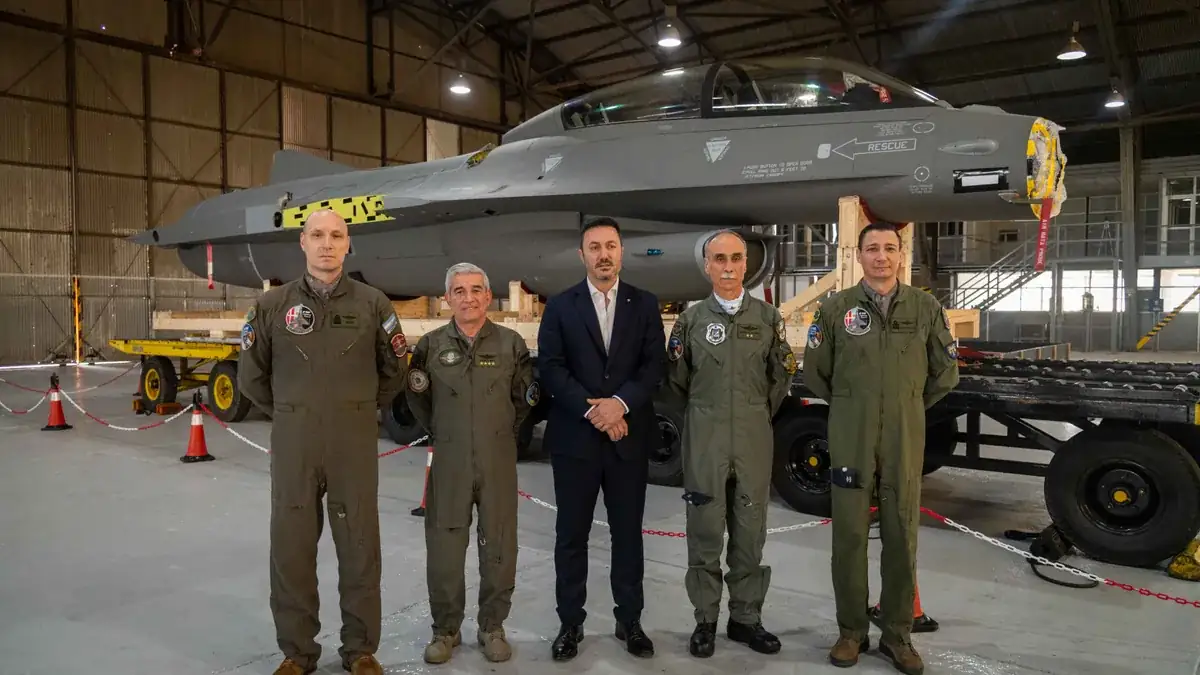
Tehran has raised the tension with Buenos Aires. Iran’s foreign ministry announced on Wednesday, November 11 that it is placing the Argentine Navy and Air Force on its list of terrorist organisations. The move is Iran’s answer to the decision of Javier Milei’s government to declare the Islamic Revolutionary Guard Corps (IRGC) a terrorist organisation.
In the Iranian statement, republished by the Tasnim agency, Argentina is accused of a “hostile act” against Iran. The ministry insists the Guards are an official branch of Iran’s armed forces, so designating them as terrorists runs against “fundamental principles of international law”. The legal basis for the countermeasures is the principle of reciprocity and a 2019 Iranian law, passed when Washington blacklisted the Guards, which provides for similar treatment of any country that adopts or supports the American decision. Tehran warns that every consequence rests with the Argentine government.
Buenos Aires’ precedent
Argentina took the first step on January 17, 2026, when it entered the Quds Force and thirteen people linked to it in its national terrorism registry, RePET (official page). On March 31 it extended the measure to the entire corps. President Milei’s office based the decision on the two deadly attacks of the 1990s in the capital: the car bomb at the Israeli embassy in 1992, with 29 dead, and the bombing of the AMIA Jewish community building in 1994, with 85 dead. Buenos Aires attributes both to Hezbollah, which it describes as the Guards’ operational arm in the region.
At the centre is Ahmad Vahidi, Iran’s former defence minister, against whom there is an Interpol red notice at the request of Argentine justice and whom Tehran placed at the head of the Guards. Listing in RePET triggers financial sanctions and restrictions on activity on Argentine territory. The Casa Rosada spoke of a “historic debt” of more than thirty years to the families of the victims and of realigning the country with the West. Two days later Argentina expelled the Iranian chargé d’affaires.
Milei’s choice fits the line he has followed since the start of his term, when he rejected joining the BRICS, declaring alignment with the United States and Israel.
Tehran now follows a steady pattern. In February it answered the European Union in the same way, designating the naval and air forces of member states as terrorist, while in early November it put the Royal Navy and the RAF on the list and declared MI6 a “hostile group”. In 2024 it had already done so for the Royal Canadian Navy. Iran’s direct contacts with Argentina are minimal, so the practical effect of the decision is expected to be limited.