Europe
Merz: “The time has come for this war to end”; the Oleshky truce as a model for energy and the Black Sea
At a joint press conference with Volodymyr Zelensky in Berlin, German Chancellor Friedrich Merz urged Russia to end the war and proposed the Oleshky regional ceasefire as a model for energy infrastructure and the Black Sea.

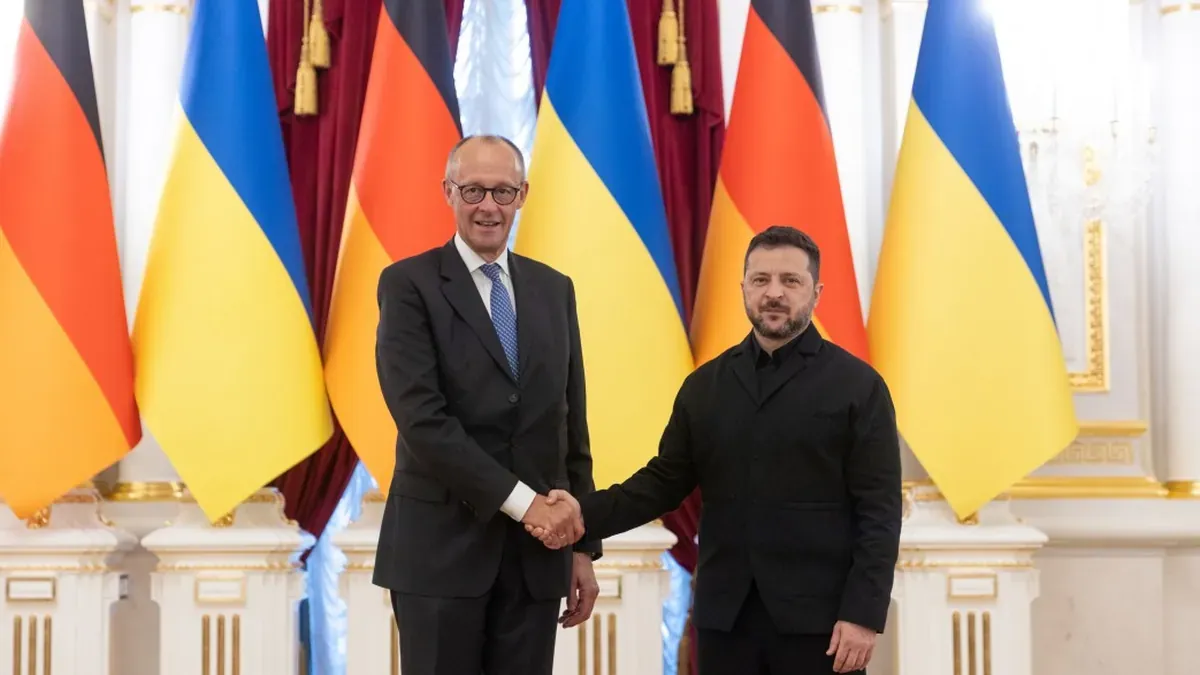
German Chancellor Friedrich Merz called on Russia to end the war and proposed the Oleshky ceasefire as a model for a pause in hostilities on energy infrastructure and in the Black Sea. The statement was made on Tuesday, November 3, during a joint press conference with Ukrainian President Volodymyr Zelensky in Berlin.
“Our message to Russia is therefore: the time has come for this war to end,” Merz said. “The regional ceasefire in Oleshky can be a model for a ceasefire regarding energy infrastructure and the Black Sea. Russia has stubbornly refused it until now.” The chancellor warned that Moscow’s attacks in the Black Sea carry a risk of further escalation and that Russia threatens to cause a global food crisis at the expense of the world’s poorest countries.
Europe’s role in the negotiations
Merz called the new round of peace talks a right step and stressed that Europe wants to and must take part. “Central elements of a peace settlement, whether they concern sanctions or the security architecture, can only be resolved with us Europeans. And everyone involved knows that very well,” he said. It is now up to Russia, he said, to show it is ready for serious negotiations, and until then Germany and its partners will increase pressure on Moscow and keep supporting Ukraine with all their strength.
Zelensky said the working groups will meet on November 10 and 11 and that he expects the way to open for a trilateral format at the level of heads of state and government. Ukraine wants an energy pause in hostilities, the opening of the Black Sea for grain and wider prisoner exchanges. For the new round of talks in Abu Dhabi, see our report on Witkoff’s announcement.
Oleshky: the truce and the new strikes
Zelensky said that on Tuesday Russia launched a new massive attack with cruise and ballistic missiles, immediately after the humanitarian operation in Oleshky. Ukraine had proposed that Russia extend the pause in hostilities and the answer, he said, was “new attacks, new strikes, new killings of our people”. In Komyshuvakha in the Zaporizhzhia region the rescue operation had continued for more than a day, after multiple air bombings the previous day. Five people have been rescued and more than 50 are missing. For the Oleshky operation, see our report on the evacuation of Oleshky residents.
The Coalition of the Willing summit in Berlin
Merz announced that next week he will discuss with his French and British counterparts continued support for Ukraine and that Germany will host a Coalition of the Willing summit in Berlin the week after. Zelensky gave November 19 as the date. The aims of the summit are coordinating additional aid, confirming readiness for post-ceasefire security guarantees, with a military exercise starting in the coming days, and coordinating diplomatic efforts. At NATO, €70 billion of military aid for Ukraine in 2026 has been agreed and, as Merz stressed, all partners must honour the commitment.