Europe
European Parliament awards 2026 Sakharov Prize to the International Criminal Court and its officials
Parliament President Roberta Metsola announced the collective award on 22 October, as MEPs press the Commission to activate the EU blocking statute against US sanctions on the Court.

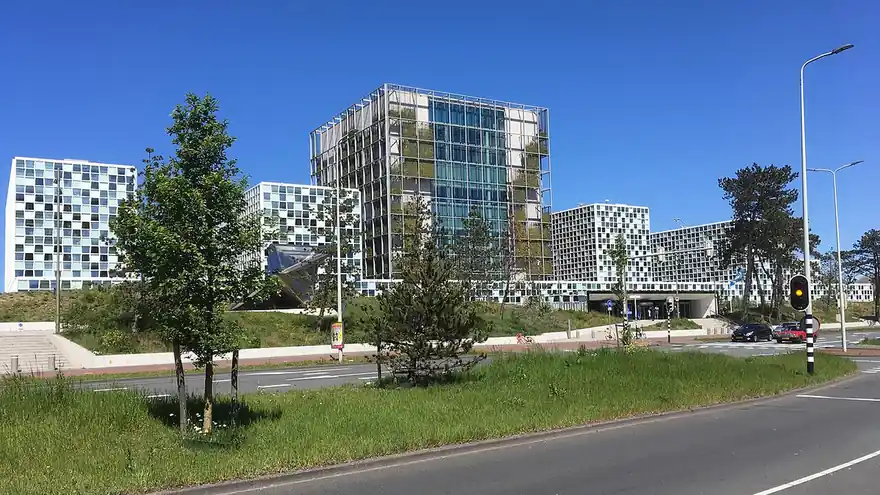
The European Parliament has awarded its 2026 Sakharov Prize for Freedom of Thought to the International Criminal Court and its officials, a collective honour that lands as the Hague-based tribunal faces sanctions from the United States.
Parliament President Roberta Metsola announced the laureate in the hemicycle on Thursday 22 October. “The European Union is built on respect for multilateralism and international institutions,” she said, adding that the award recognises the Court’s “important work in upholding international law and justice.”
What the Court does
The ICC investigates and, where warranted, tries individuals accused of the gravest crimes of concern to the international community: genocide, war crimes, crimes against humanity and the crime of aggression. Parliament describes it as a court of last resort that complements national courts and is governed by the Rome Statute, an international treaty. The citation highlights the Court’s investigations, prosecutions, trials and the issuance or authorisation of arrest warrants.
A signal on US sanctions
The prize comes against the background of Washington’s measures against the Court. Parliament’s statement says that, in its 2025 annual reports on the common foreign and security policy and on human rights and democracy in the world, MEPs voiced deep concern at the waves of sanctions imposed since 2025, notably by the United States, on the ICC, its prosecutors, judges, staff and partners. Parliament calls these serious attacks on the international justice system.
Geopolitiki has followed that dispute. In earlier reporting we covered US sanctions the International Criminal Court itself; Rubio: “Either the ICC will end its threats, or we will end the ICC” and, later, France condemns US sanctions on the International Criminal Court and asks Washington to withdraw them.
Parliament says MEPs have repeatedly asked the European Commission to activate the EU’s blocking statute, a 1996 Council regulation that nullifies within the Union the effect of foreign judicial decisions based on extraterritorial legislation and lets European operators seek compensation in court. According to Parliament, such a step would protect ICC staff from extraterritorial pressure and allow the Court to keep working independently.
MEPs also welcomed the continuation of EU financial support for the Court. Parliament notes that all EU member states are parties to the Rome Statute and are therefore obliged to implement ICC decisions, and says MEPs consider the growing disregard for international law and the politicisation of debates on international justice institutions to be, in their view, an existential threat to the rules-based international order. The ICC President and several judges visited parliamentary committees in 2025 and 2026 to explain how the sanctions affect their professional duties and personal lives.
About the prize
The Sakharov Prize, named after the Soviet physicist and dissident Andrei Sakharov, was established in 1988. Parliament awards it every year to individuals or organisations working on the defence of human rights and fundamental freedoms, minority rights, respect for international law, democracy and the rule of law.
The award ceremony for the 2026 prize will take place in December in Strasbourg, during Parliament’s plenary session.