Politics & Diplomacy
Trump on “60 Minutes”: Ukraine will emerge from the war with a “slightly different setup” – what he said about Putin, Zelensky and Iran
In his first interview since the Republican midterm defeat, Donald Trump told CBS’s “60 Minutes” the Ukraine war will end “soon” and that the country will end up with a “slightly different setup.”

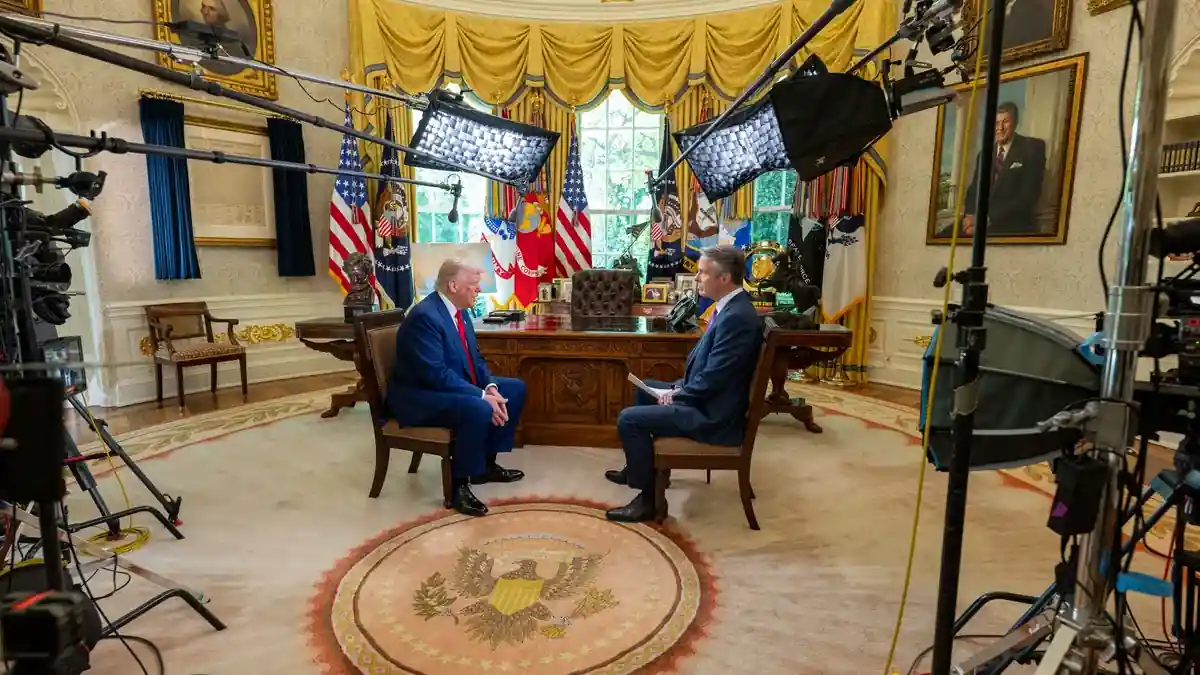
Donald Trump believes the war in Ukraine will end “soon,” but says the country will emerge from it changed. In his first interview since the Republican defeat in the midterm elections, on CBS’s “60 Minutes”, recorded at the White House on Friday, November 6, and aired on Sunday, November 8, the US president said Ukraine will end up with a “slightly different setup.”
The phrase came when journalist Ross Douthat asked whether he expects the affair to close with a free and independent Ukraine. “I think we’ll get there and it will happen,” Mr Trump answered, without explaining whether he meant territorial concessions. The interview took place only days before the Ukraine-Russia-US talks in Abu Dhabi, where the three delegations will sit at the same table for the first time since February.
“Tremendous hatred” between Putin and Zelensky
As the biggest obstacle to peace, Mr Trump cited the “hatred” between Vladimir Putin and Volodymyr Zelensky. He said he gets along well with both and avoided saying whom he trusts more. When the journalist observed that the hatred is easier to understand on Mr Zelensky’s side, since his country was invaded, Mr Trump accepted that, but added that at their first meeting “great disrespect was shown toward Russia.” He insisted the war would not have broken out had he been president and that it will end “only thanks” to him.
Asked whether Mr Putin is misleading him, he answered “I don’t think so” and argued that no one has been tougher on Moscow, with sanctions and trade measures. He denied lifting sanctions on Russian diesel: as he put it, he merely allowed Russia to put on the world market thousands of barrels of oil and diesel that the world needed, without that being a “big favour.”
France and other Europeans are asking for a seat at the Abu Dhabi talks so that post-war security terms are not decided without them; see our report on Barrot’s statement that “France will be in Abu Dhabi”.
Iran, Hegseth and White House changes
On Iran, Mr Trump followed the line he gave CNN, where he called a new strike on Iran “extremely unlikely”, saying he does not intend to escalate the war now that the elections are over. He claimed that Iran’s nuclear material is “buried under thousands of tons of rock” and that the Strait of Hormuz is open, with US military escorts that, he said, do not cost much. He added that countries the US protected will compensate it for the whole cost of the war, because “without us they would not exist,” and that “Israel would not exist” without the American strikes with B-2 bombers.
The president expressed confidence in Defense Secretary Pete Hegseth, who is under pressure to resign, saying the US “won two wars,” among them the one in Venezuela, which he said was won “in less than an hour.” He also said that, after the defeat, he expects to remove some members of his team (“maybe a few changes”), though he said he loves his cabinet. CBS reports that an hour after the interview White House chief of staff Susie Wiles was replaced by her deputy Stephen Miller, the architect of the mass deportation policy.