Europe
UK at the UN Security Council: Russia is using winter as a weapon, and Britain will stand with Ukraine “for as long as it takes”
Britain's UN ambassador cited the Dnipro and Zaporizhzhia strikes and Russian missile attacks on energy sites, and said Europe's commitment to Ukraine is unshakeable.

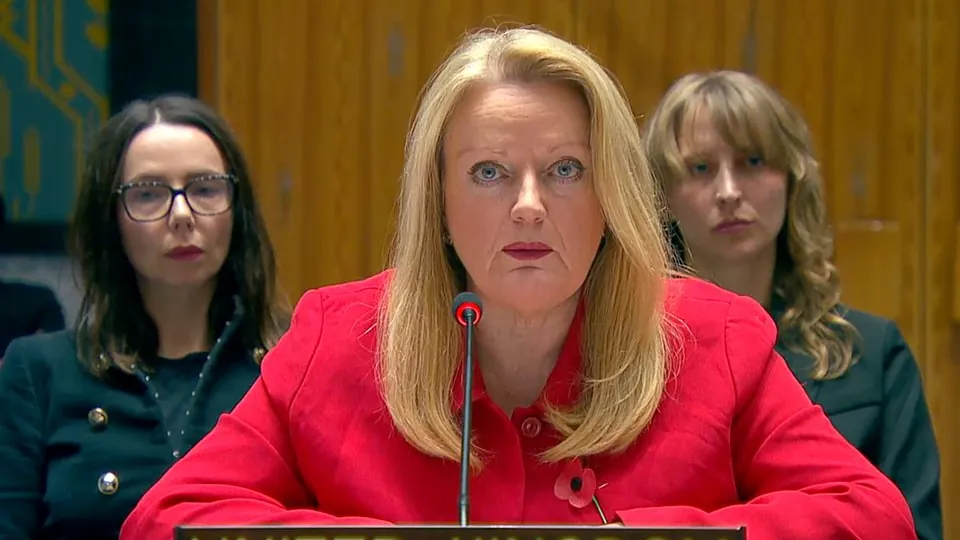
The United Kingdom told the UN Security Council on 9 November that Russia is using winter as a weapon against Ukraine, citing a series of deadly strikes on civilians over the past ten days and pledging that London and its partners will stand with Kyiv “for as long as it takes”.
Speaking at the Council’s meeting on Ukraine in New York, Dame Sarah MacIntosh, the UK Permanent Representative to the UN, listed the attacks as described in the text of her statement, published by the Foreign, Commonwealth and Development Office. On 30 October, she said, a Russian drone struck a railway station in Dnipro, killing at least 15 civilians and injuring 14. On 2 November, Russian bombs hit a school used as an aid centre in the Zaporizhzhia region, killing at least 55 civilians, which she described as among the deadliest attacks of the war.
MacIntosh added that on 7 November Russian drones and missiles struck civilian energy and other infrastructure, including Kyiv’s northern bridge, and that Russian attacks on 8 November killed a further seven civilians. According to the UK, such attacks have killed more than 1,540 Ukrainian civilians over the past four months. These figures are the British government’s own and are given here as attributed.
Energy strikes and the UN inquiry
The ambassador said Russia has launched more than 150 ballistic missiles at Ukraine, mainly at energy infrastructure, since President Donald Trump called for an energy ceasefire on 11 October. She also pointed to the UN Commission of Inquiry, which reported last month that Russia has pursued a state policy of attacking Ukraine’s energy infrastructure for more than four years and concluded that these attacks constitute war crimes.
MacIntosh quoted the Russian Ministry of Defence as telling Ukrainians: “This winter, you will freeze.” She argued that President Vladimir Putin, unable to achieve his aims on the battlefield, is intensifying attacks on cities and civilians, and warned the Council not to let the frequency of such strikes turn them into a “new normal”.
Oleshky ceasefire and the UK’s message
The UK welcomed the humanitarian ceasefire in Oleshky, brokered with United States support, which allowed aid to reach civilians and enabled hundreds of people to leave the Russian-occupied area. She said, however, that it should not take an extraordinary intervention to secure a few days of safety for civilians.
In the statement she also claimed that Russia suffered 54,000 casualties last month and has gained no net territory this year, a UK assessment that the text does not source further. “Russia has a choice,” she said: continue the war or choose peace. Ukraine wants peace, she added, and so does the international community.
Context
The Council meeting took place against the background of the diplomatic effort on Ukraine, with European governments pressing for a seat in the talks planned in Abu Dhabi. Geopolitiki has reported on several of the incidents the ambassador cited, including the earlier Dnipro railway station: 13 killed in Russian jet-drone strike on a platform, Ukrainian officials say, and on the school attack in the Zaporizhzhia region in Komyshuvakha: Ukrainian intelligence names six Russian Su-34 pilots for the school strike – who planned the attack.
The UN has said the Council convened after Russian attacks on Dnipro, Chernihiv and Kremenchuk on 29 October that reportedly killed at least 19 people. Russia, which holds a permanent seat on the Council, rejects accusations that it targets civilians. The full UK text is available on the GOV.UK website.