Middle East & North Africa
Waltz: Iran war could last another year, US can hold blockade “for the foreseeable future”
The US ambassador to the UN told the Financial Times the Iran war could last another year, while Trump asks whether to finish it or let Iran wither.

Mike Waltz, the US ambassador to the United Nations, has said the war with Iran could last another year. In an interview with the Financial Times, reported on 22 and 23 October 2026, he said the United States has no deadline for the confrontation and can keep its naval blockade of Iranian ports going. The Financial Times interview itself is behind a paywall; the account below rests on reporting of it by CBS News and other outlets.
What Waltz said
According to those reports, Waltz did not rule out that Washington and Tehran could still be deadlocked a year from now, with no nuclear deal and no normal shipping through the Strait of Hormuz. He declined to discuss hypotheticals and said he hoped Iran would “come to the table in a meaningful way” before then.
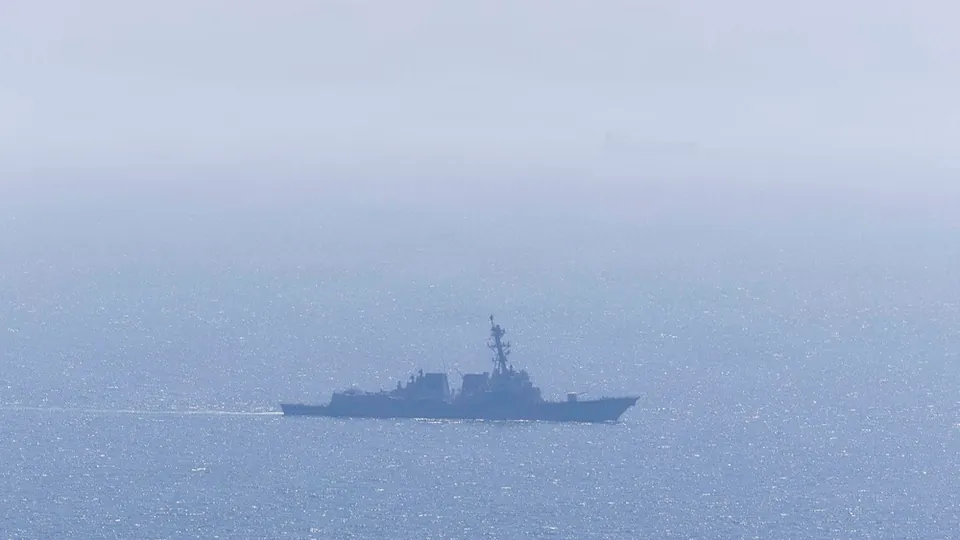
On the blockade, he said President Donald Trump and the US Navy can maintain it “for the foreseeable future”, and that the administration is tightening economic pressure on Tehran. He also set out what Washington counts as success: the war’s objectives are not met until Iran gets rid of its highly enriched uranium and accepts a “meaningful agreement” on enrichment on its own territory.
Trump: finish it or let it wither
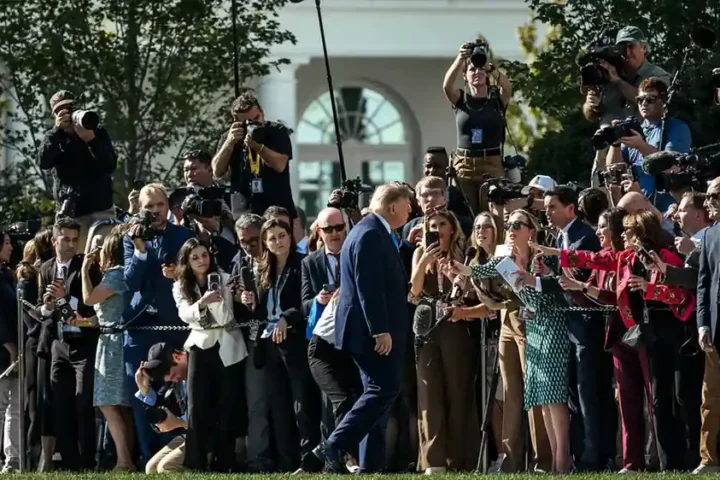
Speaking to reporters on 23 October, Trump framed the choice in similar terms. “Do we want to finish it off or do we just want to let it wither because we’re getting everything we wanted,” he said, according to Yahoo Finance. The same account quotes him describing the Navy blockade as a “hell of a job”. On 22 October the president said Iran was inventing attacks on tankers to push up the oil price; Geopolitiki covered that in Trump: “Iran is making up fake attacks” on tankers to push up oil prices before the midterms.
Oil market and Hormuz
CBS News reported that Brent crude rose by about 3.5 percent on 23 October and briefly passed $117 a barrel, which it described as the highest level of the war, compared with below $97 at the start of October. The UK Foreign Office has said traffic through Hormuz remains “sharply down on pre-war levels”, CBS added.
Iran’s Revolutionary Guard said on 22 October that it had struck four ships using the US-endorsed southern route near Oman and that three others hit mines. CBS noted that none of those claims has been corroborated. On the American side, CENTCOM marks 100 days of Iran blockade, claiming $25 billion in crude kept off the market as the IRGC threatens US bases sets out the command’s own figures, which are claims by a party to the conflict.
A possible strike
Waltz’s remarks came as another US envoy left open the possibility of an American strike on Iran at the weekend, as reported in Barrack says a US strike on Iran this weekend is “absolutely” possible, and calls Greek-Turkish disputes “ridiculous”. No official US statement announcing a strike has been published.
In the same interview Waltz said UNIFIL, the UN force in Lebanon, should not continue in its current form, reported by the Korean broadcaster SBS.