
Middle East & North Africa
Yemen’s al-Alimi announces offensive to retake territory held by the Houthis
Rashad al-Alimi announced military operations on October 4 to recover Houthi-held territory, with amnesty and reconstruction pledges as fighting escalates.

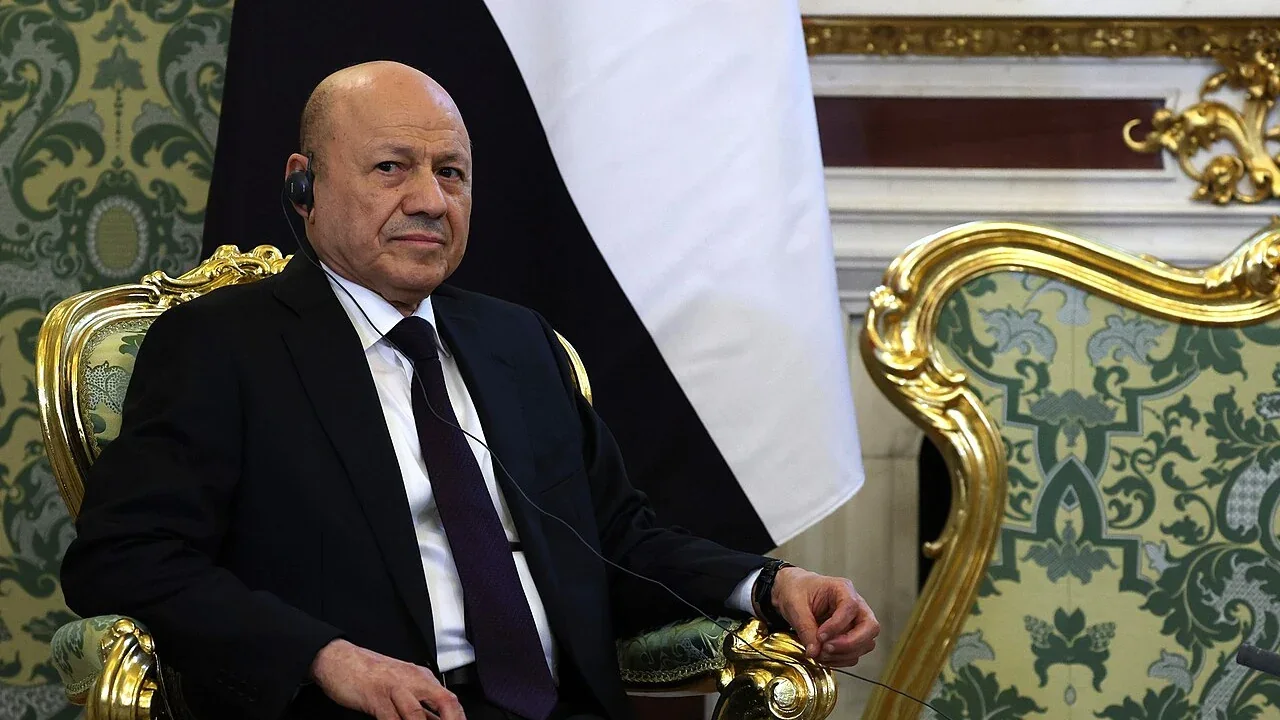
Rashad al-Alimi, chairman of Yemen’s Presidential Leadership Council, announced on Sunday, October 4 the start of military operations to recover territory controlled by the Houthis and re-establish state authority across the country.
2.jpg)
In a televised address, the head of the internationally recognised, Saudi-backed government said the armed forces, security services and other military formations had been ordered to implement approved plans “until the country is liberated from the grip of the terrorist militia.”
The announcement came less than a month after Houthi advances around Bab el-Mandeb, the Red Sea’s southern entrance, and amid fighting around Taiz. On Monday, government forces subsequently announced gains at Dhubab and around the strait; the Houthis denied losing territory.
Al-Alimi said the National Defense Council had approved the campaign after opportunities for de-escalation were exhausted. He accused the Houthis of answering restraint with further mobilisation and attacks on civilians, neighbouring countries and international waterways.
He put military, security and civilian institutions on full alert, thanked Saudi Arabia for its support and appealed to regional partners and the wider international community for assistance to Yemen’s forces, humanitarian relief and reconstruction.
Amnesty for those who lay down their arms
Al-Alimi’s published address urged residents of Houthi-held areas to keep away from military positions, gatherings of fighters and supply routes. He said the campaign was not directed against civilians or any sect or tribe.
He maintained the offer of amnesty for those who lay down their weapons and return to their families under the announced procedures. Government troops were instructed to protect lives and property and refrain from revenge or reprisals. A military spokesman also called on Houthi fighters to surrender their weapons.
The president ordered a parallel government programme for recovered areas, prioritising public employees’ salaries and arrears, repairs to roads and electricity and water networks, and conditions allowing displaced people to return.
Houthis claim new attacks on Aramco facilities
On Sunday, Houthi military spokesman Yahya Saree said ballistic missiles and drones had targeted two Saudi Aramco facilities, in Riyadh and Khurais, northeast of the capital. He presented the operations as a response to 50 Saudi-led coalition air and missile strikes over 12 hours. Saudi authorities had not confirmed those Sunday attack claims.
The exchanges followed extensive strikes over the weekend. Yemeni military spokesman Colonel Majed al-Nuzayli said 257 targeting operations had been conducted across several fronts on Saturday, October 3, and claimed at least 700 Houthi fighters had been killed. That figure was not independently verified.
Early on Sunday, he also reported 97 targeting operations on the Taiz and Lahij fronts involving aircraft, drones, artillery and missiles. Government accounts described attacks on Houthi reinforcements around Tor al-Baha and the Taiz axis; the operational figures could not be independently confirmed.
Houthi advances on heights near Taiz had threatened the route connecting the city with Aden, the government’s seat. Before the offensive announcement, regional and Western officials told Reuters that Saudi Arabia would primarily provide air operations, Yemeni allies would fight on the ground and the United States would supply intelligence.
The escalation follows the collapse in July of the truce agreed in 2022. The World Food Programme reported on October 2 that nearly three-quarters of households in accessible government-controlled areas could not meet basic food needs, as fighting and economic deterioration deepened hunger.
On Monday, October 5, the strategic political and defence committee of the Mecca agreement met in Riyadh. Türkiye’s delegation included Foreign Minister Hakan Fidan, Defence Minister Yaşar Güler and Chief of the General Staff General Selçuk Bayraktaroğlu. The Turkish foreign ministry identified recent regional developments as part of the agenda.
The agreement, signed on August 7 by Saudi Arabia, Türkiye and Pakistan, treats an attack on any of the three states as an attack on all.