Greece
Adrianos Golemis: the Greek ESA astronaut-trainee visits the Hellenic Space Center ahead of the Vast-PAM-1 mission
Adrianos Golemis, the first Greek in ESA astronaut training, visited the Hellenic Space Center (HSC) on October 15 while preparing for the Vast-PAM-1 mission to the International Space Station, planned for 2027.

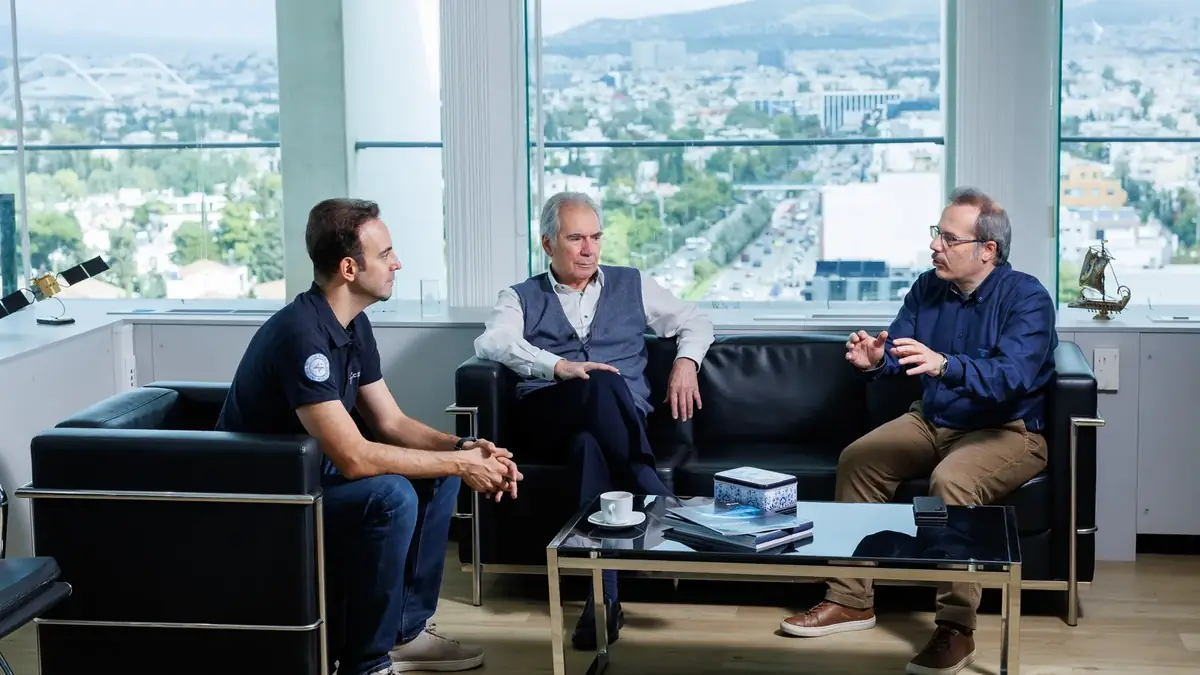
Five weeks after the announcement of the first Greek flight to the International Space Station (ISS), the astronaut chosen for it was among his colleagues. On October 15, Adrianos Golemis, the first Greek in training as an astronaut with the European Space Agency (ESA), visited the Hellenic Space Center (HSC), which made the visit public on Wednesday, November 11, with photographs from the meetings.
Golemis is no passer-by at the HSC. As a research associate he is part of its Science and Exploration Team, led by Dr Anezina Solomonidou, and the visit was part of his regular cooperation. In the photographs he appears with HSC president Emmanouil Rammos, chief executive Nikos Sergis and members of the scientific and administrative staff, including the centre’s Tasking team. He described to colleagues the latest from his scientific activity, what he has experienced in astronaut training and where preparation for the Vast-PAM-1 mission stands.
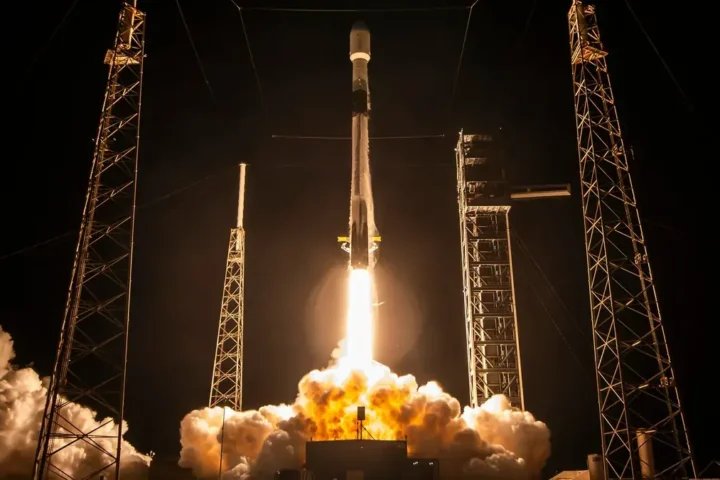
Vast-PAM-1 is the sixth private astronaut mission to the ISS and is carried out in cooperation with NASA. It was presented on September 9, at the International Space Summit in Paris, by Prime Minister Kyriakos Mitsotakis and French President Emmanuel Macron. The agreement with the US company Vast, which organises the flight, was signed by ESA on behalf of Greece. Launch is planned for 2027 on a SpaceX Dragon spacecraft atop a Falcon 9 rocket, with a crew including Frenchman Thomas Pesquet (commander) and Czech Aleš Svoboda (pilot).
Golemis will fly as a mission specialist, subject to approval by the Multilateral Crew Operations Panel (MCOP), in which the station’s five partners are represented (NASA, ESA, Roscosmos, JAXA and the Canadian Space Agency). He takes part as an ESA project astronaut. In the coming months he will attend training modules in Europe and the US, where the Vast, SpaceX and NASA teams will prepare him for launch, entry and exit from the spacecraft in the suit, emergencies and simulations of all flight phases up to the return to Earth.
He studied medicine at Aristotle University of Thessaloniki and completed the International Space University’s master’s in space studies in Strasbourg. In 2014 he spent a year in Antarctica running European physiology and psychology experiments in full isolation. He has taken part in parabolic flights, holds a private pilot licence and since 2018 has supported ESA astronauts medically as a flight surgeon. In 2022 he became the first Greek to complete all six stages of ESA’s astronaut selection.
The Greek dimension of the mission is scientific and educational. Minister of Digital Governance Dimitris Papastergiou has mentioned opportunities for Greek experiments and technology demonstrations in medicine, human physiology, agri-food, materials and sensors, with the aim of inspiring young people to pursue scientific and technological studies.