Greece
Hellenic Space Center asks the public to name the first Greek mission to the International Space Station
The Hellenic Space Center and the Ministry of Digital Governance are asking the public to suggest a name for the first Greek mission to the International Space Station, on which ESA astronaut Adrianos Golemis will fly in summer 2027. The deadline is October 30.

The public is being asked to find a name for the first Greek mission to the International Space Station (ISS), to which European Space Agency (ESA) astronaut Adrianos Golemis will travel in the summer of 2027. Suggestions are being sought by the Hellenic Space Center (HSC) and the Ministry of Digital Governance, as the Center announced on Monday, October 19, 2026, and the deadline expires on Friday, October 30 at 23:59 (Athens time).
Golemis’s flight is part of the Vast-PAM-1 mission. He will stay on the ISS for two weeks and carry out Greek and European scientific experiments. It will be the first time a Greek ESA astronaut goes up to the station for scientific research.
His participation was announced on September 9, 2026 at the International Space Summit in Paris. There Prime Minister Kyriakos Mitsotakis and French President Emmanuel Macron announced the agreement signed by ESA, on behalf of Greece, with Vast for the Vast-PAM-1 mission, in cooperation with NASA. Golemis will serve as mission specialist, subject to approval by the Multilateral Crew Operations Panel (MCOP), on which the station’s five partners are represented. The commander will be French ESA astronaut Thomas Pesquet and the pilot Czech astronaut Aleš Svoboda. Transport will be by a SpaceX Dragon spacecraft launched on a Falcon 9 rocket.
Golemis joined ESA on September 1, 2026 as a project astronaut, not as a permanent member of the astronaut corps, and became the first Greek to begin astronaut training at the European Astronaut Centre. He studied medicine at the Aristotle University of Thessaloniki and worked at the Concordia station in Antarctica. Since 2018 he has worked at ESA as a flight surgeon, supporting astronauts before, during and after their missions, and from 2024 to 2026 as Lead Flight Surgeon in the agency’s Space Medicine team.
What the name must be like
The Hellenic Space Center presents the venture as a team effort of research centres, universities, companies and experts from Greece and Europe, and wants a name that expresses that spirit. In his message in the announcement, Golemis points out that the word “astronaut” is Greek and asks the public to help find “another word” for the first Greek mission to the ISS with ESA.
The requirements for the name are specific. It must consist of one word or a few words, be memorable and easy to pronounce in Greek and English, and appeal to everyone, especially young people. Proper names are excluded, except for mythological ones with a very widely known symbolism, as are names already given to another astronaut mission, chiefly European ones.
To take part, one fills in the form on the Center’s website, free of charge. Participants write the name they propose, justify the choice in up to 1,000 characters and give contact details. Individual and group proposals are allowed, for example from an organisation or a school class, in Greek or English, with a maximum of two proposals per person or group. For minors, a signed consent from a parent or guardian is required, while proposals sent by email or through social media are not accepted.
The final decision will be taken by the Hellenic Space Center and Golemis himself. The name may be modified to fit the requirements of ESA, Vast, which provides the mission, and NASA. The Center reserves the right to change, extend or cancel the process.
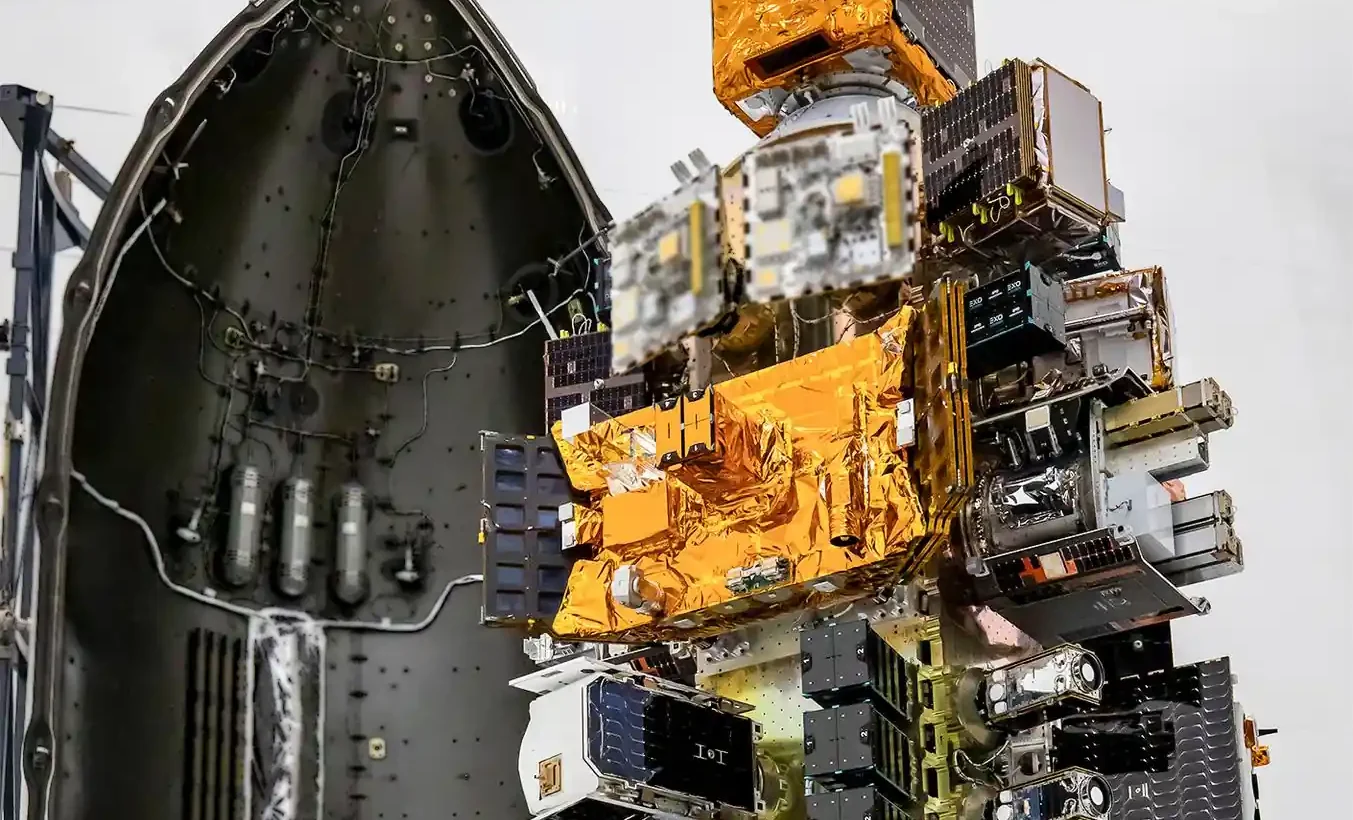
Greece’s presence in space has had other recent moments. On March 30, 2026 SpaceX launched Greek nanosatellites, among them ERMIS, PeakSat and OPTISAT. Golemis was also hosted for a fireside chat at the Greek Space Tech Forum 2026, where the Center’s president, Emmanouil Rammos, included the forthcoming mission of the first Greek astronaut among the milestones of Greece’s course in space.