Analysis Africa
Western Sahara explained: why the UN mission MINURSO has ended
MINURSO, the UN mission created in 1991 to prepare a referendum in Western Sahara, has ended after the Security Council failed to renew it. Here is what it did, the legal background and what happens next.

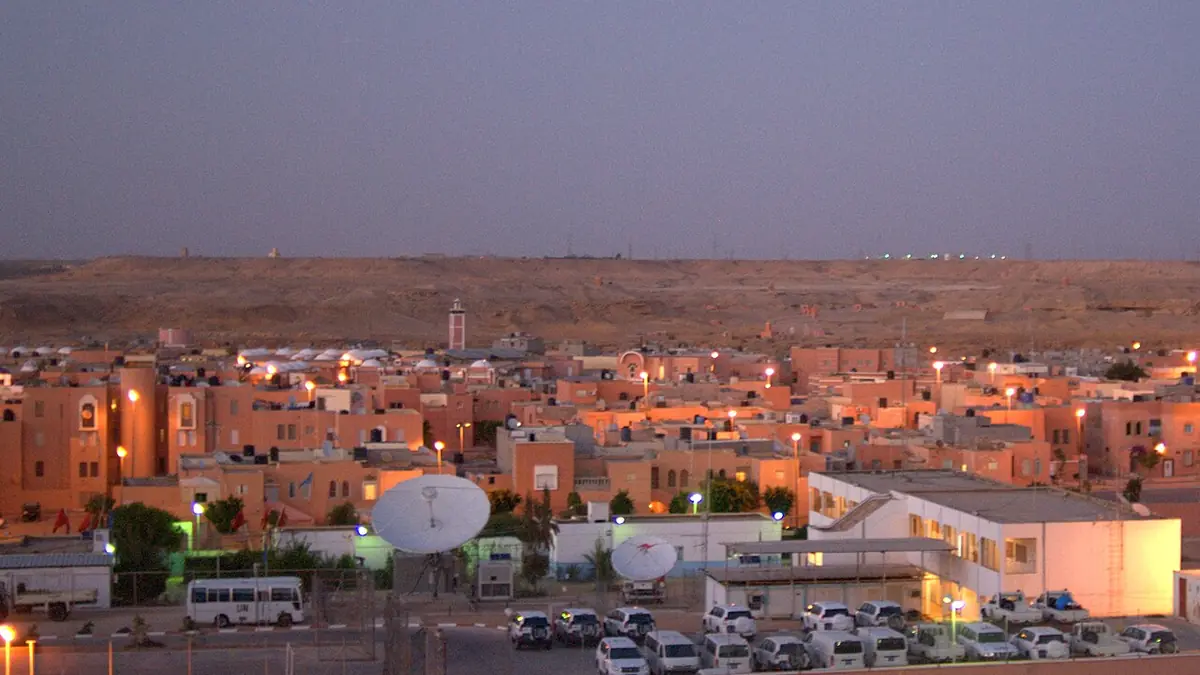
The United Nations peacekeeping mission in Western Sahara, MINURSO, has stopped operating after 35 years because the Security Council could not agree on its future. The mission was created in 1991 to prepare a referendum on the territory’s status. That vote never took place, and the dispute between Morocco and the Polisario Front is still unresolved.
Key points
- MINURSO was set up by Security Council resolution 690 on 29 April 1991 to organise and supervise a referendum of self-determination.
- Its mandate expired at midnight on Saturday 31 October 2026, after Russia vetoed a U.S. draft and a Russian one-year extension failed to win the nine votes it needed.
- The International Court of Justice found in 1975 that it had not established any tie of territorial sovereignty between Western Sahara and Morocco or Mauritania.
- The UN says the end of the mission “does not abrogate” the right of the people of Western Sahara to self-determination, and its Personal Envoy, Staffan de Mistura, continues to work on a political solution.
What is MINURSO and why was it created?
MINURSO stands for the United Nations Mission for the Referendum in Western Sahara. The Security Council established it in resolution 690, adopted unanimously on 29 April 1991. The text expresses the Council’s full support for the Secretary-General’s efforts to organise and supervise, together with the Organization of African Unity, a referendum for the self-determination of the people of Western Sahara.
The plan rested on proposals that Morocco and the Frente POLISARIO accepted in principle on 30 August 1988. According to UN News, they provided for a referendum in which the people of Western Sahara would choose between independence and integration with Morocco. The referendum never happened. The mission nevertheless kept carrying out the tasks the Council had given it, chiefly monitoring the ceasefire.
Where does the legal dispute come from?
The question of who has sovereignty over Western Sahara went to the International Court of Justice before the mission existed. On 13 December 1974 the UN General Assembly asked the Court whether the territory, at the time of Spanish colonisation, had been terra nullius, and what legal ties it had with Morocco and the Mauritanian entity.
In its advisory opinion of 16 October 1975, the Court answered the first question in the negative. On the second, it found legal ties of allegiance between the Sultan of Morocco and some of the tribes living in the territory, and rights, including some relating to land, that linked the Mauritanian entity to it. The Court’s conclusion, however, was that the material before it did not establish any tie of territorial sovereignty between the territory and Morocco or the Mauritanian entity. It therefore found nothing that would affect the application of General Assembly resolution 1514 (XV), the 1960 Declaration on the Granting of Independence to Colonial Countries and Peoples, and the principle of self-determination through the free and genuine expression of the will of the people.
This is the legal reference point for the self-determination language that the UN still uses today.
What did the mission look like when it ended?
According to UN News, when its mandate ended MINURSO was headquartered in Laayoune. It had nine team sites, four west of the berm and five east of it, plus a liaison office in Tindouf. It had some 160 military observers and around 180 civilian and affiliated personnel, as well as a dedicated mine action capability. Secretary-General António Guterres paid tribute to the 20 MINURSO personnel who died during the mission’s 35 years in the territory.
The UN says Alexander Ivanko, the Special Representative, led the mission through a “particularly challenging period” after hostilities resumed in 2020.
Why did the Security Council fail to renew it?
The Council met on Friday 30 October. A draft resolution from the United States was vetoed by Russia, while a rival Russian text, a one-year extension of the mandate to 31 October 2027, did not receive the nine votes needed for adoption. Our reports at the time are in UN Security Council fails to renew MINURSO as Russia vetoes U.S. draft on Western Sahara.
UN News reports that the U.S. delegate said his country’s text would have supported the principle of self-determination and “moved the 50-year conflict forward”, calling the status quo unacceptable. The Russian delegate said the text would have imposed one-sided solutions and described his vote as “a life-saving veto, so to speak”.
What is Morocco’s position?
UN News notes that in 2007 Morocco put forward an Autonomy Proposal as a basis for negotiations. It envisages the territory as self-governing under Moroccan sovereignty. This is Morocco’s own proposal, described here as the UN describes it. The Polisario Front, for its part, accepted the 1988 settlement proposals that foresaw a referendum with independence as one of the options.
What happens now?
Sunday 1 November marked the start of a liquidation period. UN Spokesperson Stéphane Dujarric said on Monday that the UN will repatriate some 160 military observers and close 13 facilities and team sites, in phases. A smaller team reporting to the UN Department of Operational Support will oversee the “orderly and environmentally responsible” handover. UN property and equipment will be disposed of or transferred, communications and logistics systems taken down and mission records archived. Details are in MINURSO ends: UN begins liquidating its Western Sahara mission as Guterres urges maximum restraint.
Guterres said he remains concerned about the security situation throughout the territory and the risk of escalating hostilities. He urged everyone concerned “to exercise maximum restraint”. His statement also said that the UN stands ready to keep supporting a just, lasting and mutually acceptable political solution that provides for the self-determination of the people of Western Sahara, with Personal Envoy Staffan de Mistura continuing his work.
Why it matters beyond the desert
The case shows how a Security Council deadlock can end a peacekeeping mission that has run since 1991. Without observers on both sides of the berm, the independent eyes the UN had on the line are gone, and the Secretary-General himself has warned of the risk of escalation. For small and medium states that rely on international law, including the principle of self-determination and the UN Charter, the episode is a reminder of how much depends on the Council’s ability to act.
Sources
UN News, Western Sahara: UN ‘stands ready’ to keep supporting peace efforts as MINURSO mission ends (1 November 2026) and World News in Brief (2 November 2026); UN Security Council resolution 690 (1991), UN document S/RES/690(1991); International Court of Justice, Western Sahara advisory opinion, case overview.