Politics & Diplomacy
Oleshky: WFP feeds more than 400 evacuees in Kyiv, and Lindberg thanks Melania Trump for the ceasefire
The UN World Food Programme says it is serving hot meals to more than 400 people who left Oleshky during the local ceasefire, with US funding, and warns of rising security risks for aid operations in Ukraine.

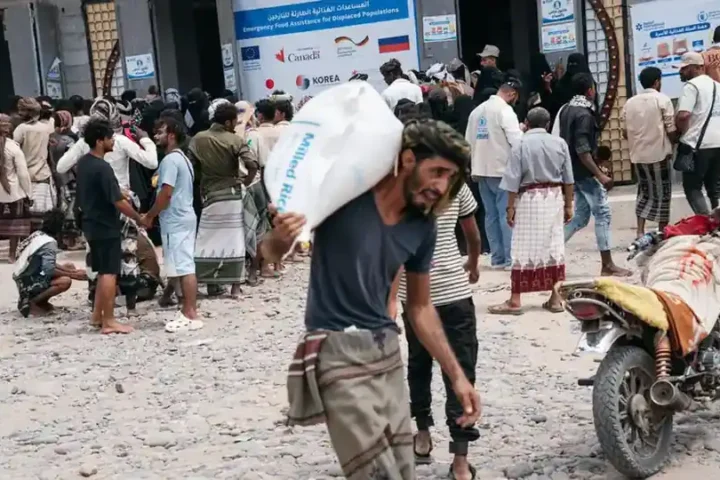
The UN World Food Programme (WFP) is giving emergency food aid to more than 400 people who left the Russian-occupied city of Oleshky, in Ukraine’s Kherson region, during the brief local ceasefire. According to the agency, many arrived in worrying condition at medical facilities in Kyiv on 31 October, after months of severe shortages of food, medical supplies and other basic necessities.
WFP said late on Sunday that, working with the Ukrainian humanitarian NGO Iskra Dobra, it served hot meals to the evacuees as soon as they arrived and will keep doing so for an initial two weeks. More evacuees are expected, and the agency “stands ready to scale up its assistance”. The emergency food aid is funded by the United States, UN News reported.
“A chance to reach safety”
“For people who have endured months of fear, isolation and deprivation, this humanitarian pause offers something very simple but incredibly important: a chance to reach safety and receive the help they need,” said WFP Executive Director Luke J. Lindberg. He recognised the role of US First Lady Melania Trump in helping to broker the ceasefire and said he hoped it could open the door to sustained humanitarian access. WFP had previously tried to support people in Oleshky but had not been granted access.
UN Emergency Relief Coordinator Tom Fletcher said the evacuation window, which ended on Sunday, “shows what is possible when parties put civilians first”. He noted that aid had at last been delivered to Oleshky and added: “Now let’s build on this opening and get aid to more people, wherever they are.”
A dangerous environment for aid workers
The evacuation comes amid an increasingly dangerous environment for civilians and humanitarian operations across Ukraine. WFP recorded 134 security incidents affecting the agency and its partners since 2023, including 57 this year, as of September. They affected distribution points, vehicles, warehouses and staff. Across the country, WFP reaches more than half a million people every month with food and cash assistance, focusing on communities near the front line.
The Secretary-General’s Spokesperson said on Monday that attacks over the weekend continued to kill and injure civilians and to disrupt electricity and heating as temperatures fall, with the Dnipro and Donetsk regions among the hardest hit. Heat and power plants in Kyiv and Shostka were damaged, and more than 650 villages in the Zhytomyr region had power outages.
UN Development Programme Goodwill Ambassador Nikolaj Coster-Waldau, who spent a week in Ukraine, also called for continued funding to help communities through another winter of war. “Statistics about damaged energy infrastructure can seem abstract, but the reality is deeply personal,” he said.
Background
Geopolitiki has followed the ceasefire from the start, from Local ceasefire in Oleshky, Kherson, from October 29, brokered by Melania Trump, with humanitarian aid and evacuation of civilians to the latest claims in Oleshky: Ukraine’s General Staff accuses Russia of reinforcing its positions during the ceasefire, while Lubinets speaks of demining.