Cyprus
Gerapetritis on the GSI cable: “The project is moving forward” and “we will not tolerate any interference whatsoever”
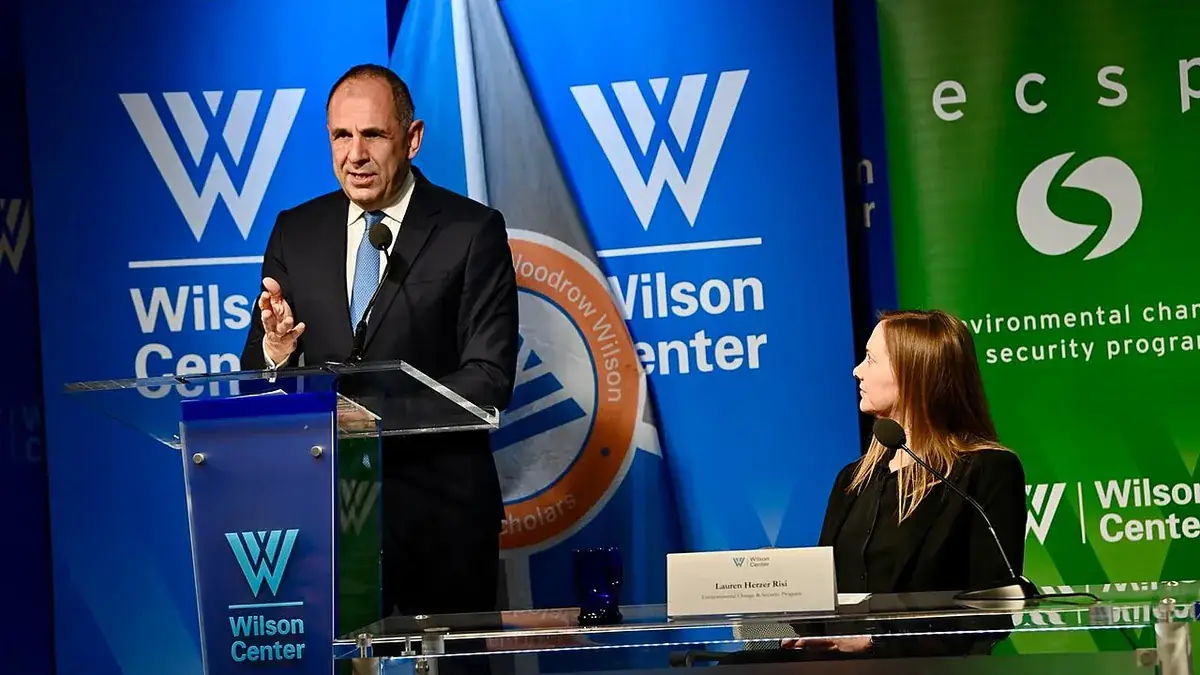
Speaking at the Slemani Strategic Forum in Iraqi Kurdistan, Foreign Minister George Gerapetritis said Greece has licensed the vessel to carry out surveys and lay cables for the Greece-Cyprus interconnector, and will tolerate no interference.

Greek Foreign Minister George Gerapetritis spoke from Iraqi Kurdistan about the Greece-Cyprus electricity interconnector (GSI) and Turkish interference. In a conversation with journalist Matthew Boyle at the Slemani Strategic Forum in Sulaymaniyah on Friday, November 13, Gerapetritis said Greece has granted the vessel a licence to carry out surveys and lay cables. “The project is moving forward,” he stressed, and added: “we are not going to tolerate any interference whatsoever.” The Ministry of Foreign Affairs published the transcript of the discussion.
Boyle raised the issue by referring to an incident in which Turkey was “blocking, or trying to block, a ship” working on cables to Cyprus. Gerapetritis replied that there have been “incidents of interference from the Turkish side” in the past. He called the GSI an “undertaking of fundamental importance” for Europe, since it links Greece with Cyprus and the Middle East.
The remarks come as the Abeille Marengo, which sailed from Heraklion for the cable surveys, is working in the area, and as the frigate Limnos informed a Turkish frigate that the vessel is working on the Greek continental shelf. See our report: Frigate “Limnos” answers Turkish frigate.
Deterrence and connectivity
The foreign minister described the Mediterranean as a region rich in hydrocarbons, with 21 coastal states and overlapping claims, where connectivity is a precondition for future prosperity. He spoke of a combination of deterrence and connectivity, “because without deterrent mechanisms, it is impossible to guarantee peace.” He presented Greece as an energy hub, with the Vertical Corridor, the projects south of Crete in cooperation with Chevron and Exxon, and GREGY, “a long-range project linking Greece with Egypt” for green energy. He reminded the audience that in Europe there was “a huge, excessive dependence on Russia as far as natural gas is concerned.”
Iran and Hormuz
The discussion opened with Iran. Gerapetritis called the situation “extremely delicate and sensitive” and said that no military action under current conditions can bring lasting peace, which is why every diplomatic option must be exhausted. He asked for the Gulf states and neighbouring countries to take part in the solution and for freedom of navigation to be secured. “The weaponisation of the Strait of Hormuz, for example, is absolutely unacceptable,” he said, linking it to food and energy security.
The United States, IMEC and Kurdistan
On relations with the United States, the minister said: “I think we are at the peak of our bilateral relationship.” He referred to US Secretary of State Rubio’s visit to Athens and his speech on the Pnyx, as well as to the Greek diaspora and American investment in Greece. On the IMEC corridor he said it is a “project of global importance,” particularly with the closure or restriction of the Strait of Hormuz and the Bab el-Mandeb, and that Greek ports are a natural gateway to Europe, since Greece holds “almost 20% of the world’s merchant fleet.” For Iraqi Kurdistan he saw room for investment in energy, agriculture and tourism, and hoped that “in the very near future” there will be a direct flight to Athens.