Greek-Turkish Relations
BREAKING: Frigate “Limnos” answers Turkish frigate by radio – the Abeille Marengo is working on the Greek continental shelf, under a Greek permit
East of Karpathos, the Turkish frigate TCG Gökova read a radio message claiming the French survey vessel Abeille Marengo sails on the “Turkish continental shelf” with Turkey’s “consent”. The Hellenic Navy frigate Limnos replied at once: the ship works on the Greek continental shelf under the Greek NAVTEX.

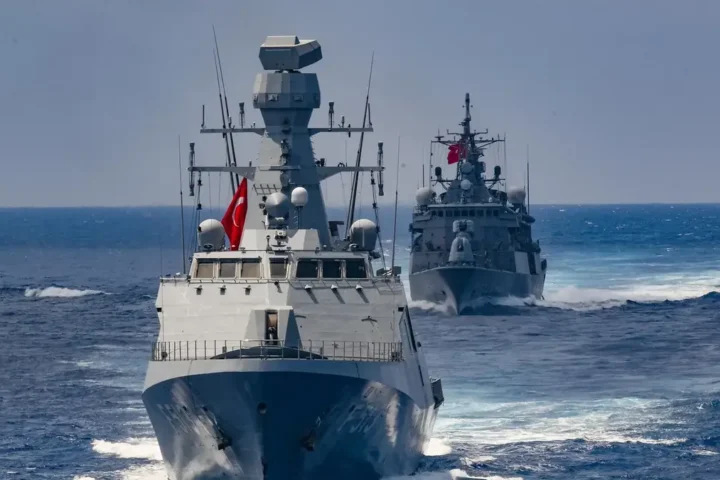
East of Karpathos on Thursday, November 12, the first Turkish move at sea against the Abeille Marengo took the form of a radio message, and the Hellenic Navy’s answer was also given by radio, without delay. As soon as the French survey vessel, which is carrying out the seabed surveys for the Greece–Cyprus electrical interconnection cable (GSI), passed from Greek territorial waters into international waters, the Turkish frigate TCG Gökova (F-496) read it a written text by radio.
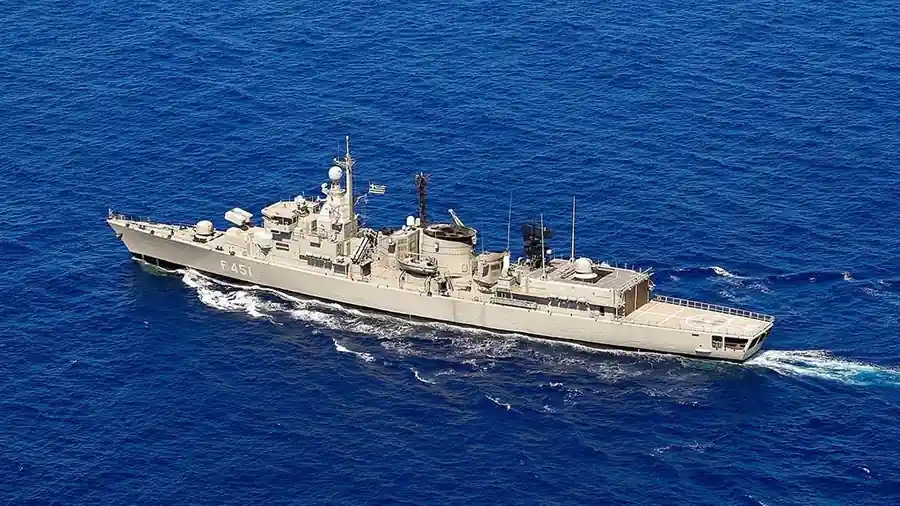
The Gökova, which was following the survey vessel from a distance, declared that the ship “is sailing in an area of the Turkish continental shelf” and that it “has the consent to continue its passage”. The frigate “Limnos” (F-451), which escorts the Abeille Marengo, replied immediately with its own message: the survey vessel is working on the Greek continental shelf, under the NAVTEX issued by the Heraklion station.
Ankara’s “reading”: consent without a permit
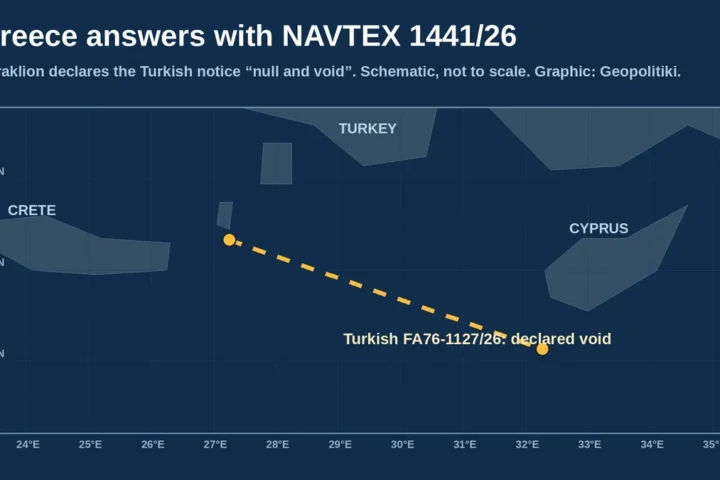
The wording of the Turkish message was not accidental. The Gökova spoke not of a permit or licensing by Turkish authorities but of “consent”. With this choice Ankara seeks to record in the field that the work is going ahead because it accepts it, without claiming that it issued a permit that nobody asked it for. It is the same line as Turkish NAVTEX 1127/26, which presented the surveys as work “with the consent of the Turkish authorities” on the “Turkish continental shelf”.
The Greek reply in the field followed the line of NAVTEX 1441/26 of the Heraklion station, which declared the Turkish notice null and confirmed that Greek 1411/26 remains in force. The permit for the survey and the laying has been given by Greece and Cyprus, at the request of Nexans on behalf of GSI. Cyprus has also answered with its own NAVTEX.
The Fleet in the area
With the presence of the “Limnos” and not only next to the survey vessel, the Fleet sends a clear message: it is in the area to protect the surveys carried out under the Greek NAVTEX. The exchange of messages took place in a calm tone and was not accompanied by any move to obstruct. The French vessel went on with its work normally, while the Navy forces deployed in the area monitor the Turkish presence and, if necessary, are able to prevent at once any obstruction.
The exchange comes after the statements of the Turkish Navy chief, who said that ships are “not allowed” to carry out surveys on behalf of Greece and Cyprus in areas that Ankara considers “disputed”.
The next critical point is whether Turkey will limit itself to radio messages or try to approach the survey vessel as it advances further east, toward the area between Karpathos, Rhodes and Cyprus. Foreign Minister George Gerapetritis is expected to brief the party leaders on Greek-Turkish affairs on Saturday, November 14.
Read the original report in Greek at NEMESIS HD.