
Greece
Israel returns 22 antiquities to Greece, a first in the two countries’ history, with the Israeli ambassador in Athens present
Twenty-two Greek antiquities that had left the country illegally have been returned from Israel. It is the first time the Israeli state has returned antiquities to Greece.

Twenty-two Greek antiquities that had left the country illegally have been returned from Israel. It is the first time the Israeli state has returned antiquities to Greece. The handover was made by Israel’s ambassador in Athens, Pninat Yanay, to Culture Minister Lina Mendoni, at a ceremony in the Altar Room of the National Archaeological Museum, according to the Ministry of Culture’s announcement. Also present was Amir Ganor, director of the Antiquities Theft Prevention Unit of the Israel Antiquities Authority, the service that located and seized the objects.
What is returning to Greece
The set consists of fifteen vases of Attic origin, six vases from Corinthian workshops and a bronze statuette representing a female figure. Of the Attic vases, eleven are black-figure, three are red-figure and one is black-glazed, and they date to the Archaic and Classical periods. The Corinthian vases belong to the Archaic era. For the bronze statuette the ministry notes that its authenticity will be investigated further.
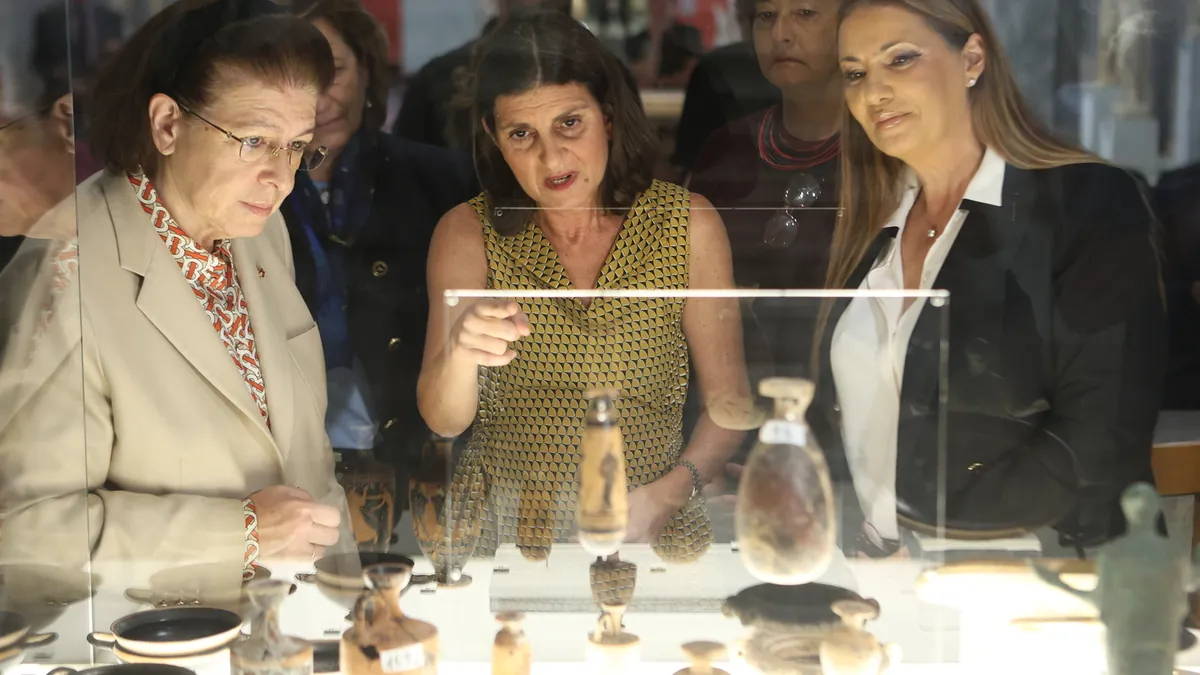
Mendoni: the starting point of closer cooperation
“It is the first time Israel has returned antiquities to Greece, marking the starting point of closer cooperation between the two countries for the protection of cultural heritage,” Mendoni said. The minister stressed that the return shows that cooperation between states can contribute substantially to the fight against antiquities trafficking, and that every return of an object to its place of origin has a wider symbolic and moral dimension. “Effectively tackling illicit trafficking requires cooperation, mutual trust and a shared commitment to legality,” she added.
According to the ministry, officials of the competent services of the two countries are already working together, exchanging experience and good practices for locating and recovering cultural goods removed illegally.
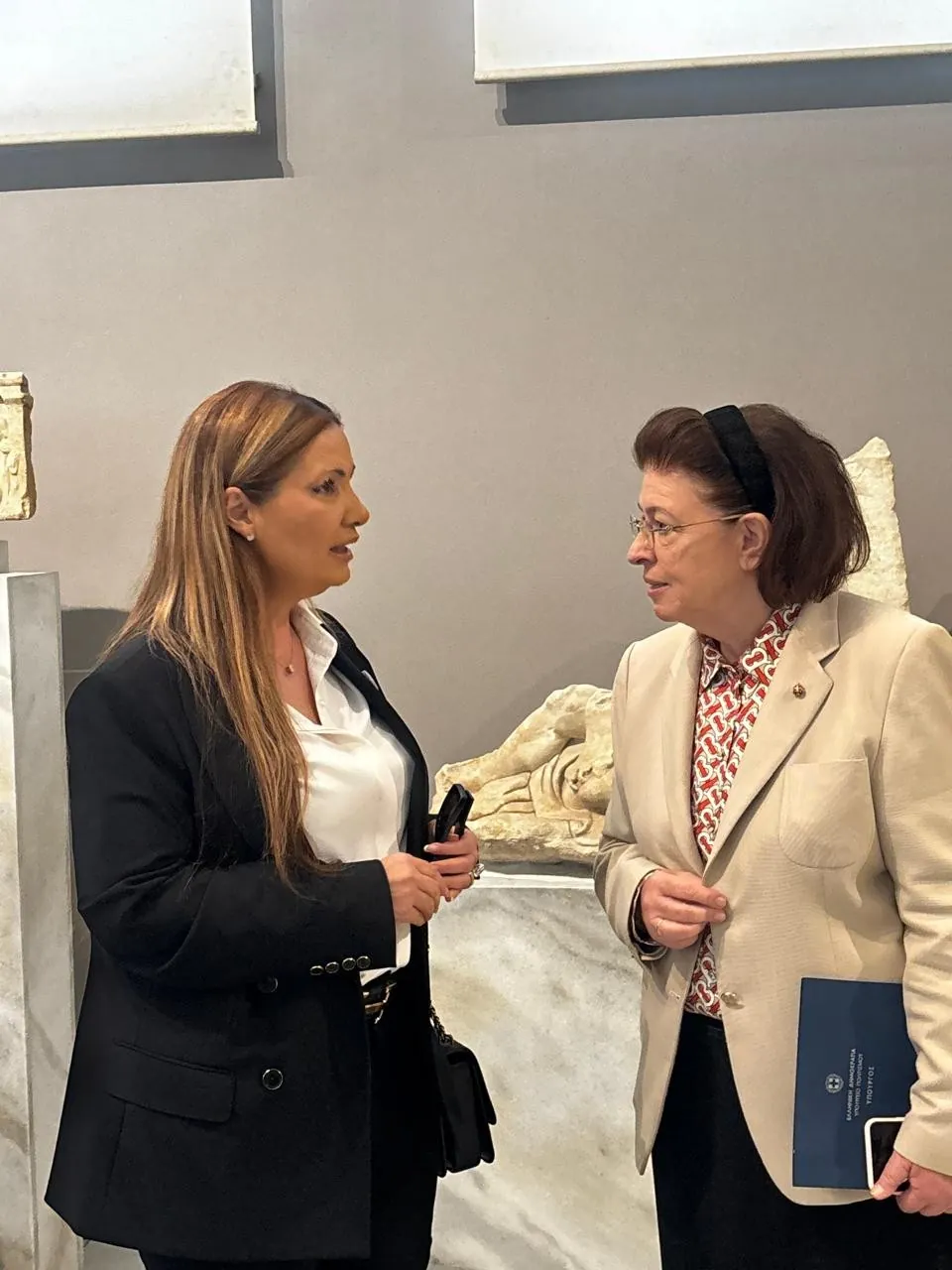
The Israeli ambassador: a link that had been broken
Yanay spoke of a child who today looks at one of the ancient vases and “sees what perhaps another child saw and felt 2,000 years ago”, thus becoming “one more link in the chain of generations that had been broken”. She said it was deeply moving for her to hand over the objects as ambassador, and an honour for her country to contribute to this moment.
Greece and Israel, beyond defence
The first return of antiquities adds to a relationship that in recent years has deepened mainly in defence, where the two countries are even discussing co-production of ballistic missiles. For Athens, recovering illegally exported antiquities is a constant priority, as the recent return to Cyprus of two 14th-century icons stolen after the Turkish invasion also showed.