Analysis
NATO Article 4 explained: how the consultation clause works
Article 4 lets any NATO Ally call the others to consult when it feels threatened. It has been used nine times, five by Turkey and twice in 2025 over Russian incursions, and never by Greece.

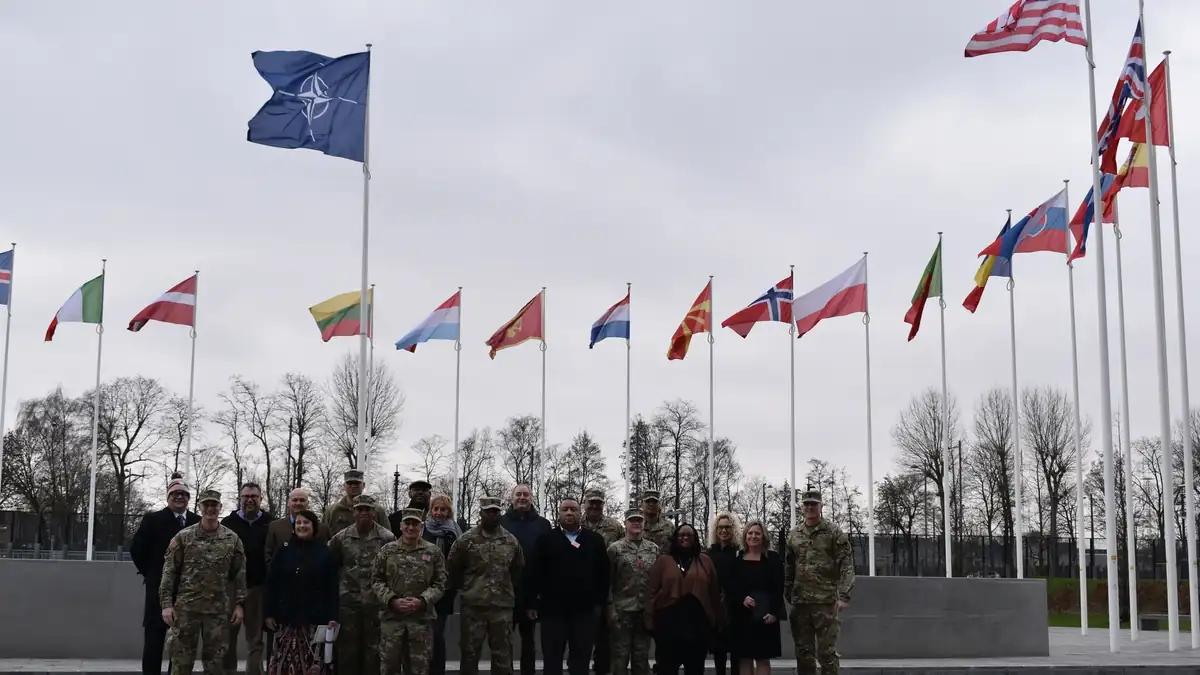
NATO’s Article 4 lets any Ally call the others to the table when it believes its territorial integrity, political independence or security is threatened. It starts talks, not a war: unlike Article 5, it carries no promise of military help. By NATO’s own count it has been invoked nine times since 1949, five of them by Turkey and the latest two in September 2025 over Russian incursions into Poland and Estonia.
Key points
- Article 4 is a consultation clause: the Allies “will consult together” when any one of them feels threatened.
- Any member can invoke it on its own opinion of the threat; no vote is needed to open consultations.
- What follows is decided case by case by the North Atlantic Council, from a statement of solidarity to the deployment of air defences.
- Greece has never invoked it, and it is not on NATO’s list of the nine invocations; Turkey is on that list five times.
What does Article 4 of the North Atlantic Treaty say?
The article is a single sentence in the text of the North Atlantic Treaty:
“The Parties will consult together whenever, in the opinion of any of them, the territorial integrity, political independence or security of any of the Parties is threatened.”
Two phrases matter. “In the opinion of any of them” means the trigger is the requesting Ally’s own assessment, not a finding by the others. And “threatened” is a lower bar than the “armed attack” that Article 5 requires. An Ally does not have to be hit before it can ask for consultations.
NATO’s own page on the consultation process and Article 4 describes the mechanism in plain terms: any member country can formally invoke the article, and once it does, “the issue is discussed and can potentially lead to some form of joint decision or action on behalf of the Alliance.” The body that hears the request is the North Atlantic Council, NATO’s main political decision-making body.
How is Article 4 different from Article 5?
Article 5 says that an armed attack against one or more Allies in Europe or North America “shall be considered an attack against them all,” and that each Ally will take “such action as it deems necessary, including the use of armed force.” Article 4 contains no such commitment. It guarantees a hearing, nothing more.
- Threshold: Article 4 needs a perceived threat; Article 5 needs an armed attack, within the area defined in Article 6.
- Obligation: Article 4 obliges Allies to consult; Article 5 obliges each Ally to decide what action it will take, including force.
- Outcome: Article 4 can end in a statement or in practical help; Article 5 is covered in our explainer NATO Article 5 explained: what it covers and why Greece joined.
In practice Article 4 is often the first step: it brings a crisis into the Council, puts the facts on the table and lets Allies decide what, if anything, to do together.
Every time Article 4 has been invoked
The list below follows NATO’s own page, which states that the article has been invoked nine times since the Alliance was created in 1949.
| Date | Requested by | Trigger |
|---|---|---|
| 10 February 2003 | Turkey | Possible threat to its population or territory from armed conflict in neighbouring Iraq |
| 22 June 2012 | Turkey | Turkish fighter jet shot down by Syrian air defence forces |
| 3 October 2012 | Turkey | Five Turkish civilians killed by Syrian shells |
| 3 March 2014 | Poland | Tensions in Ukraine after Russia’s actions |
| 26 July 2015 | Turkey | Terrorist attacks and the measures Turkey was taking |
| 28 February 2020 | Turkey | Turkish soldiers killed in air strikes in Idlib province |
| 24 February 2022 | Bulgaria, Czechia, Estonia, Latvia, Lithuania, Poland, Romania, Slovakia | Russia’s full-scale invasion of Ukraine |
| 10 September 2025 | Poland | Violation of Polish airspace by multiple Russian drones |
| 23 September 2025 | Estonia | Three Russian fighter jets violated Estonian airspace on 19 September 2025 |
What happened after the early requests?
The outcome varies. After Turkey’s request on 10 February 2003, NATO “agreed a package of defensive measures” and ran Operation Display Deterrence from the end of February to early May 2003. After the two Turkish requests in 2012, Turkey asked on 21 November 2012 for Patriot missiles, and NATO agreed to deploy them to help defend the Turkish population and territory and to help de-escalate the crisis along the border.
The two cases show that Article 4 is a flexible tool: what it produces depends on what the requesting Ally asks for and what the others agree to.
The 2025 requests: drones over Poland and Estonia
The two most recent invocations came within two weeks of each other. On 10 September 2025 Poland asked for consultations after multiple Russian drones violated its airspace. On 23 September 2025 the North Atlantic Council met at Estonia’s request after three Russian fighter jets violated Estonian airspace on 19 September. Both followed the pattern of the 2014 and 2022 requests from Poland and its neighbours: states on NATO’s eastern flank using the article to bring Russian actions before the whole Alliance.
Where does Greece stand?
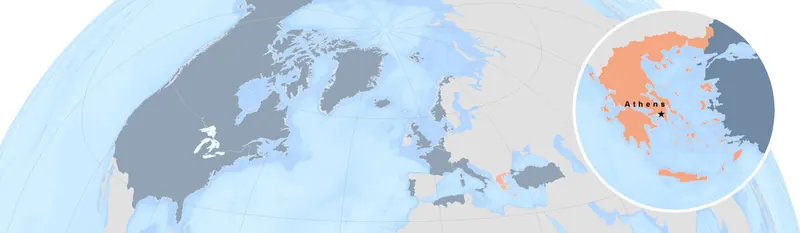
Greece joined NATO in 1952, as the map above shows, and the Treaty’s Article 4 applies to it like any other Ally. Yet Greece does not appear anywhere in NATO’s list of invocations, while Turkey appears five times, in 2003, twice in 2012, in 2015 and in 2020, always in connection with Iraq, Syria or terrorism on its southern borders.
Reading the treaty text shows why this matters for the Aegean. Article 1 commits every Ally “to refrain in their international relations from the threat or use of force in any manner inconsistent with the purposes of the United Nations.” Turkey’s parliament adopted a standing 1995 resolution declaring that an extension of Greek territorial waters to 12 nautical miles would be a casus belli, although Article 3 of the UN Convention on the Law of the Sea gives every coastal state that right. A threat of war against a fellow Ally sits badly with the wording of Article 1, and the sentence of Article 4 is wide enough for Greece to raise the matter whenever it judges that its security is threatened.
Article 4 would not, by itself, bring protection, and Article 5 is not designed for disputes between Allies. But the clause shows that membership gives every Ally, Greece included, a standing right to put a concern before the Council. For the cost of that membership today, see our explainer on NATO’s 5% Target Explained: What It Means and Where Greece Stands.
Why does Article 4 matter now?
Three of the nine invocations date from 2022 or later, all concerning Russia. That makes the clause a barometer of where Allies feel pressure: Turkey’s five requests followed fighting in Iraq and Syria, while the 2014, 2022 and 2025 requests came from NATO’s eastern members. It also shows the limit of the tool. It opens a discussion in the Council, but anything more depends on the agreement of the Allies around the table.
Sources
This article rests on the text of the North Atlantic Treaty and on NATO’s own page on the consultation process and Article 4, both published by NATO. Quotations are taken verbatim from those pages.