Analysis Air Force
Armaments Whisky: the Delta Wings die at twenty, the inglorious end of the Mirage 2000-5 that nobody wants to sign off on
Greece’s newest Mirage 2000-5 fighters are not reaching the end of their service life because they are old, but because nobody has decided what happens next. Support ends in 2027, the defence minister wants them sold, and no buyer or plan has been announced.

In the “Armaments Whisky” series we are used to hosting topics that are not discussed soberly: they need a strong drink in hand. Today’s topic does not take a simple glass. It takes a single malt, neat, and preferably a double.
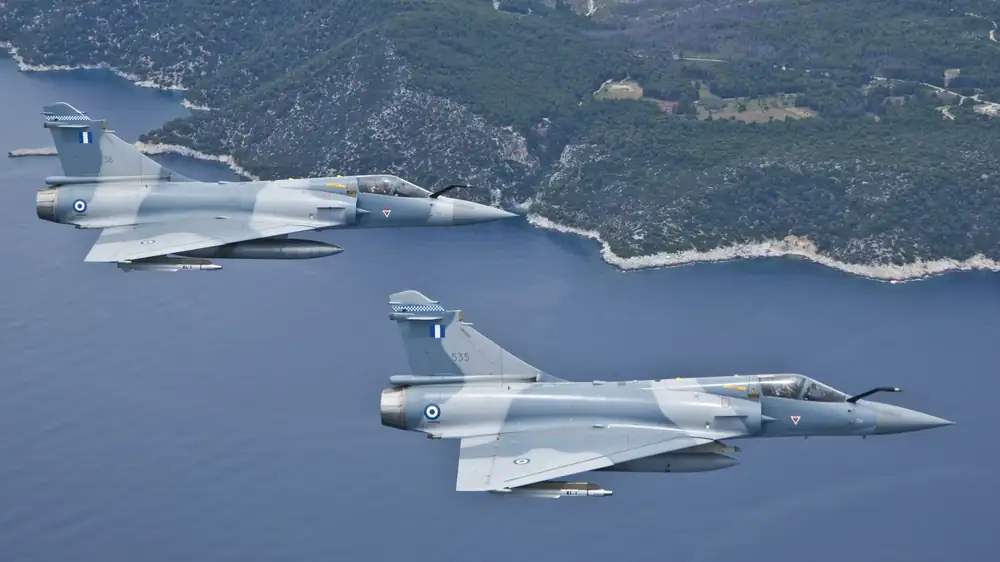
The Hellenic Air Force’s Mirage 2000-5s are not reaching their end because they have grown old. They are reaching it because nobody has decided what happens to them the day after. The last of the 601 Mirage 2000s Dassault Aviation ever built was delivered at Tanagra on November 23, 2007, in a ceremony attended by French Defence Minister Hervé Morin and the Chief of the French Air Force. The production line closed with Greek aircraft. Nineteen years later, with the 15 new aircraft of the 2000 order only halfway through their lives, their technical support expires in 2027 and the defence minister has said publicly that they must be sold. No buyer has been found, and no plan for what happens if none is found has been presented anywhere. A fighter is designed to fly for three or four decades. The newest Greek Delta Wings risk being switched off at twenty, without even returning their value.
The 2000 investment and the half-sized fleet
The story of the Delta Wings in the Air Force begins in 1988, with the arrival of 40 Mirage 2000EG/BG at the 114 Combat Wing. Those aircraft carried much of the burden of Aegean interceptions for two decades and were at the centre of the Chios incident of October 1996, which we analysed in our study of the dogfight. In 2000 Athens decided on the next step: 15 new Mirage 2000-5 Mk2, ten single-seat -5EG and five two-seat -5BG, and the upgrade of 10 of the existing EGMs to the same standard, with Dassault kits and work at the Hellenic Aerospace Industry (HAI). With them came the RDY-2 radar, MICA missiles and the SCALP-EG cruise missile, which gave the Air Force a deep-strike capability from a safe distance. It was an investment designed for a fleet that would fly at least into the 2030s.
The mistake, however, had already been made in the planning. Of the 40 original aircraft only 10 were upgraded, as we pointed out in our 2023 analysis. The Air Force thus found itself with two Mirage 2000 fleets in two different standards, with different spare parts, different software and different training. One fleet was modern, the other had an expiry date. The 2000-5s moved to 331 Squadron “Theseus” at Tanagra.
The déjà vu of the Mirage 2000EGM/BGM: 18 aircraft with no buyer
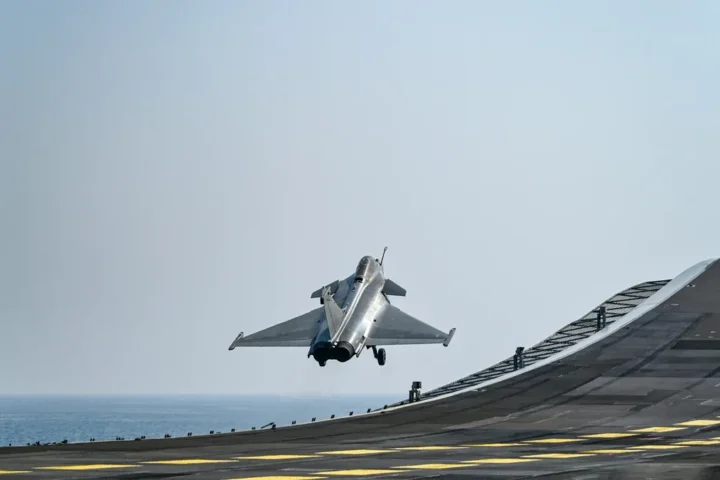
To understand what threatens the 2000-5s, one only has to look at what happened to their predecessors. When the first Rafale landed at Tanagra in January 2022, 332 Squadron “Falcon” gave up the Mirage 2000EGM/BGM, and the aircraft were retired within the year after more than thirty years of service. As early as October 2020, the late honorary Chief of the Hellenic National Defence General Staff, Gen. Michalis Kostarakos, had written that “this is not the time to retire aircraft” and that “defence does not come in an economy pack”. The retirement happened, but there was no rescue plan.
The 18 Mirage 2000EGM/BGM that remained stayed in storage. In 2024 the Indian press wrote that they were offered to India at a discount, chiefly as a source of spare parts for its own Mirage 2000 fleet, and no sale has been announced since. An aircraft left on the ground without support loses value every month. Time-limited components expire, certifications lapse, and cannibalising for spare parts makes returning it to flying condition ever more expensive. This is the road that also opens for the 2000-5s if we reach 2027 without a decision.
The 2024 “for sale” sign and the 2027 deadline
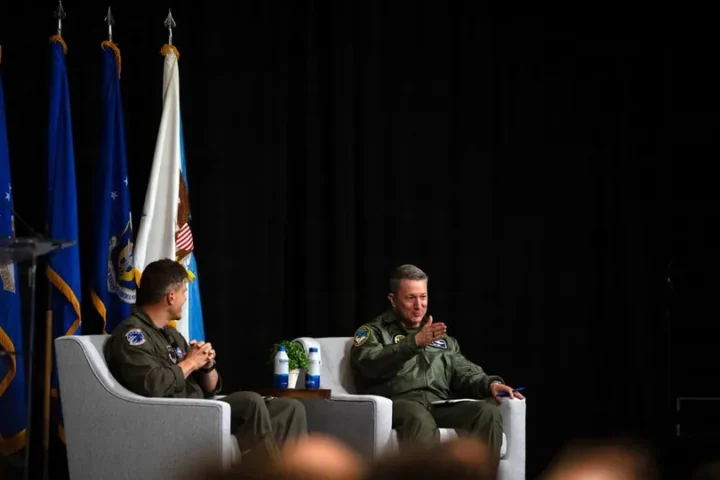
In March 2024 Nikos Dendias publicly put the Mirage 2000-5s up for sale. Speaking in Patras, he said Greece would go to three basic types, F-16 Viper, Rafale and F-35, and that “we will try to sell the F-16 Block 30s and the Mirage 2000-5s too”, because every older type means a separate maintenance line. He added that “our old aircraft cannot enter this new reality” of interconnection and that the technology needed “is extremely expensive for us to create”. The logic of standardisation is sound. The problem is the order of moves. By announcing the sale before there is a buyer, the seller shows every prospective buyer that it must sell, and before support expires.
Since then the matter has drifted. In June 2024, asked by Bloomberg about transferring Mirages to Ukraine, Prime Minister Kyriakos Mitsotakis answered that Greece would do nothing that would degrade its defence capabilities and that, for fighter jets, “we are not there”. Talks with India produced nothing, while Greek press reported in October 2025 on pressure from NATO allies for the aircraft to be resold through third parties to Ukraine, where French Mirage 2000-5Fs already fly. In April 2026 French and Greek reports described a French proposal to transfer the Greek fleet to Kyiv in exchange for better terms on new Rafales. No official Greek position has been announced.
Meanwhile support infrastructure is being planned as if the Mirage 2000-5 had a future. On May 7, 2025, HAI signed a contract to fit out buildings for workshops maintaining the missile launchers and high-pressure bottles of the M2000-5 and Rafale fighters, to MBDA’s technical requirements. The contract was amended on April 20, 2026 with additional work worth €59,466.35 (Diavgeia, ADA ΨΕΡΖ469Η1Γ-ΨΝΛ). The sum is small, but it shows the contradiction. In the hangar the Mirage 2000-5s are still counted as an active weapon, while in the minister’s office they are for sale.
The political responsibility: four decades of purchases with no lifecycle plan
The responsibility does not belong to one minister or one government. The “armaments deal of the century” of 1985, with 40 F-16s and 40 Mirage 2000s, was a political choice to balance Washington and Paris. It was a legitimate choice, but it created two parallel supply chains from the start. The 2000 government decided to buy new 2000-5s and to upgrade only a quarter of the old fleet, leaving the rest of the old fleet with no future. In December 2019 the General Directorate for Defence Investments and Armaments signed a new contract with Dassault Aviation, Thales DMS France and Safran Aircraft Engines for the Mirage 2000-5 fleet. Less than a year later, in September 2020, the government announced the purchase of the Rafale without saying what would happen to the Mirages. In 2024 came the public “for sale” sign with no buyer.
The common denominator is that Greece decides armaments platform by platform and not fleet by fleet. There is no published plan saying when an aircraft enters service, when it is modernised, when it is retired and how it is disposed of. Parliament’s Committee on Armaments Programmes and Contracts gives its opinion on purchases, but is not asked to examine a retirement and disposal plan. So aircraft bought with public money leave service without anyone being held accountable for the value lost. The 18 stored EGM/BGMs are the first such cost. The 2000-5s will be the second, and much larger, if history repeats itself.
An operational continuity plan before the engines go quiet
The first step is a date. Athens must decide now, not in 2027, between two roads. The first is a limited-scope support bridge to 2029-2030, with the aircraft in the role of SCALP-EG and MICA carrier beside the Rafales. The second is a sale with a deadline, while the aircraft still have support, flight hours and certifications. On both roads, the last flight must be a decision of the Air Force and not the result of an expired contract.
If a sale is chosen, it must be done as a package, with spares, ground equipment, documentation and training, and with a role for HAI in supporting the new user. If France does propose an exchange for new Rafales, Greece must negotiate it as a measurable credit on the price and not as a political favour. The minister himself said in 2024 that the Rafale fleet should be strengthened to reach 30 aircraft. The continuity of the Delta Wings does not have to be broken, since the Rafale is also a delta wing, with canards. The natural outcome is for 331 Squadron to become the second Rafale squadron at Tanagra and keep its pilots and technicians, which is its hardest asset to replace.
Finally, transparency is needed. Parliament must be briefed on the Mirage 2000-5 retirement and disposal plan as it is briefed on every purchase, with a timetable, cost and alternatives. The Mirage 2000-5s can leave in two ways: with a ceremony, a buyer and a successor, or like the EGMs, stored and forgotten, losing value every month. The difference will not be decided in the hangar, but in the minister’s office.
Frequently asked questions about the Hellenic Air Force’s Mirage 2000-5
How many Mirage 2000-5s did the Air Force acquire? In total 25 Mirage 2000-5 Mk2: 15 newly built, delivered in 2007, and 10 Mirage 2000EGM upgraded to the same standard with HAI’s participation. They serve with 331 Squadron of the 114 Combat Wing at Tanagra.
When does technical support for the Greek Mirage 2000-5 end? According to what has been published, current support from French industry expires in 2027. Without a new contract, fleet availability will fall quickly.
Why does the government want to sell the Mirage 2000-5s? Defence Minister Nikos Dendias has said the Air Force will move to three basic fighter types, F-16 Viper, Rafale and F-35, to reduce maintenance lines and connect all platforms into a single network.
What happened to the older Mirage 2000EGM/BGMs? They were retired in 2022, after the arrival of the Rafales, and the 18 that remained were kept in storage. In 2024 it was reported that they were offered to India, with no sale announced.