Cyprus
Cyprus 1974 timeline: coup, Turkish invasion and UN resolutions
A dated timeline of Cyprus in 1974, from the 15 July coup to the Turkish invasion of 20 July and the August offensive, built on U.S. diplomatic records, UN resolutions and the Strasbourg court.

The Cyprus crisis of 1974 began with a coup against President Makarios on 15 July and became a Turkish invasion on 20 July, followed by a second offensive in mid-August that left the Republic of Cyprus divided. This timeline follows the dates through the declassified U.S. diplomatic record, the Security Council resolutions and the European Court of Human Rights.
Key points
- The coup of 15 July struck at the elected head of state of the Republic of Cyprus; a U.S. diplomat told the Greek side that Greece “bears certain responsibilities for the present situation”.
- Turkey’s forces landed on 20 July after, in the words of the U.S. record, a decision that Prime Minister Ecevit called “irrevocable”; the Security Council demanded “an immediate end to foreign military intervention in the Republic of Cyprus”.
- When fighting resumed on 14 August the Council again demanded that all military action cease, and on 16 August recorded its “formal disapproval of the unilateral military actions undertaken against the Republic of Cyprus”.
- In 2001 the Strasbourg court found continuing violations by Turkey over missing persons and the return of displaced Greek Cypriots.
Timeline of 1974 at a glance
| Date | What happened | Record |
|---|---|---|
| 15 July 1974 | A coup in Nicosia targets President Makarios. At a Washington meeting that day U.S. officials say the outcome depends partly on whether he is alive. | FRUS, vol. XXX |
| 16 July 1974 | The U.S. Embassy in Athens reports that Makarios escaped assassination; General Ioannides tells a U.S. emissary that Greek Cypriot nationalists moved against him. | FRUS, vol. XXX |
| 20 July 1974 | Turkish forces land on Cyprus in the early morning. The Security Council adopts Resolution 353 unanimously the same day. | FRUS; S/RES/353 |
| 14 August 1974 | Fighting resumes. Resolution 357 deplores it and demands that all firing and military action stop forthwith. | S/RES/357 |
| 15 and 16 August 1974 | Resolution 360 records the Council’s “formal disapproval of the unilateral military actions undertaken against the Republic of Cyprus”. | S/RES/358-360 |
| 13 December 1974 | The Council endorses General Assembly Resolution 3212 (XXIX), adopted unanimously, and extends UNFICYP’s stay to 15 June 1975. | S/RES/364-365 |
| 10 May 2001 | The European Court of Human Rights finds continuing violations by Turkey in northern Cyprus. | ECHR, Cyprus v. Turkey |
15 July: the coup against Makarios
On the morning of 15 July 1974 Henry Kissinger convened the Washington Special Actions Group on Cyprus. The minutes, printed in Foreign Relations of the United States, 1969-1976, Volume XXX, record the State Department’s Joseph Sisco describing two U.S. aims: to avert war between Greece and Turkey and to prevent Soviet exploitation. He said it was unclear whether this was “a limited objective coup inspired by Greece” or the start of a prolonged civil war.
A day later the U.S. Embassy in Athens reached General Ioannides through a channel to deliver a Washington message. The cable shows him saying that the Greek Cypriot nationalists had moved against Makarios and that it was immaterial whether they did so with or without Greece’s prior blessing or later help from Greek officers. A separate cable the same day noted that Makarios had escaped assassination.

20 July: the Turkish invasion
The U.S. record leaves no doubt that Ankara had already decided. Sisco’s own notes, printed as an editorial note in the same volume, say that on the early morning of 20 July he met Prime Minister Ecevit and “it was clear that Turks had already taken decision to intervene militarily”. Ecevit later told him the decision was “irrevocable”. The note states: “In the early morning hours of July 20 the Turkish invasion force landed on Cyprus.”
In Athens, Sisco met the acting foreign minister, who demanded an immediate halt to Turkish action. Sisco told him that Greece bears certain responsibilities for the present situation, then left for Ankara with a cease-fire proposal.
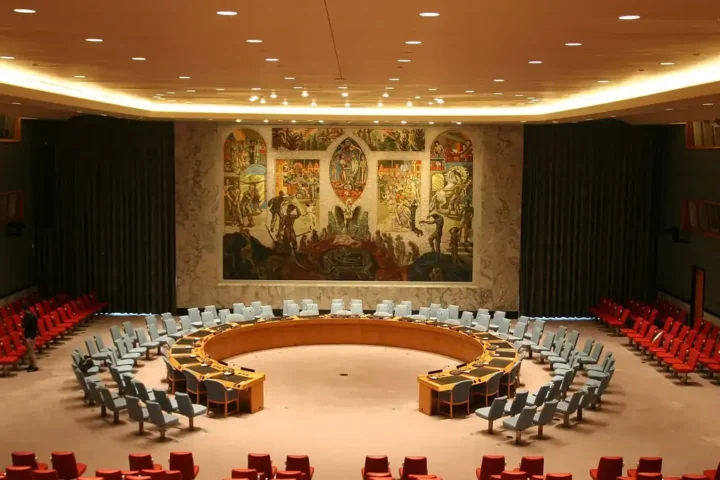
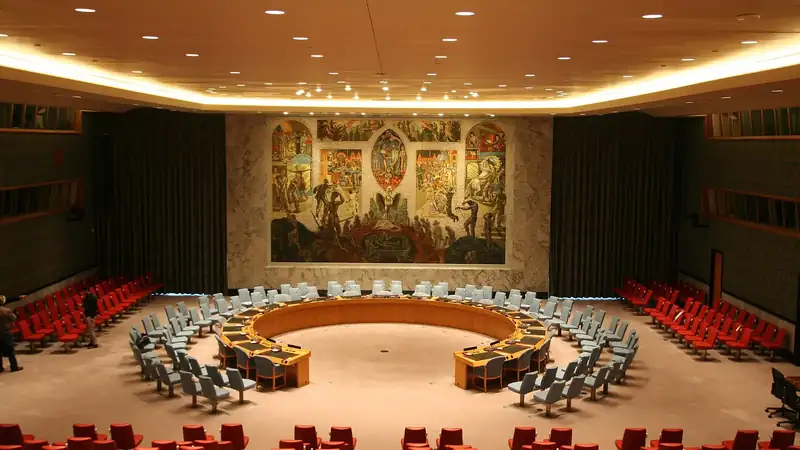
The Security Council acted the same day. Security Council Resolution 353 (1974), adopted unanimously, called on all States to respect the sovereignty, independence and territorial integrity of Cyprus, demanded “an immediate end to foreign military intervention in the Republic of Cyprus that is in contravention of the provisions of paragraph 1 above” and requested the withdrawal without delay of foreign military personnel present other than under international agreements. That wording covers the Turkish troops who had just landed. Resolution 354 of 23 July demanded immediate compliance.
14 to 16 August: the second offensive
On 14 August the Council adopted Resolution 357, “deeply deploring the resumption of fighting in Cyprus”, and demanded that all firing and military action cease forthwith. Resolution 358 the next day insisted on strict observance of the cease-fire.
At the Washington meeting on 15 August Kissinger said he had reassurances from Ecevit that the Turks would not move south of the line they had established. On 16 August, Arthur Hartman, the Assistant Secretary of State for European Affairs, summed up the territorial result: “They have taken the best land on the island.” The same day the Council adopted Resolution 360, recording its “formal disapproval of the unilateral military actions undertaken against the Republic of Cyprus”.
Aftermath: displacement, and the courts
Resolution 361 of 30 August 1974 noted that a large number of people in Cyprus had been displaced and named the UN High Commissioner for Refugees as coordinator of humanitarian assistance. On 13 December the Council endorsed General Assembly Resolution 3212 (XXIX), which the Assembly had adopted unanimously, and extended UNFICYP’s stay to 15 June 1975.
The European Court of Human Rights examined the aftermath in Cyprus v. Turkey, judgment of 10 May 2001. The Court held, by sixteen votes to one, that there was a continuing violation of Article 2 because Turkey had not conducted an effective investigation into the fate of Greek Cypriot missing persons, a continuing violation of Article 5 for those last seen in Turkish custody, and a continuing violation of Article 3 towards their relatives. The Cyprus government submitted that about 1,491 Greek Cypriots were still missing and that over 211,000 had been displaced; the Court found a continuing violation of Article 8 by reason of the refusal to allow any Greek Cypriot displaced person to return to their home in northern Cyprus, and a continuing violation of the right to property. The judgment records that Turkey did not appear at the hearing.
On 18 November 1983, after the declaration of a secessionist state in the occupied north, the Security Council adopted Resolution 541 declaring that step legally invalid and calling on all States not to recognise any Cypriot State other than the Republic of Cyprus. Turkey remains the only country to recognise the secessionist entity.
Where to read more
Geopolitiki has companion explainers on UN resolutions on Cyprus explained: what 353, 541 and 550 demand, Missing persons in Cyprus explained: CMP figures and ECHR rulings, Enclaved Greek Cypriots in Karpas explained: the ECHR findings and Cyprus problem explained: 1960, 1974 and the UN buffer zone.
Sources: Foreign Relations of the United States, 1969-1976, Volume XXX (U.S. Department of State, Office of the Historian); Security Council Resolution 353 (1974) and Resolutions 354 to 365 (1974) of the UN Security Council; Cyprus v. Turkey, judgment of 10 May 2001.