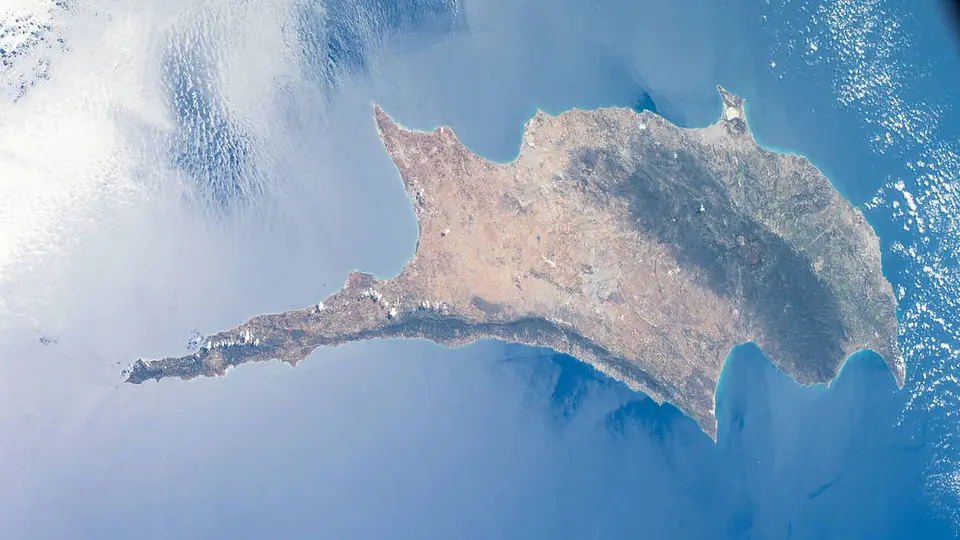
Cyprus
Cyprus problem explained: 1960, 1974 and the UN buffer zone
How the Republic of Cyprus came to be divided: the 1960 constitution, the violence of 1963, the coup and Turkish operation of 1974, the UN buffer zone and where UN-led talks stand in 2026.

The Cyprus problem is the unresolved division of the Republic of Cyprus, an independent state since 1960, after the coup of 15 July 1974 and the Turkish military operation that followed. A UN-patrolled buffer zone about 180 km long has separated the two sides since the ceasefire of 16 August 1974, and UN-led talks on a settlement are still going on.
Key points
- Cyprus became independent on 16 August 1960 under agreements that made Greece, Turkey and the United Kingdom guarantors.
- The Security Council demanded an end to foreign military intervention on 20 July 1974 and formally disapproved of unilateral military action against the Republic of Cyprus on 16 August 1974.
- The Council deplored the 1983 Turkish Cypriot proclamation of a separate state and considered it legally invalid.
- In the north, EU law is suspended because the Republic of Cyprus does not exercise effective control there.
- On 29 July 2026 UN Secretary-General António Guterres said he would convene another “5+1” meeting.
How did the Republic of Cyprus begin?
According to the UNFICYP history pages, Cyprus became independent on 16 August 1960, and joined the United Nations a month later. The constitution rested on agreements reached in Zurich and London in February 1959. The president was to be a Greek Cypriot and the vice-president a Turkish Cypriot, and the Council of Ministers had seven Greek Cypriot and three Turkish Cypriot members.
Greece, Turkey and the United Kingdom jointly guaranteed the constitution’s basic articles. The Treaty of Guarantee prohibited both union with another state and partition of the island. If the guarantee was breached, the three powers were to consult; if that failed, each could act “with the sole aim of re-establishing the state of affairs” set out in the treaty, in the wording quoted by the UN.
What happened in 1963 and 1964?
On 30 November 1963 President Makarios proposed 13 constitutional amendments. Turkey rejected them and the Turkish Cypriot leadership refused to consider them. Violent intercommunal disturbances broke out on 21 December 1963. A ceasefire was arranged on 29 and 30 December, and a neutral zone was created along a “green line” in Nicosia.
On 4 March 1964 the Security Council unanimously adopted resolution 186, creating the UN Peacekeeping Force in Cyprus (UNFICYP). It became operational on 27 March 1964. Its original task was to prevent a recurrence of fighting and to help restore law and order and a return to normal conditions.
What happened in the summer of 1974?
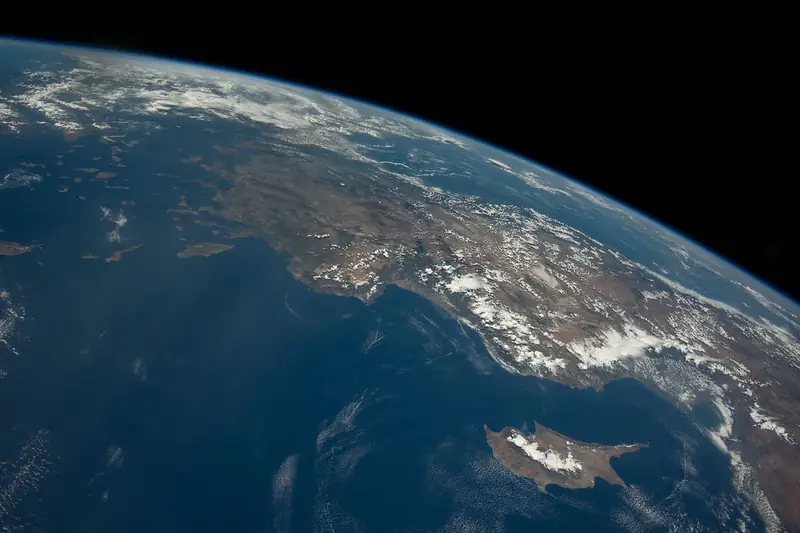
The UN account of the events of summer 1974 begins on 15 July, when the National Guard, “under the direction of Greek officers”, staged a coup d’état against the government of Makarios. On 20 July Turkey, citing the Treaty of Guarantee, launched a large military operation on the north coast. The same day the Security Council adopted resolution 353, which called on all parties to cease firing and demanded an immediate end to foreign military intervention.
A ceasefire announced for 22 July did not hold, and fighting resumed around Nicosia airport, which UNFICYP then took over as a protected area. Foreign ministers of Greece, Turkey and the United Kingdom met in Geneva from 25 July. The conference broke down on 14 August and heavy fighting resumed. Turkish forces declared a ceasefire at 18.00 on 16 August 1974, and on that day the Council adopted resolution 360, recording its formal disapproval of unilateral military actions against the Republic of Cyprus.
What is the buffer zone?
The ceasefire lines of 1974 became the boundary of the buffer zone, often called the Green Line. In its account of operations since 1974 UNFICYP says the lines run about 180 km from Kato Pyrgos on the northwest coast to Dherinia on the east coast. The zone is less than 20 metres wide in Nicosia and about 7 km wide near Athienou, and covers roughly 3 percent of the island.
UNFICYP’s mandate now includes supervising the ceasefire and maintaining the zone, as well as the humanitarian work it describes: helping electricity and water supplies cross the lines, delivering supplies to Greek Cypriots and Maronites living in the north, and facilitating medical evacuations. The Security Council has renewed the mandate regularly, on the basis of Secretary-General reports each June and December.
What did the UN say about the 1983 proclamation?
On 15 November 1983 the Turkish Cypriot side proclaimed a separate state. UNFICYP records that the Security Council deplored the proclamation and considered it legally invalid. Turkey and the Turkish Cypriot community objected to the resolution’s text, but all parties continued to cooperate with the peacekeepers.
How does the division affect the EU?
The European Commission explains in its Green Line Regulation page that EU legislation is suspended under Protocol 10 to the 2003 Act of Accession in the northern part of Cyprus, where the Government of the Republic of Cyprus does not exercise effective control. As a result those areas lie outside the EU customs and fiscal territory. Council Regulation 866/2004 sets the terms under which persons and goods can cross the line into the government-controlled areas.
The Law of the Sea and sovereignty questions around the island are covered in our explainers on UNCLOS explained: sea zones, islands and the Aegean dispute and the Treaty of Lausanne explained: borders, islands and minorities.
Where do the talks stand in 2026?
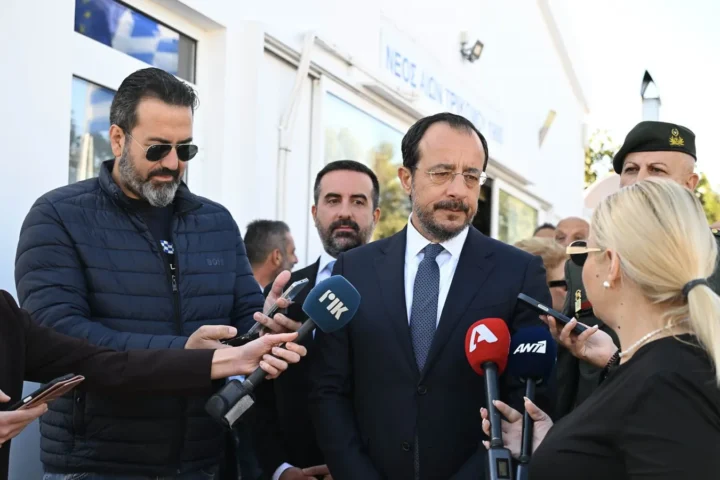
Guterres visited Cyprus at the end of July 2026. UN News reported that at a press conference in Nicosia on 29 July he spoke of “frank and constructive discussions” with the Greek Cypriot leader Nikos Christodoulides and the Turkish Cypriot leader Tufan Erhürman, held separately and together. He said “this is the moment when all efforts must be made to rebuild trust” and that “the United Nations cannot impose peace”.
He announced that he would convene another 5+1 meeting, the format that brings together the two leaders and the guarantor powers Greece, Turkey and the United Kingdom, “after adequate preparations”. No date was given in the UN report. His Personal Envoy on Cyprus is María Ángela Holguín. For recent developments see Cyprus: Christodoulides and Erhürman at the same table at the Pyla Peace Festival – new meeting next week, and for the security picture Cyprus to the UN: 626 Turkish airspace violations in two months – landing ships, submarines and frigates in the ports of Famagusta and Kyrenia.
The UN Secretary-General explained his approach during his July 2026 visit in this press conference from Nicosia.
Timeline at a glance
| Date | Event |
|---|---|
| 16 August 1960 | Cyprus becomes independent; the constitution takes effect |
| 21 December 1963 | Intercommunal violence breaks out |
| 4 March 1964 | Security Council resolution 186 creates UNFICYP |
| 15 July 1974 | Coup by the National Guard under Greek officers |
| 20 July 1974 | Turkey launches a military operation on the north coast; resolution 353 |
| 16 August 1974 | Ceasefire lines fixed; resolution 360 |
| 15 November 1983 | Turkish Cypriot proclamation of a separate state, deplored and held legally invalid by the Security Council |
| 29 July 2026 | Guterres in Nicosia announces another 5+1 meeting |
Sources
UNFICYP (history, summer 1974, operations since 1974, buffer zone, establishment and mandate pages), UN News, 29 July 2026, and the European Commission Green Line Regulation page.